



Art Deco Flacon
An art deco flacon brings the sharp geometry and luxurious materials of the interwar years straight to your dressing table.
Art Deco Flacon
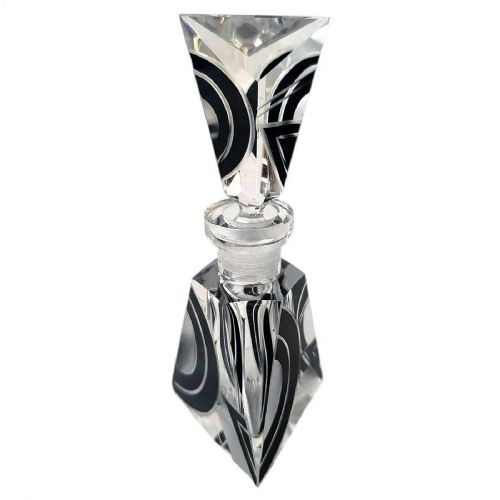
An art deco flacon is a decorative scent or perfume bottle produced primarily during the 1920s and 1930s. These vessels served both a practical function on a dressing table and a decorative purpose, reflecting the modernist aesthetics of the era.
The pieces you encounter most frequently on this page originate from the Czech Republic, France, and Britain. They take the form of geometric perfume bottles and stoppered scent containers designed with characteristic period styling.
Materials and construction
Maker studios shaped these flacons using glass, crystal, opalescent glass, and pressed glass. These vitreous bodies were often combined with sterling silver mounts and coloured enamel details.
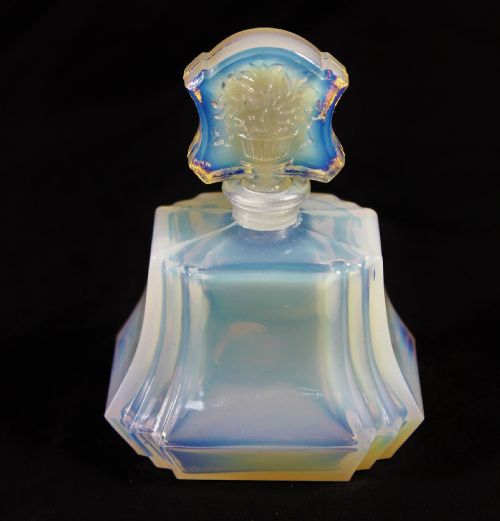
Techniques ranged from precision cutting to intricate moulding, particularly evident in the frosted and opalescent sculptural forms produced by leading French glassworks. Enamelling and guilloche work added vibrant bands of colour to the glass and silver components.
Some bottles come with moulded butterflies on the stopper, ensuring your perfume is forever guarded by tiny glass insects.
Defining quality in a flacon
Quality in an art deco flacon rests on the crispness of the glass cutting and the precision of the metalwork. Pieces featuring complex opalescent effects or detailed guilloche enamel demonstrate a higher level of workshop execution.
The presence of matching stoppers and intact original mounts elevates a piece significantly. The refinement of the decorative motifs separates standard utilitarian items from sophisticated studio productions.
Karl Palda·Rene Lalique·Sabino
The Art Deco Flacon Glossary
- Flacon
- A small stoppered bottle or flask used for perfume or scent. These vessels were essential accessories on interwar dressing tables.
- Guilloche enamel
- Decorative metalwork covered with translucent enamel over an engine-turned pattern. It creates a shimmering geometric texture beneath the coloured surface.
- Opalescent glass
- Glass containing ingredients that cause it to milky-blue scatter light. This technique produces a distinctive glowing effect on moulded reliefs.
- Sterling silver
- An alloy of silver containing 92.5 percent by mass of silver and 7.5 percent of other metals. It provides durable mountings and collars for glass perfume bottles.
Art Deco Flacon: Frequently Asked Questions
What is an art deco flacon?
An art deco flacon is a decorative perfume or scent bottle created during the 1920s and 1930s. These pieces combine geometric forms with materials like glass, crystal, and enamel.
They were designed to hold fragrances while serving as elegant decorative objects for the bedroom or dressing room.
How were these bottles used?
These vessels held personal scents and perfumes for daily use on dressing tables. The stoppers kept the volatile liquids sealed between applications.
Owners often displayed them as part of matching vanity sets alongside mirrors and powder boxes.
How do I care for an art deco flacon?
Clean the glass gently with lukewarm water and mild soap, avoiding harsh abrasives that might damage enamel or silver mounts. Keep sterling silver components polished with a soft cloth.
Handle stoppers with care, as these ground glass or moulded glass parts are prone to chipping if twisted too tightly.
How do I identify the period?
Look for characteristic design traits such as symmetry, clean geometric lines, and stylised motifs typical of the 1920s and 1930s. Maker marks, signatures on the glass, and hallmarks on the silver mounts also help confirm the era of production.
Materials such as opalescent glass and guilloche enamel point directly to interwar manufacturing techniques.