
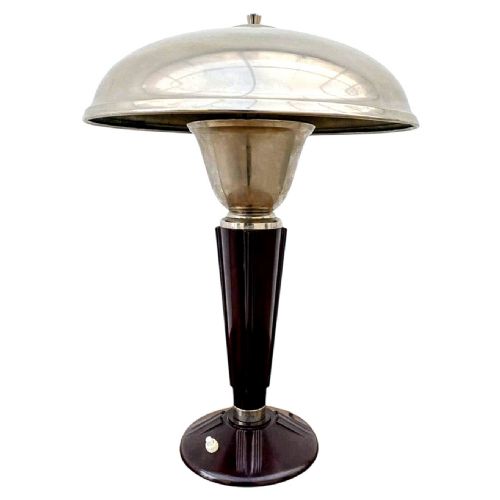


Art Deco Dome Lamp
These art deco dome lamp examples combine clean geometric lines with industrial materials, offering striking illumination for period interiors.
Art Deco Dome Lamp
When you search for an art deco dome lamp, you encounter architectural lighting shaped by the aesthetic movements of the early twentieth century. The selection ranges from robust table models to ceiling fixtures designed during the nineteen-twenties and thirties.
You are most likely to meet metal and glass configurations among these listings. Forms span desk lamps, pendant lights, and ceiling lights reflecting Art Deco, Bauhaus, and Jugendstil design principles.
How they were made
Maker workshops utilised durable metals such as brass, chrome, copper, and bronze for structural frames and shades. These metals were often polished or combined with organic materials like wood and early plastics.
Shades and domes were formed from etched crystal, frosted glass, opaline glass, cut glass crystal, and alabaster. Fabric and toleware also appear as contrasting elements in shade construction.
Listings feature periods from nineteen-ten to nineteen-thirty, with materials spanning metal, glass, brass, chrome, Bakelite, fabric, nickel, bronze, alabaster, toleware, and Macassar.
What varies in quality
The distinction between standard production and superior execution lies in the integration of materials and the precision of metalwork. Heavier bases and refined joins demonstrate careful studio construction.
The quality of the glass or crystal shade dictates the overall refinement of the piece. Thickly moulded opaline or intricately etched crystal shows greater technical accomplishment than plain metal shades.
Eileen Grey·Stuart Crystal·Wilhelm Wagenfeld
The Art Deco Dome Lamp Glossary
- Bakelite
- An early thermosetting plastic utilised for electrical components and lamp bases. Its dark, smooth finish defines many pieces from the period.
- Opaline
- A milky, semi-translucent glass developed to diffuse light softly. It is frequently moulded into dome shapes for reading and desk lamps.
- Bauhaus
- A design movement prioritising functionalism and industrial simplicity. Lamps from this tradition favour unadorned metal tubes and clean geometric forms.
- Jugendstil
- The continental European counterpart to Art Nouveau. It introduces organic, flowing motifs that predate the rigid symmetry of later decades.
- Toleware
- Painted or enamelled metalware used for lamp shades and bodies. It offers a muted, matte surface texture distinct from polished chrome.
Art Deco Dome Lamp: Frequently Asked Questions
What is an art deco dome lamp?
An art deco dome lamp is a lighting fixture characterised by a rounded or hemispherical shade and geometric styling typical of the interwar period. These objects combine metalwork with glass components to provide focused or ambient illumination.
They were produced in various formats including desk models, reading lamps, and ceiling pendants. The design ethos prioritised streamlined forms and industrial materials.
How were these lamps used originally?
These lamps served practical lighting roles on office desks, reading tables, and in central living spaces. Ceiling versions illuminated halls and rooms while table variations provided task lighting for work areas.
Their construction reflected the electrification of homes and offices during the early twentieth century. Owners relied on them for both direct illumination and modern interior decoration.
How do I live with an art deco dome lamp?
Living with these pieces involves placing them on stable surfaces where their metallic finishes and glass shades can catch natural and artificial light. They integrate well into period rooms and contemporary spaces alike as focal lighting points.
Wiring should be checked by a professional to ensure safety for modern electrical standards. Position them away from high-traffic edges to protect fragile glass or crystal domes.
How do I tell periods apart?
Early pieces from the nineteen-tens often display Jugendstil influences with softer, more organic curves. Items from the nineteen-twenties and thirties transition towards strict geometric symmetry and Machine Age chrome.
Materials also offer chronological clues, as early plastics like Bakelite and industrial chrome became more prevalent by nineteen-thirty. Stylistic cues link pieces directly to specific design movements of the era.