




Antique Wooden Yoke
An antique wooden yoke carries the honest weight of utility, bringing sculptural form and rustic history into a modern room.
Antique Wooden Yoke
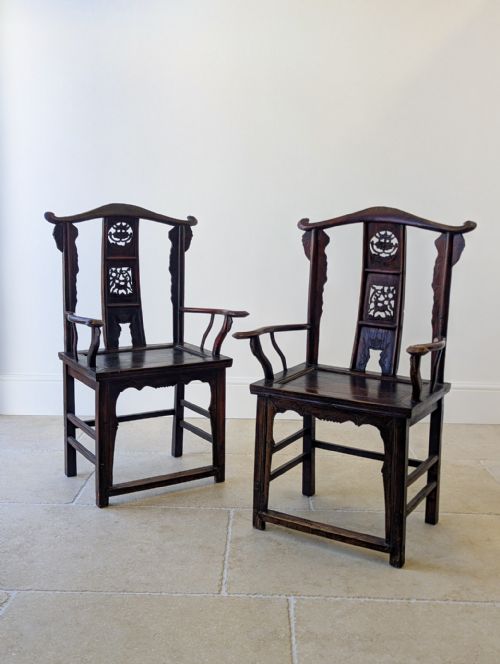
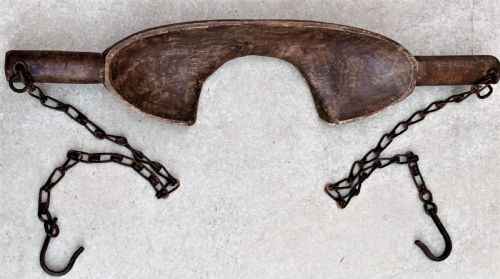
When you search for an antique wooden yoke, you encounter a distinct blend of agricultural bygones and traditional seating forms. The selection divides broadly between British dairy maid pieces and Chinese yoke-back chairs, spanning the nineteenth century.
The English examples take the form of shoulder yokes in beech or ash, fashioned for carrying milk pails across fields. The Asian examples present as elm scholars chairs and armchair pairs featuring curved top rails that echo the silhouette of a farming yoke.
Industrial variants also appear, such as railway lamp carriers and architectural salvage, showing how versatile these timber items proved in daily work. Most pieces you meet on this page date from the Victorian era up to around nineteen twenty.
How they were made
Maker operations relied on native hardwoods selected for strength and grain pattern, with elm, beech, ash, and oak forming the structural basis. Timbers were shaped using traditional turning and joining techniques suited to heavy daily toil.
Surfaces received straightforward treatments, ranging from natural waxed timber and blonde wood to painted finishes and red lacquer. Wrought iron hardware frequently reinforces the wooden frames, particularly on agricultural salvage and railway equipment.
Periods represented span from eighteen fifty through the Victorian era up to nineteen twenty.
What varies in quality
Quality rests in the integrity of the joinery and the preservation of the original surface, whether that is aged lacquer, old paint, or polished hardwood. Pieces that retain their structural firmness without excessive timber replacement hold greater integrity.
Proportion and the clarity of the carved or turned elements also distinguish finer examples. Sympathetic weathering on nineteenth-century pieces adds character, provided the core timber remains sound and unaltered by modern interventions.
The Antique Wooden Yoke Glossary
- Shoulder yoke
- A curved wooden beam designed to fit across human shoulders for carrying balanced loads such as water or milk pails. English dairy maid examples usually employ turned beech or ash.
- Yoke-back chair
- A seating form featuring a top crestrail curved to resemble an agricultural yoke. Chinese scholars chairs and armchairs commonly display this distinctive profile.
- Elm
- A tough, interlocking hardwood favoured for traditional chair seats and frames due to its resistance to splitting. It forms the primary timber for the Chinese seating in this collection.
- Railwayana
- Artefacts collected from the railway network, including lamp carriers and signal components. Pieces like the GNR and LNER items reflect this utilitarian history.
- Lacquer
- A natural resin finish applied in thin coats to Chinese furniture, providing a durable and decorative surface. Red lacquer variations appear on nineteenth-century elm armchairs.
Antique Wooden Yoke: Frequently Asked Questions
How do I style a yoke at home?
Agricultural yokes work well mounted horizontally on a plain wall as sculptural timber art. Their weathered patinas provide a strong focal point in rustic or industrial interiors.
Alternatively, yoke-back chairs integrate easily into living spaces and hallways as functional seating with distinctive silhouettes.
Are Chinese yoke chairs comfortable?
Chinese scholar chairs and elm armchairs feature ergonomic back rails and arm supports designed for upright posture. They offer a structured sit rather than deep lounge comfort.
The curved top rail provides steady support for the upper back during extended periods of sitting.
How do I date an antique yoke?
Dating relies on examining the tool marks, timber shrinkage, and the nature of the joinery. Nineteenth-century pieces show hand-finished surfaces and period specific hardware.
Comparing the style against documented periods like the late Qing Dynasty or Victorian era helps narrow the timeframe of manufacture.