
Antique Wooden Hooks
Antique wooden hooks bring practical utility and period character to an entrance hall, combining durable timbers like oak and mahogany with functional brass or ceramic fixings.
Antique Wooden Hooks
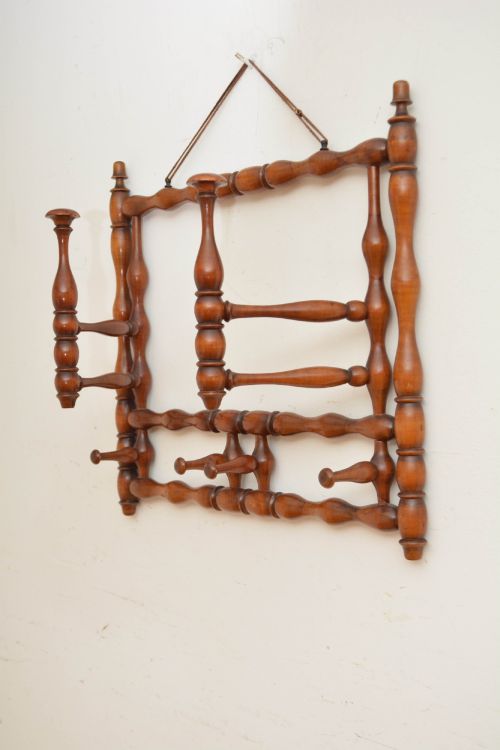
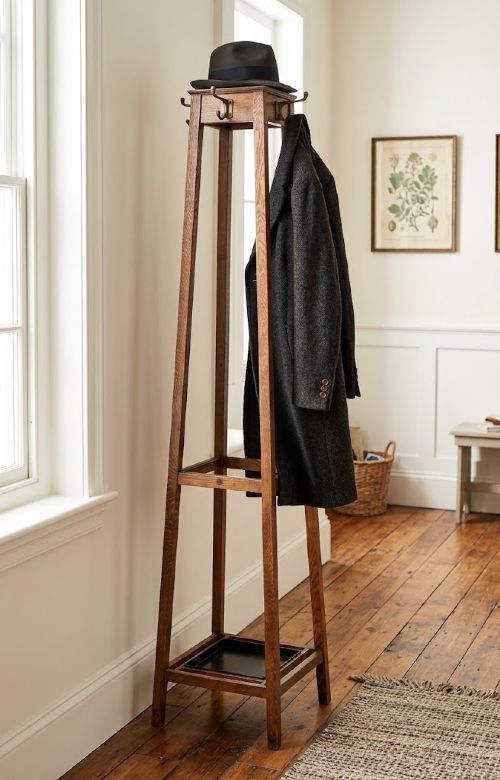
Antique wooden hooks comprise wall-mounted coat racks, hall stands, and individual fixtures designed for everyday organisation. These pieces span the nineteenth and early twentieth centuries, reflecting the domestic requirements of Victorian and Edwardian hallways.
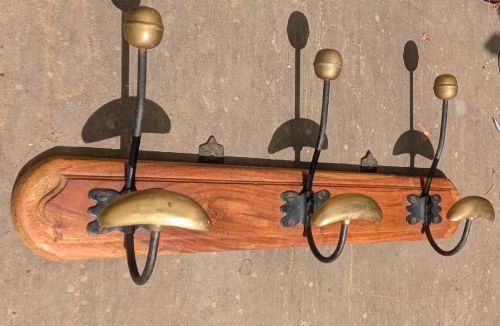
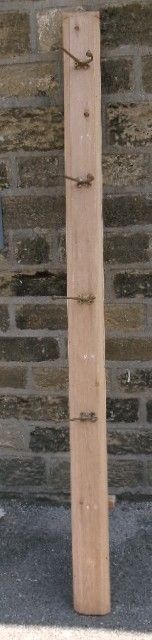
Buyers will encounter both long timber backboards fitted with multiple metal hooks and singular decorative items. The materials utilised demonstrate how utilitarian items were constructed using local hardwoods and robust metalwork to withstand daily use.
Materials and construction methods
Makers utilised dense hardwoods such as oak, mahogany, walnut, and beech to provide a stable foundation for heavy garments. These timbers were frequently polished, ebonised, or painted, depending on the prevailing style of the period.
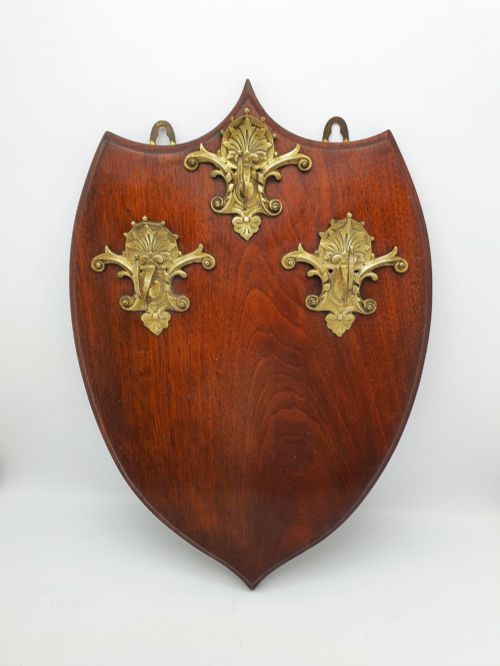
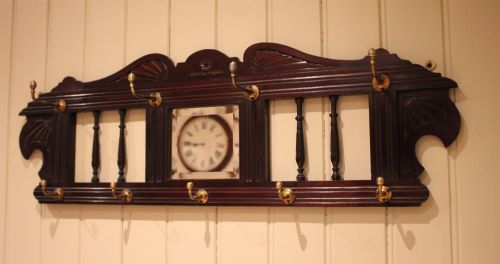
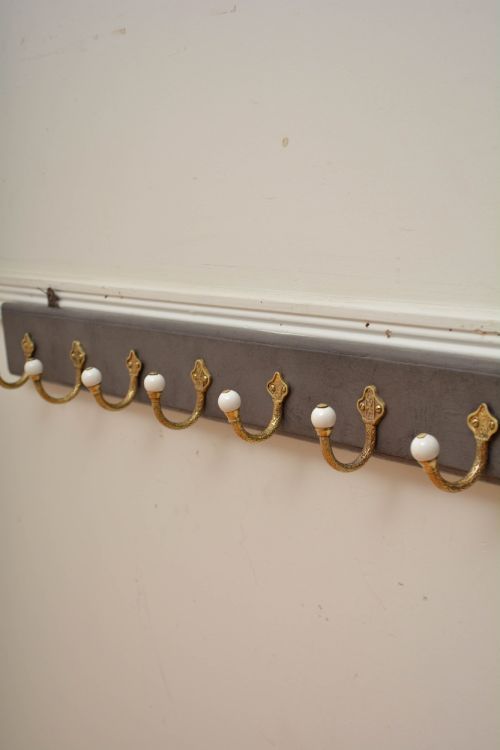
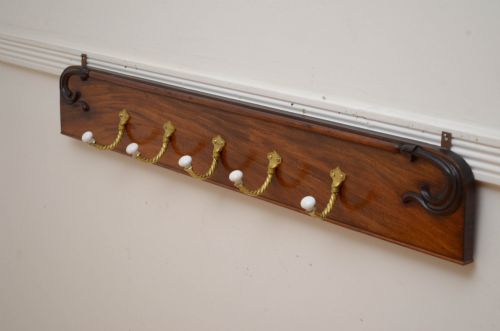
Metal components, predominantly cast brass, iron, and bronze, were screwed directly into the timber backboards or attached through pre-drilled recesses. Many examples also integrate ceramic or porcelain hooks, secured alongside metal prongs to prevent fabric snagging.
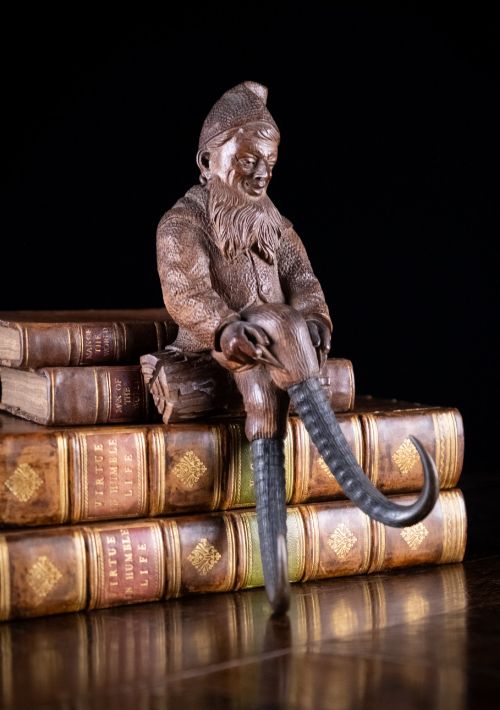
A grinning Black Forest gnome carved into a wooden whip hook stands ready to guard your riding crop.
Factors determining quality
Quality rests primarily in the timber selection and the integrity of the joinery, with solid oak and figured mahogany representing sturdier construction than softer pine alternatives. The weight and casting detail of the attached hooks also distinguish finer workshop production from standard utility items.
The survival of original fixings and matching hardware elevates a piece significantly. Superior examples retain their complete set of period-appropriate brass or ceramic hooks without replacements or filled screw holes on the backboard.
Astrola
The Antique Wooden Hooks Glossary
- Backboard
- The horizontal or vertical timber panel upon which the hooks are mounted. It provides structural support and distributes the weight of garments across the wall fixings.
- Hall stand
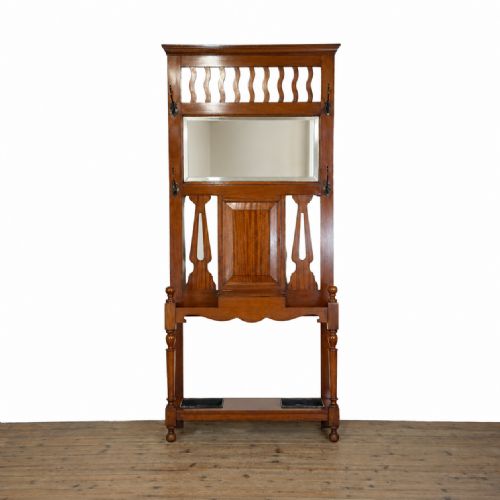
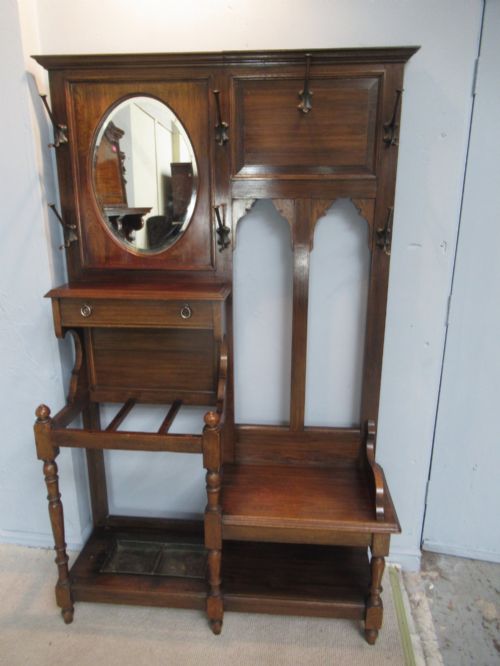
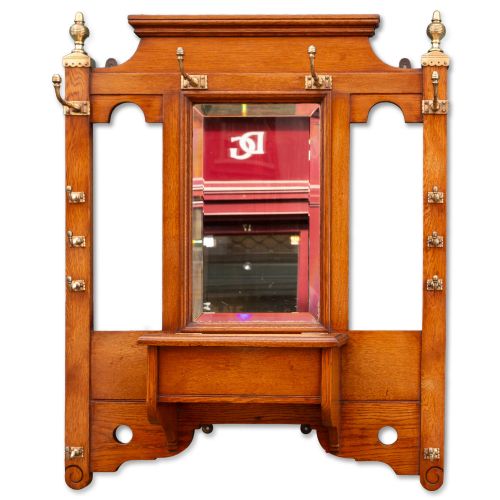
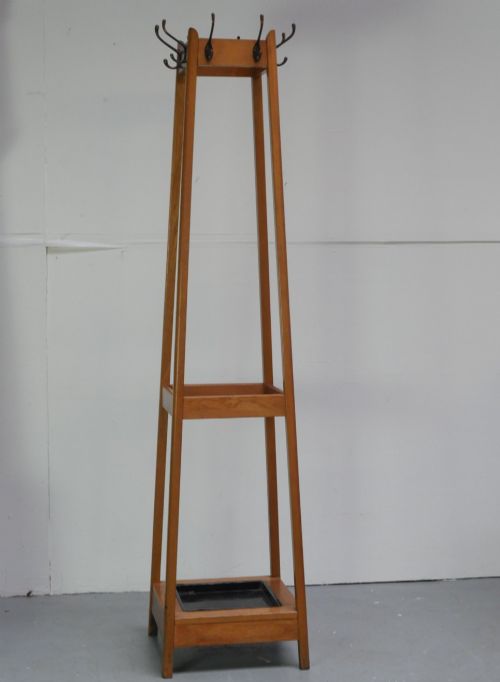
- A large piece of hall furniture combining coat hooks, a mirror, umbrella wells, and sometimes a seat or glove box. They were essential fixtures in Victorian and Edwardian entranceways.
- Faux bamboo
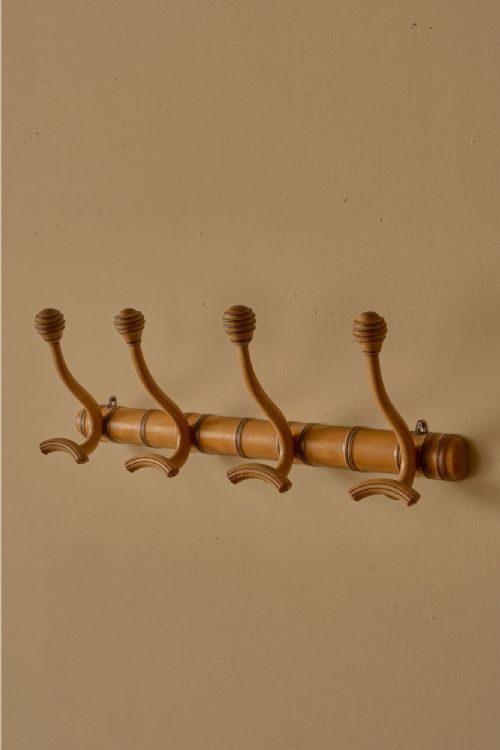
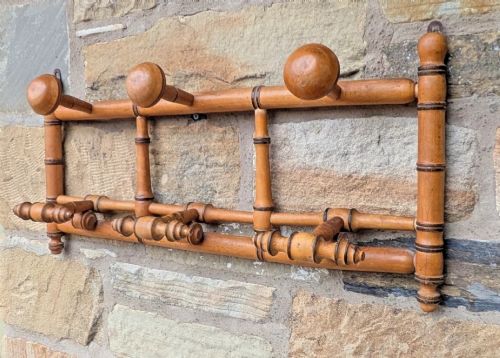
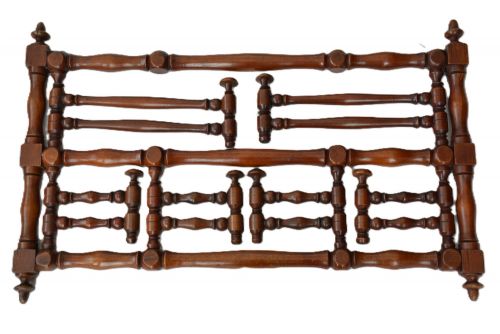
- A decorative treatment where timber is carved or turned to resemble natural bamboo canes. This style was particularly popular in nineteenth-century French furniture.
- Black Forest carving
- Highly detailed wooden sculpture produced in the Swiss and German border regions. These pieces often feature naturalistic animal or figural motifs.
- Bentwood
- Timber softened by steam and bent into curved shapes, commonly utilised in lightweight coat racks and stands from the late nineteenth century onwards.
Antique Wooden Hooks: Frequently Asked Questions
How do I secure a heavy coat rack to the wall?
Most antique wooden racks feature pre-drilled countersunk screw holes or brass mounting plates integrated into the timber backboard. Use appropriate wall anchors matching your plaster or masonry to ensure the piece supports the weight of winter garments.
Distributing the fixings evenly across the length of the board prevents warping over time. If the mounting holes do not align with modern wall studs, attach a concealed batten to the wall first.
How do I date an antique wooden coat rack?
Dating relies on timber selection, fixing types, and stylistic indicators such as Gothic revival motifs or Arts and Crafts simplicity. Victorian pieces often employ heavy brass double hooks on dark oak or mahogany boards, while Edwardian versions lean towards lighter golden oak.
Examine the screws and fixings on the reverse, as hand-cut slots or early machine-threaded screws provide reliable clues to the manufacturing decade.
Are the hooks usually original to the backboard?
Many surviving pieces retain their original matching brass or ceramic hooks, though replacements do occur due to wear or breakage over a century of use. Look for consistent patination, matching screw types, and undisturbed indentations in the wood beneath each hook.
Slight variations in alignment can indicate workshop installation, while clean, unblemished wood surrounds often suggest later replacements.