


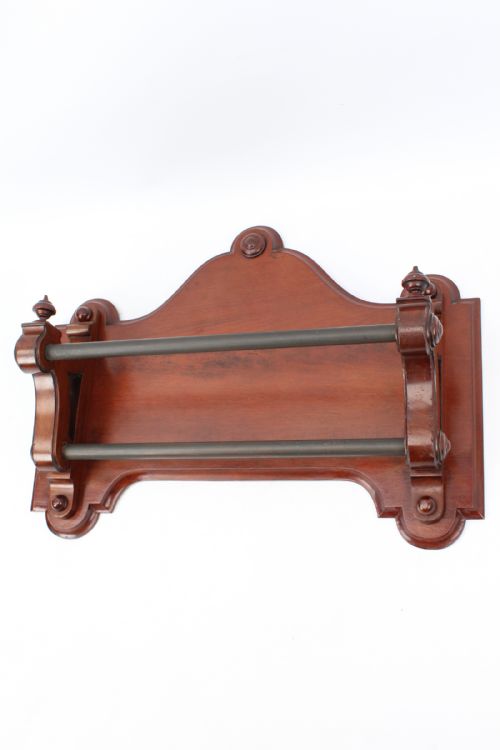

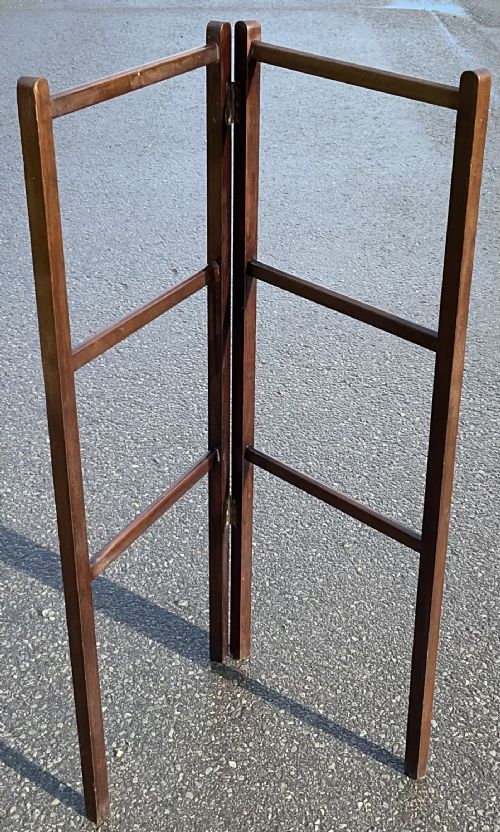


Antique Wood Towel Rack
These antique wood towel rack pieces bring practical nineteenth-century utility and rich timber grain to the modern home.
Antique Wood Towel Rack
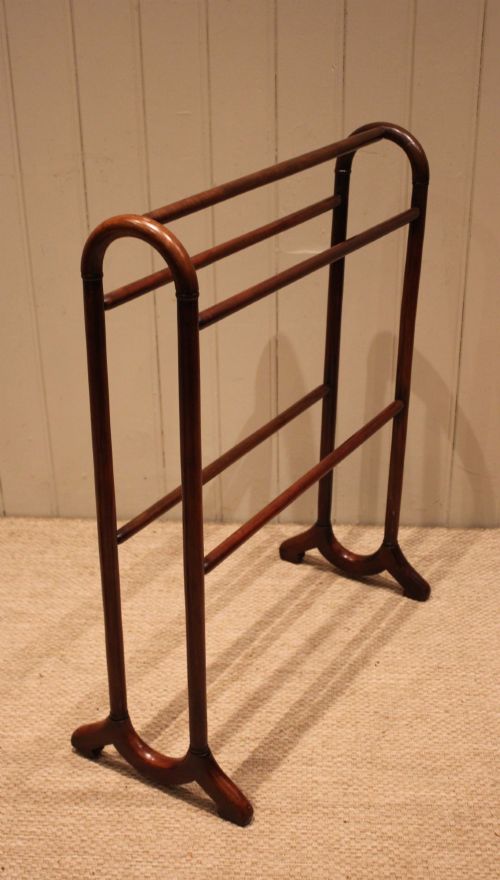
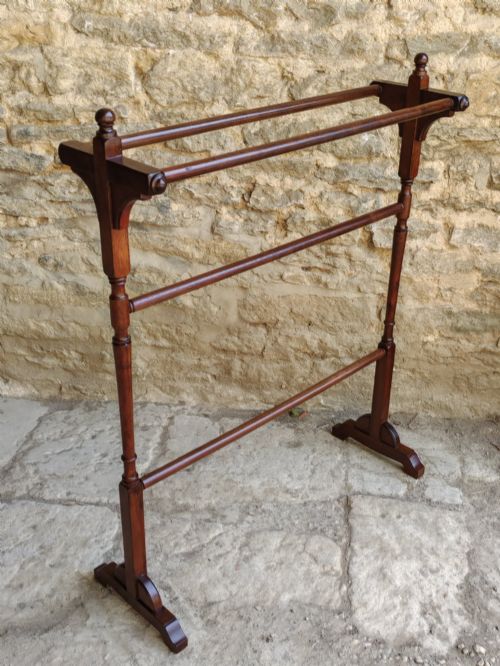
An antique wood towel rack is a functional domestic furnishing designed for hanging and drying linens, frequently appearing in forms such as floor-standing folding rails, hanging double rails, and cheval designs. These items span periods from the early nineteenth century through the Edwardian era, with Victorian mahogany examples dominating the selection.
Buyers will encounter various configurations ranging from simple three-fold timber frames to substantial William IV clothes rails and related pieces like hall stands and lacquered robe stands. The prevailing materials are hardwoods such as mahogany and walnut, occasionally accented with brass fittings.
How they were made
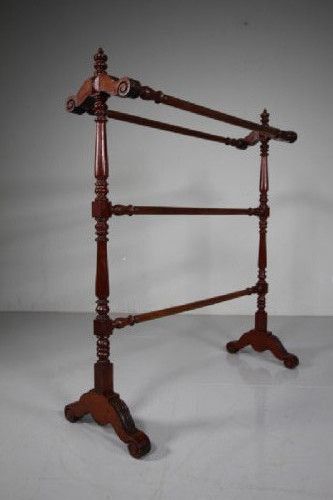
Cabinetmakers constructed these frames primarily from solid mahogany, elm, and walnut, employing traditional joinery to withstand daily household use. Selected pieces feature carved elements, particularly in Chinese Qing Dynasty items and Victorian Gothic Revival designs.
Surface finishes include traditional polishing applied to hardwoods, alongside lacquered wood surfaces seen on specific Asian robe stands. Brass components frequently provide structural pivots or hanging hardware on folding and hanging models.
Antique Wood Towel Rack Retail Price Guide 2026
Typical asking prices for wood towel rack among the pieces listed under this phrase on Sellingantiques today, from the lower quarter to the upper quarter. They describe what is for sale here now, not the wider market.
The selection spans the nineteenth century through the Edwardian period, featuring mahogany, walnut, elm, and lacquered wood in rail, stand, and rack forms.
What varies in quality
The distinction between standard domestic pieces and superior examples lies in the selection of timber grain, the crispness of any carved detailing, and the robustness of the folding mechanisms. Larger oversized formats and matched pairs demonstrate higher ambition from their period workshops.
Proportion and stability differentiate finer items, particularly in multi-fold and cheval constructions where balanced weight distribution ensures the frame remains steady during use.
The Antique Wood Towel Rack Glossary
- Cheval towel rail
- A freestanding floor model designed with pivoted uprights, allowing the frame to swing or tilt. This format often provides greater hanging capacity than standard fixed rails.
- Gothic Revival
- A nineteenth-century design style incorporating medieval architectural motifs, pointed arches, and heavy proportions into furniture. Walnut and mahogany were frequently utilised for these substantial pieces.
- William IV
- A stylistic period spanning the 1830s, characterised by robust proportions and classical revival influences. Pieces from this era often feature heavy timber sections and substantial scale.
- Lacquered wood
- A decorative surface treatment utilising natural resin varnish built up in multiple layers. This technique appears on specific imported Qing Dynasty robe stands.
- Three-fold towel rail
- A hinged frame consisting of three interconnected panels that can be angled or folded flat. This design maximises drying space while allowing compact storage.
Antique Wood Towel Rack: Frequently Asked Questions
How were antique towel racks used?
These pieces served in bedrooms and dressing rooms for airing and hanging household linens, garments, and towels. Freestanding folding designs allowed servants to move them near fires for warming fabrics.
Today, they function practically in bathrooms and bedrooms while displaying period timber grain and traditional joinery.
Are these racks sturdy enough for daily use?
Most solid hardwood examples remain robustly constructed from materials like mahogany and walnut. Traditional joinery provides the structural strength needed for holding damp towels or garments.
Care should be taken with folding hinges and pivoting joints on older multi-panel or cheval frames during repositioning.
How do I identify a Victorian rail?
Victorian pieces typically utilise solid mahogany or walnut, reflecting the darker timber preferences of the nineteenth century. They often feature turned uprights, substantial proportions, and traditional hand-finished polish.
Stylistic sub-categories like Gothic Revival add specific architectural carving, while standard models focus on functional folding frames.
What is the difference between Edwardian and Victorian versions?
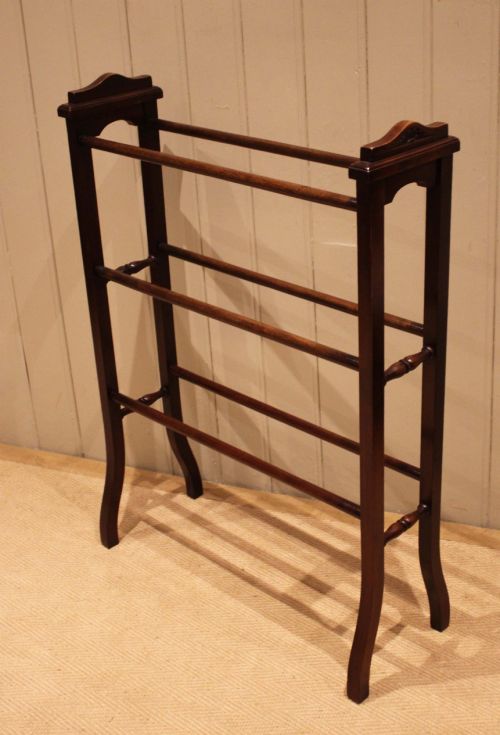
Edwardian towel racks, dating from around 1900 to 1910, generally present lighter proportions and cleaner lines than their nineteenth-century predecessors. They continue the use of mahogany but often reflect a simpler aesthetic.
Victorian examples tend to be heavier, sometimes incorporating larger timber sections, brass hardware, or more ornate turning.