
Antique Wood Pedestal Table
An antique wood pedestal table brings centered stability and rich timber grain to a room, ranging from compact wine tables to grand dining formats.
Antique Wood Pedestal Table
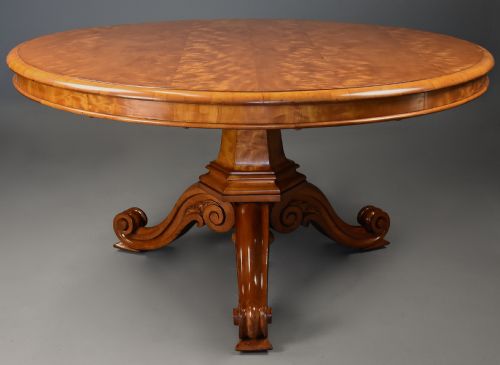
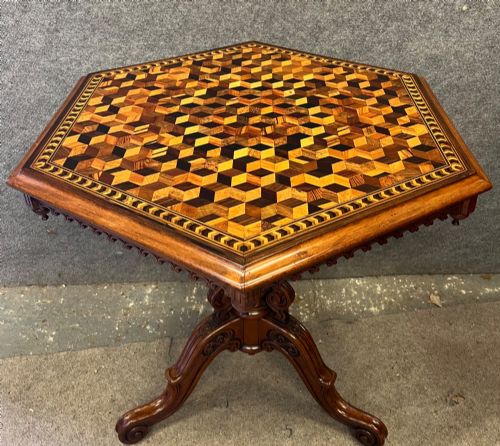
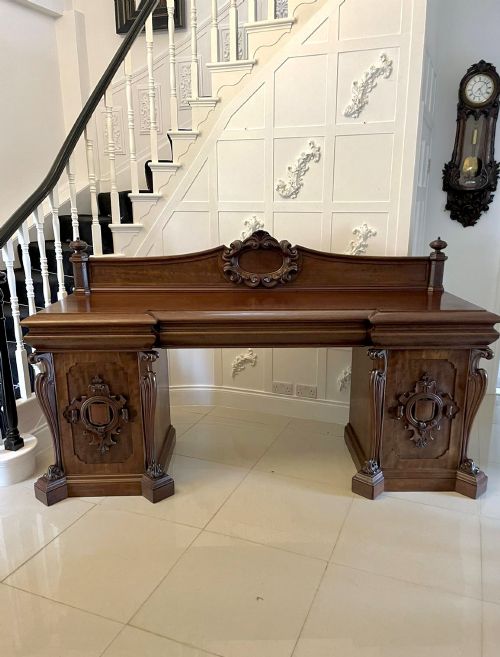
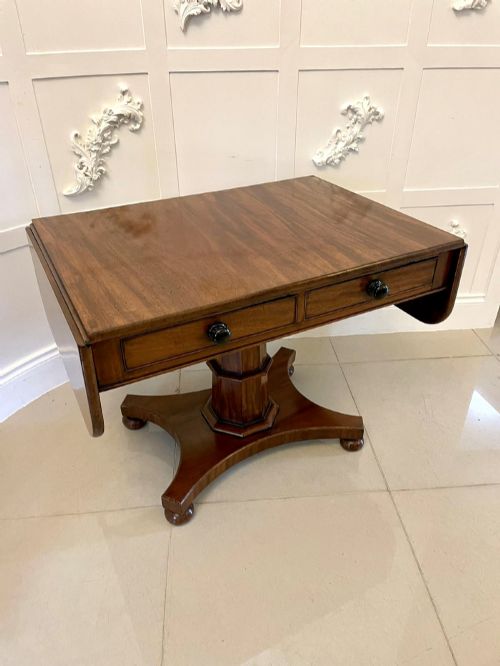
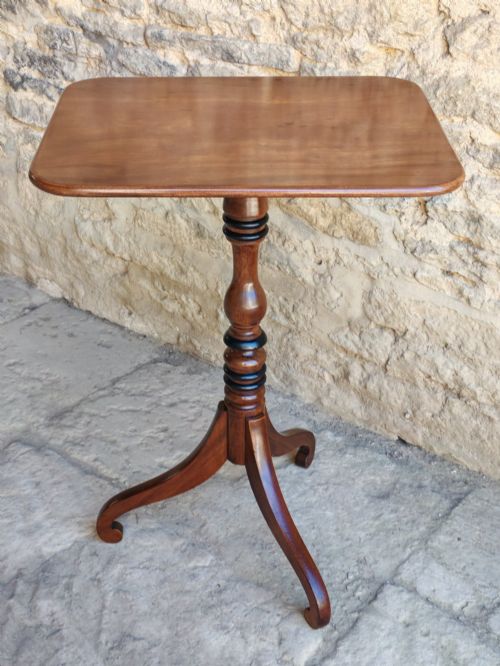
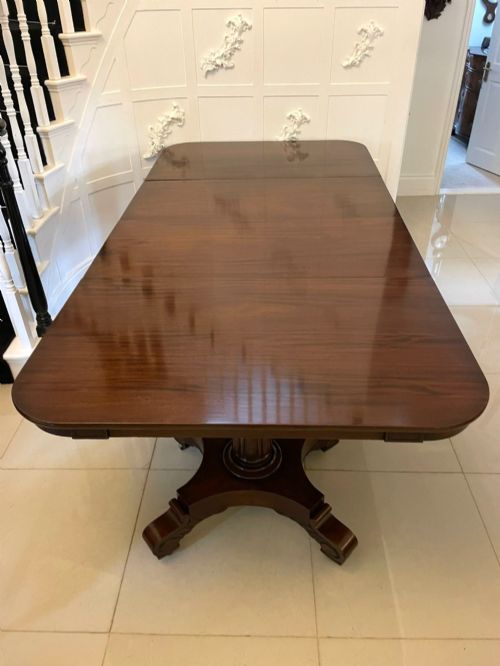
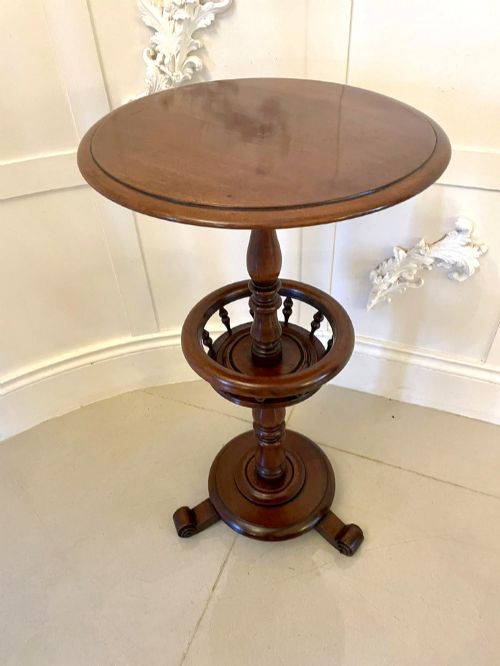
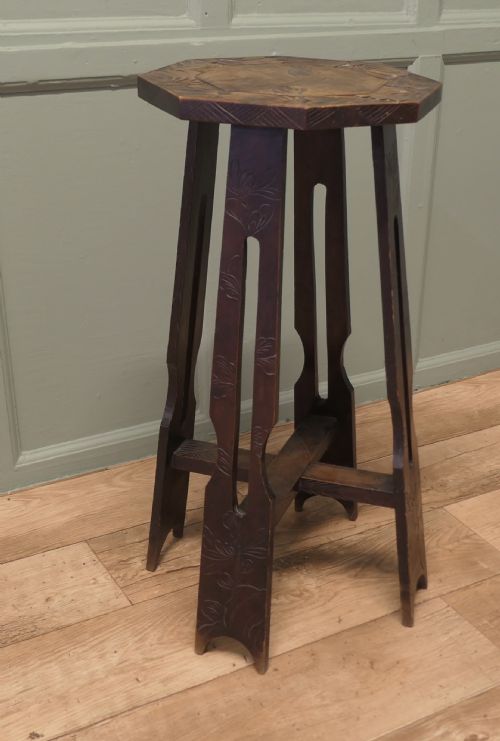
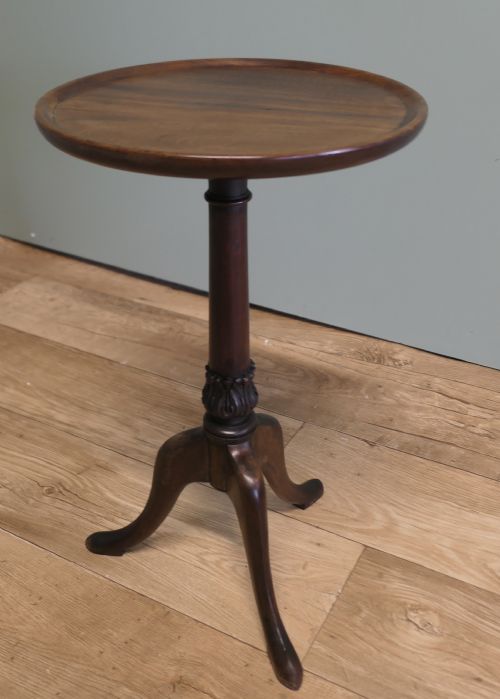
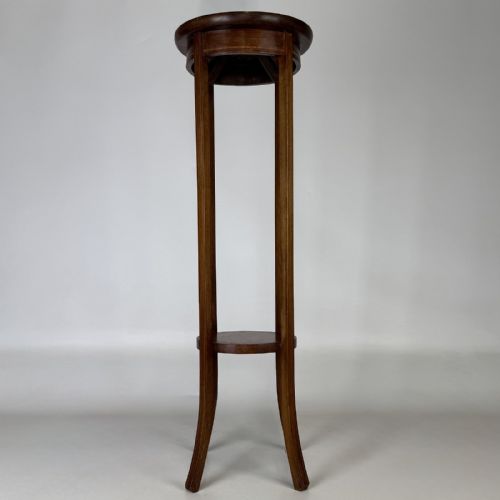
The antique wood pedestal table category covers a wide variety of forms found in domestic interiors, including wine tables, lamp tables, card tables, occasional tables, and large dining tables supported by one or more central pillars.
The pieces span several centuries and design movements, with examples appearing from the 18th century, Georgian, Regency, William IV, Victorian, and Edwardian eras.
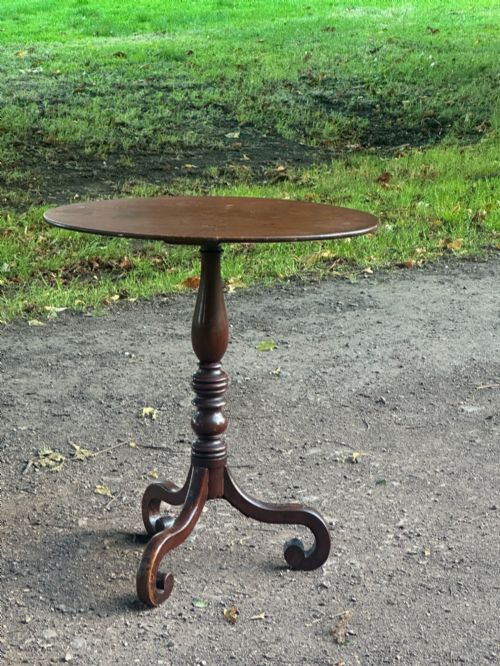
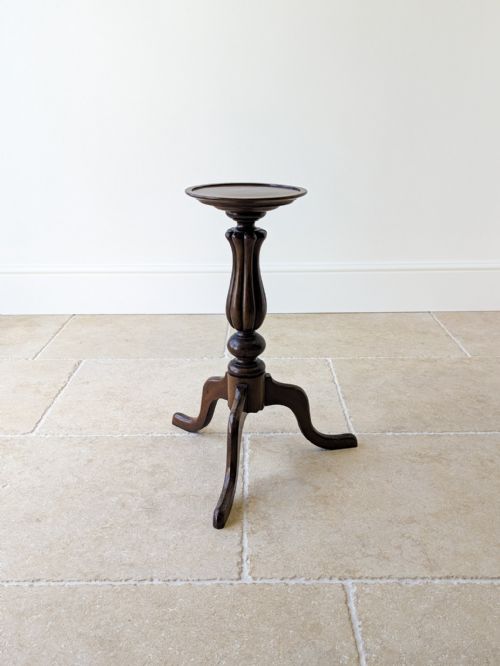
Buyers frequently encounter circular dining formats, tripod lamp stands, and fold-over card tables constructed to sit centrally within a room or against a wall.
Materials and Construction
Cabinet makers utilised dense hardwoods such as mahogany, rosewood, walnut, and oak, often selecting veneers with figured grain patterns like burr birch and flame mahogany to create visual depth on the top surface.
Structural stability relies on solid timber pillars, sometimes featuring carved tripod legs, triform bases, or brass paw feet, occasionally incorporating brass inlay or gilded brass mounts.
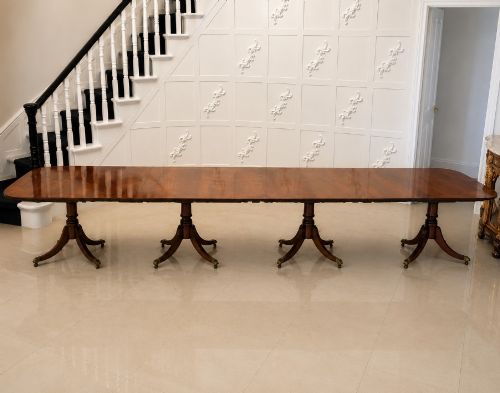
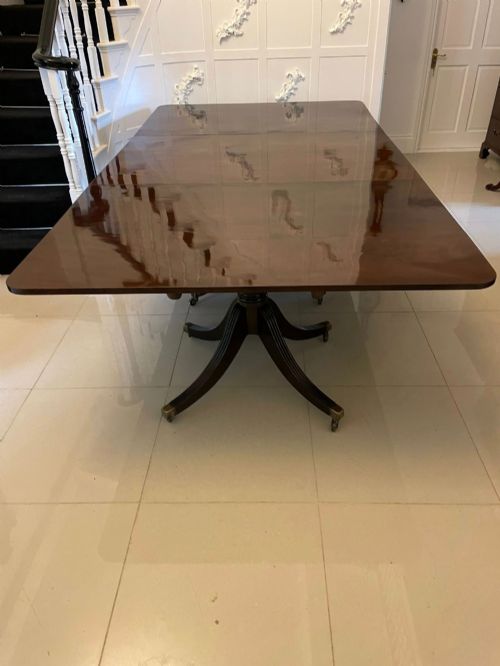
Form variations range from compact lamp and wine tables to extending dining tables supported by multiple pillars.
Assessment of Quality
The standard of a piece depends heavily on the choice of timber figure, the crispness of any carved detailing on the pedestal base, and the stability of the central pillar connection to the top.
Superior execution shows in the precision of brass inlay, the smoothness of tilt-top or fold-over mechanisms, and the harmonious proportion between the supporting column and the table top.
Gillows of Lancaster·Trollope & sons·George Bullock
The Antique Wood Pedestal Table Glossary
- Tilt-top table
- A table with a mechanism that allows the top to hinge into a vertical position when not in use. This design saved space in historical interiors.
- Triform base
- A three-sided supporting platform beneath a central pillar. It provides balanced weight distribution for circular tables.
- Centre table
- A freestanding table finished on all sides intended to stand in the middle of a room rather than against a wall.
- Piecrust edge
- A raised, carved decorative border shaped in curves around the perimeter of a circular table top.
Antique Wood Pedestal Table: Frequently Asked Questions
What rooms suit a pedestal table?
These tables adapt well to reception rooms, hallways, and dining spaces where a central pillar allows easier seating access around the perimeter.
Smaller wine and lamp tables fit beside seating, whilst larger multi-pedestal versions serve as dining centerpieces.
How do I identify a tilt-top mechanism?
Tilt-top examples feature a catch or release block underneath the top that disconnects the surface from the pillar.
This historical feature allowed owners to store the furniture flat against a wall when the room was needed for other purposes.
What timber types are most common?
Mahogany and rosewood dominate the surviving inventory, particularly from the Georgian and Victorian periods.
Walnut, oak, and exotic veneers such as burr birch also appear across various styles from the eighteenth to the early twentieth century.
How do single and multi-pedestal tables differ?
Single pedestal designs rely on a central column with tripod or triform feet, commonly seen on lamp, card, and breakfast tables.
Multi-pedestal versions distribute weight across two or three columns to support extended dining lengths.