
Antique Wood Lighting
Antique wood lighting brings warmth and architectural character to a room through floor lamps, table lamps, wall lights, and chandeliers crafted from oak, pine, walnut, and giltwood.
Antique Wood Lighting
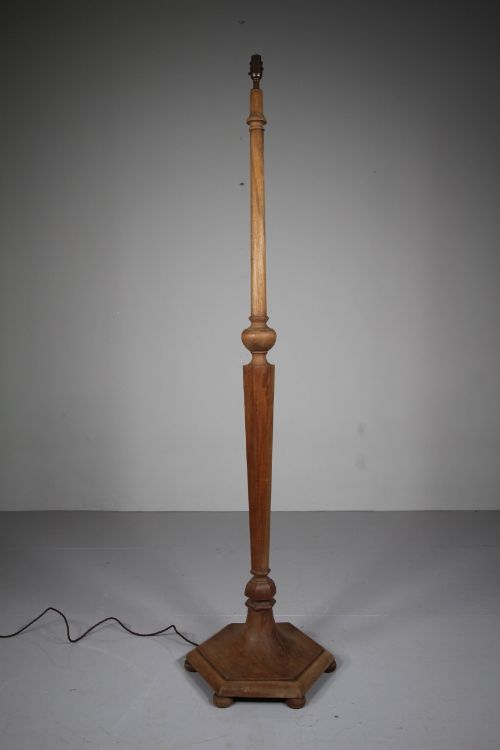
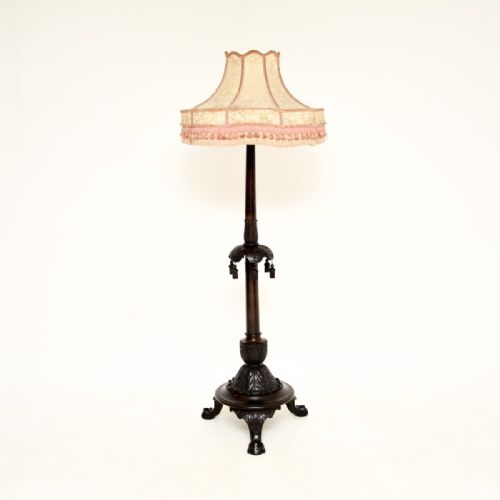
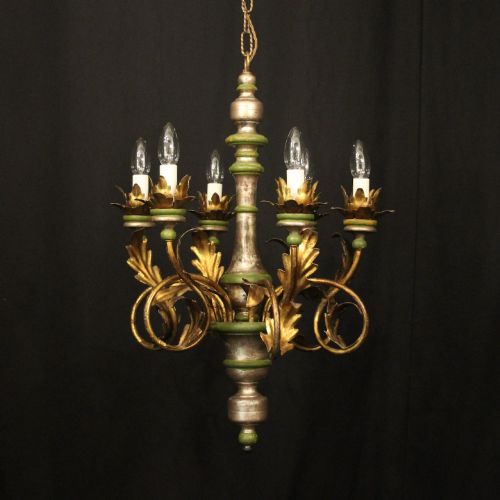
Antique wood lighting encompasses functional domestic illumination and candle stands turned into lamps, spanning periods from the Georgian era through the Victorian period and into the 1930s. Buyers searching for antique wood lighting encounter floor lamps, table lamps, wall lights, and chandeliers fashioned from various timbers and paired with metal, fabric, and glass.
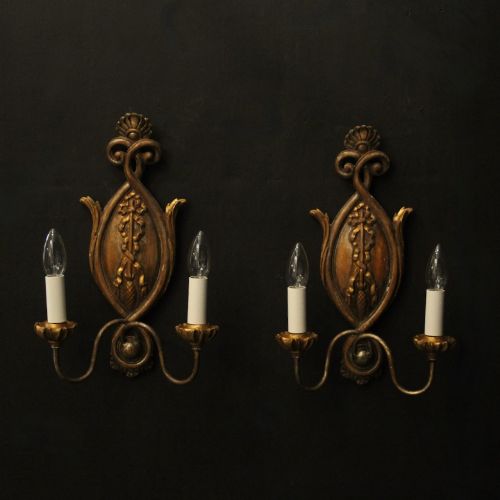
Origins vary from English country workshops to Italian studios producing Florentine giltwood arms. These items combine structural timber work with electrical or candle-holding fittings suited to domestic interiors.
How they were made
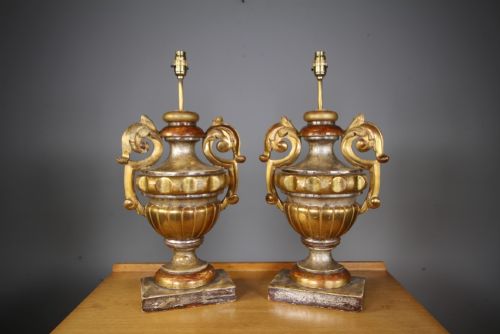
Craftsmen utilised native and exotic timbers including oak, ash, maple, walnut, and satin birch, shaping them by hand on lathes or carving them into classical and rustic forms. Pine and oak provide sturdy column structures for floor lamps and table standards, whilst giltwood involves the application of thin gold leaf over carved wood or gesso bases.
Joinery techniques depended on the period, employing turned sections, pegged joints, and carved details ranging from simple farmhouse turnings to elaborate Italian Baroque putti and Florentine scrolls. Metal components such as brass fittings and fabric shades frequently accompany the timber bodies to complete the illumination apparatus.
Listings feature oak, pine, walnut, and giltwood across periods spanning the Georgian era to 1930.
What varies in quality
Quality rests upon the crispness of the carving, the selection of the timber grain, and the integrity of the original construction. Fine examples exhibit carefully turned columns, well-preserved gilt or polished wood surfaces, and harmonious proportions without clumsy alterations.
Lighter or mass-produced later pieces lack the depth of hand-carved detail and dense timber weight found in earlier Georgian or Victorian standards and torcheres. The survival of original surface finishes and matching pairs elevates the desirability of wall lights and floor lamps.
Heals·Maple & Co.
The Antique Wood Lighting Glossary
- Torchere
- A tall decorative stand originally designed to hold a torch or candle, frequently converted into a floor lamp. These carved wooden columns showcase elaborate regional styles.
- Turned
- Shaped on a lathe by rotating the timber against cutting tools. This technique creates symmetrical columns and candlesticks from oak, mahogany, and ash.
- Chinoiserie
- European imitation of Chinese and East Asian artistic motifs, applied to lacquered lamp bodies. This style introduces vibrant ochre and decorated surfaces to wooden light bases.
Antique Wood Lighting: Frequently Asked Questions
How do I date an antique wooden floor lamp?
Dating relies on examining the turning style, timber species, and wiring methods used in the construction. Georgian and Victorian pieces show hand-tool marks and dense hardwoods, whereas 1930s items often feature Art Deco geometric lines or satin birch.
Original fixings and switches also help determine the era, though many lamps receive modern rewiring for safe home use.
Can I use modern lamp shades on antique bases?
Modern shades fit most standard lamp fittings provided the harp or carrier matches the vintage brass socket. Careful selection of shade fabric and scale ensures the proportion remains faithful to the original timber standard.
Matching the shade colour to accents in the wood grain enhances the overall visual balance.
What is the difference between a torchere and a floor lamp?
A torchere originates as a tall, slender candle-stand from the eighteenth or nineteenth century, which is frequently adapted for electricity. Standard floor lamps were generally designed from inception to house electrical wiring and heavier weighted bases.
Both provide elevated illumination but carry distinct historical joinery traits.
How do I care for giltwood wall lights?
Giltwood requires gentle dusting with a soft, dry brush to protect the delicate gold leaf finish from abrasion. Moisture and chemical cleaners damage the gesso and metallic surface layers permanently.
Keeping them away from direct heat sources prevents the underlying wood from splitting.