


Antique Walnut Book Stand
An antique walnut book stand organises volumes with rotating designs, sliding mounts and open shelves from Victorian and Edwardian makers.
Antique Walnut Book Stand
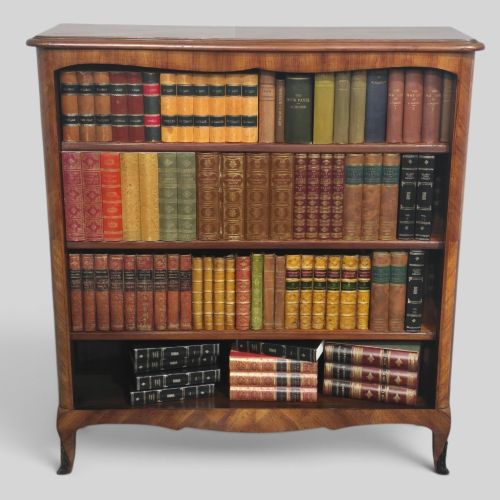
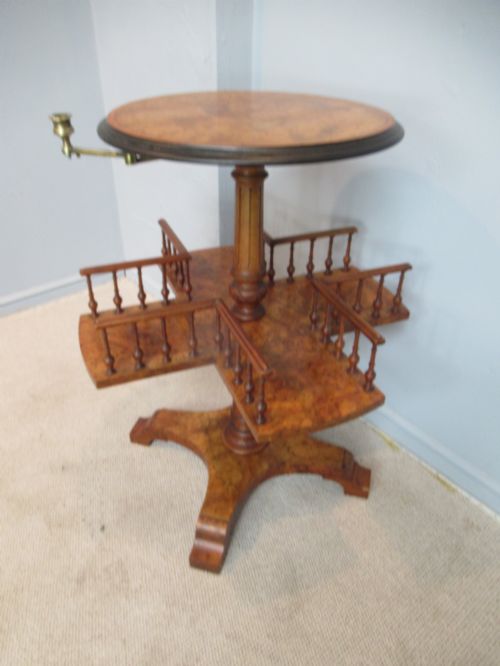
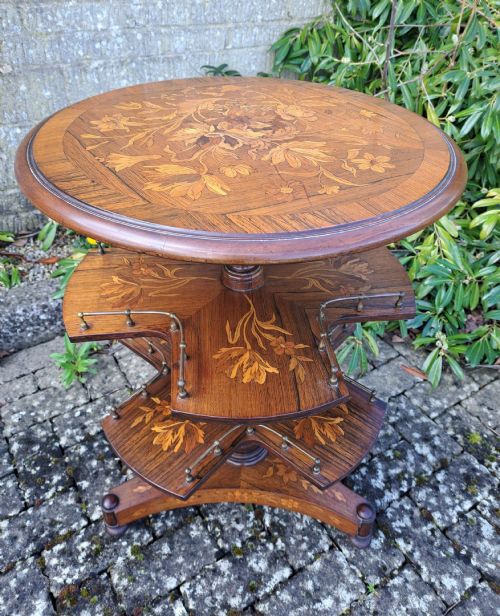
An antique walnut book stand encompasses revolving booktables, desk slides, music stands and library bookcases designed to keep working volumes close to hand. These pieces range from compact tabletop sliding bookends with brass mounts to multi-tiered floor-standing revolving bookcases produced during the Victorian and Edwardian eras.
The version most commonly encountered on this page is the revolving bookcase or table, alongside extending book slides fitted with brass ends. These items draw on periods spanning from the mid-nineteenth century through to the early twentieth century, utilising native and exotic variations of walnut.
How they were made
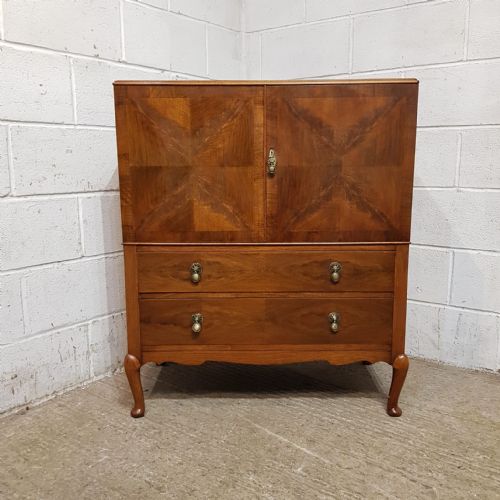
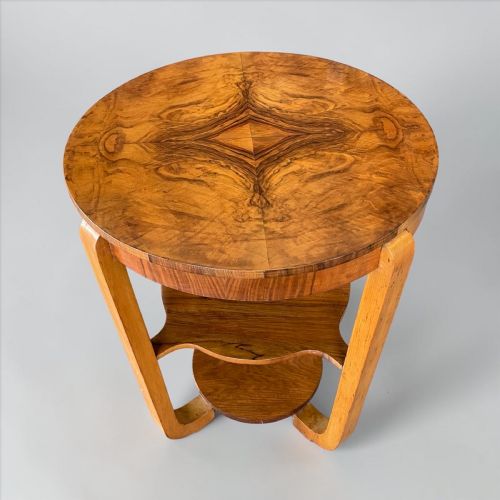
Cabinet makers utilised solid walnut, burr walnut and figured walnut veneers applied to secondary timbers, often embellished with fruitwood inlay, boxwood or marquetry details. The natural grain patterns of burr and figured walnut provide the primary visual interest across the surfaces of these stands.
Functional hardware plays a structural role, with cast brass mounts, hinges, sliding mechanisms and chrome fittings incorporated to allow booksides to expand or revolving tiers to turn smoothly.
Listings feature walnut book stands spanning the Georgian period, the Victorian era, and the Edwardian years.
What varies in quality
The distinction between standard production pieces and finer examples rests on the selection of timber veneers and the intricacy of decorative inlay. Heavily figured burr walnut and precise marquetry elevate a piece above plain veneered alternatives.
Mechanical complexity and hardware quality also separate standard items from superior works, such as smooth-action revolving mechanisms, heavy cast brass mounts and patented sliding book racks.
Maple & Co·Gillows·Betjemanns
The Antique Walnut Book Stand Glossary
- Burr walnut
- A prized timber harvested from walnut tree growths, featuring swirling, mottled grain patterns used for decorative veneer surfaces.
- Book slide
- An extending desk accessory with hinged or sliding ends designed to hold a small row of volumes upright.
- Revolving bookcase
- A rotating stand mounted on a spindle base that allows books to be accessed from multiple angles in a library or study.
- Marquetry
- The art of applying decorative pieces of wood veneer to a structure to form intricate floral or geometric patterns.
- Whatnot
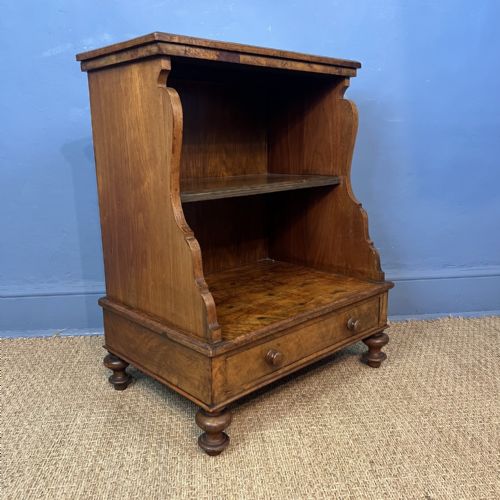
- A multi-tiered open shelf unit used for displaying books and ornaments, popular during the Victorian period.
Antique Walnut Book Stand: Frequently Asked Questions
How do revolving book stands work?
Revolving book stands rest upon a concealed internal spindle and bearing system that permits the upper tiers to turn freely in either direction.
This mechanism allows a reader to access a selection of volumes from a stationary seated position.
How do I care for walnut furniture?
Walnut furniture benefits from placement away from direct heat sources and strong sunlight to prevent the timber and veneer from drying out.
Regular dusting with a dry cloth helps preserve the polished finish of the wood.
Were these stands used in offices?
Libraries, studies and drawing rooms served as the primary locations for these stands, housing reference books and daily reading material.
Smaller desk accessories kept working volumes organised near writing tables.