

Antique Vitrine Cupboard
An antique vitrine cupboard brings glass-fronted elegance to any room, offering a considered space to display treasured ceramics and books.
Antique Vitrine Cupboard
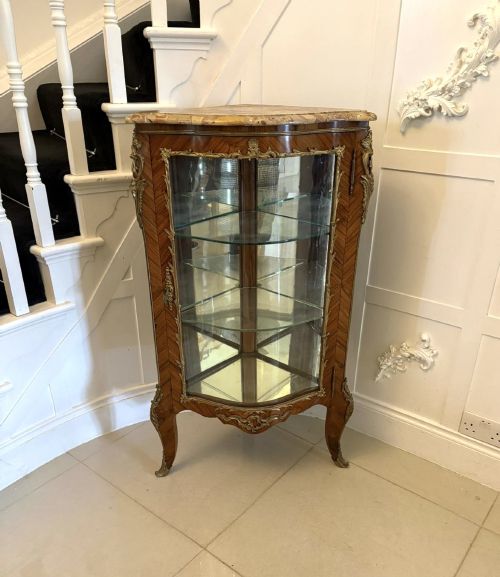
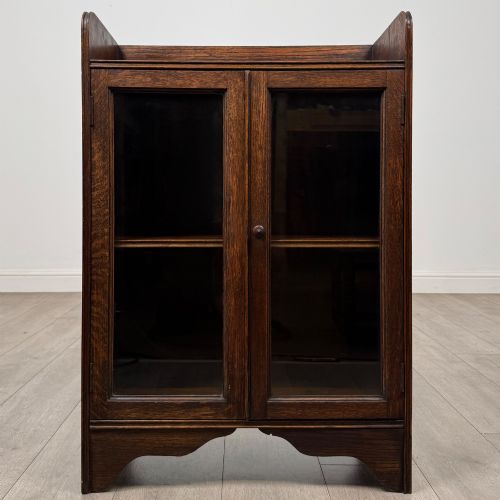
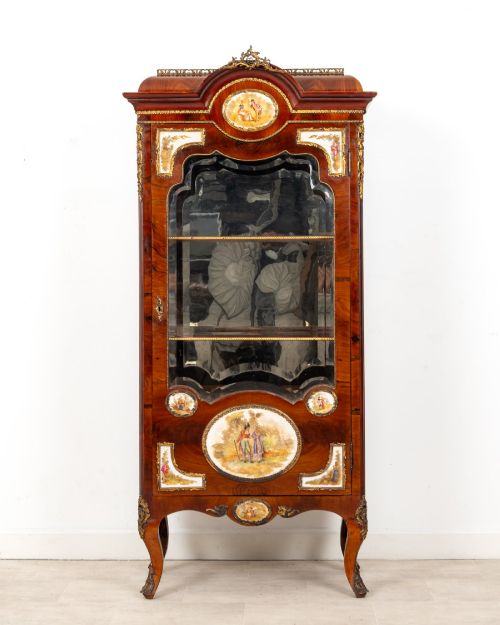
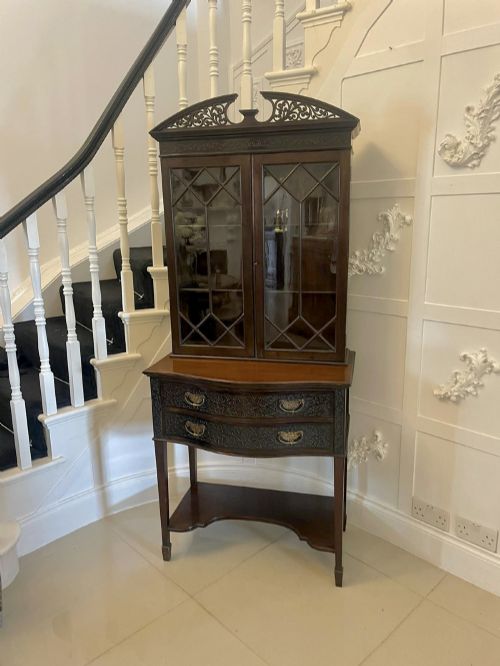
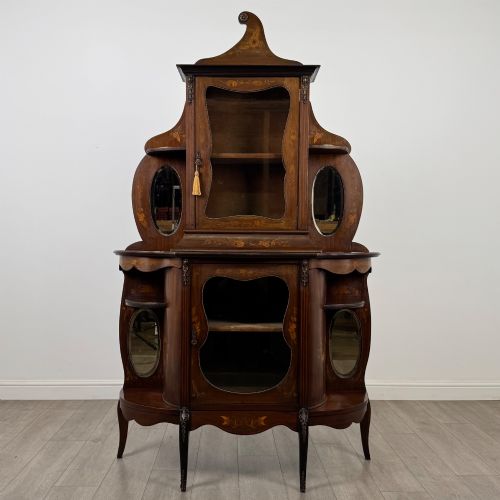
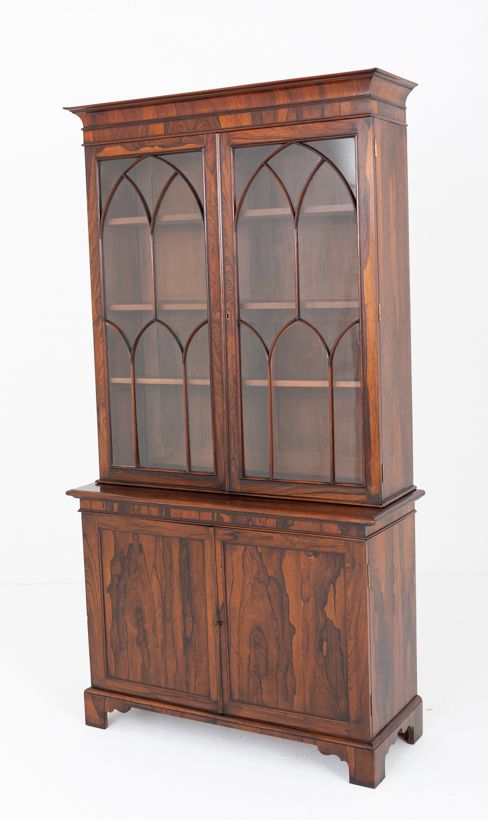
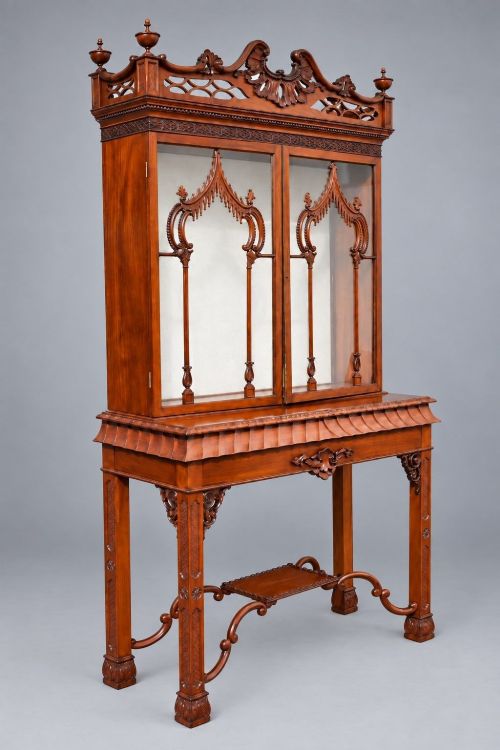
An antique vitrine cupboard is a glazed cabinet designed primarily for the display and protection of fine objects, drawing upon centuries of cabinet-making traditions. The pieces gathered under this description span formal display cabinets, corner cabinets, bookcases, and wall-mounted variations originating from periods such as the Georgian era, the Victorian age, and the Edwardian epoch.
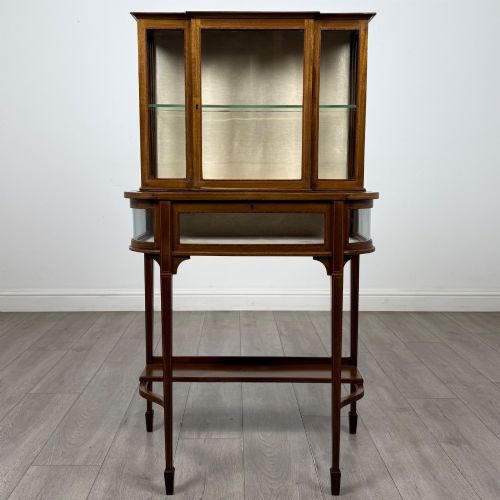
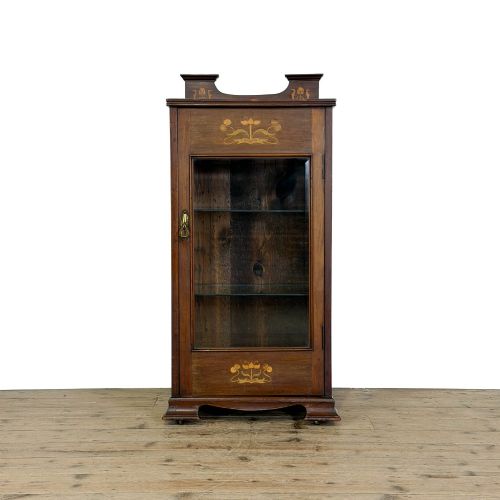
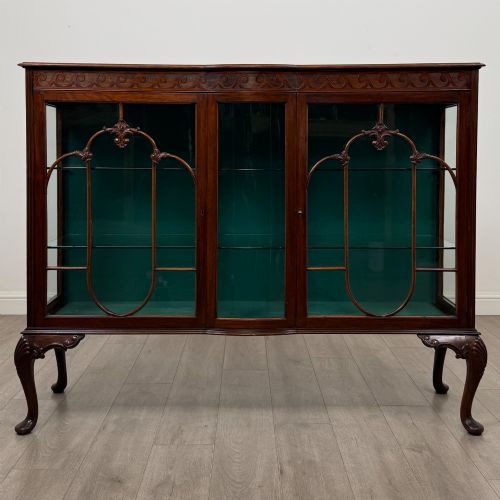
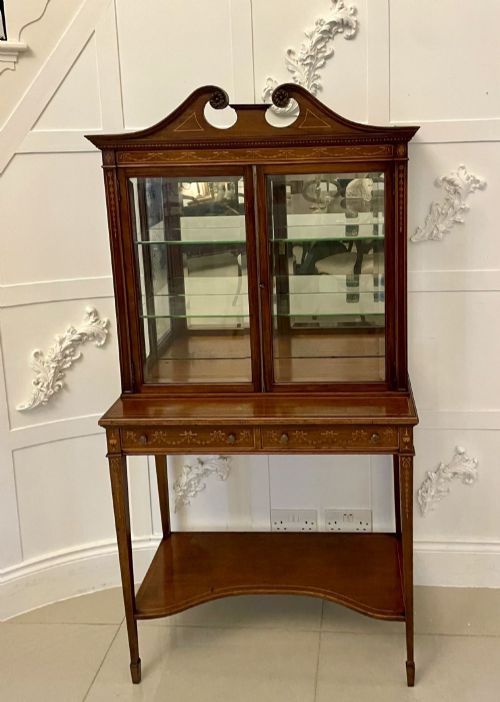
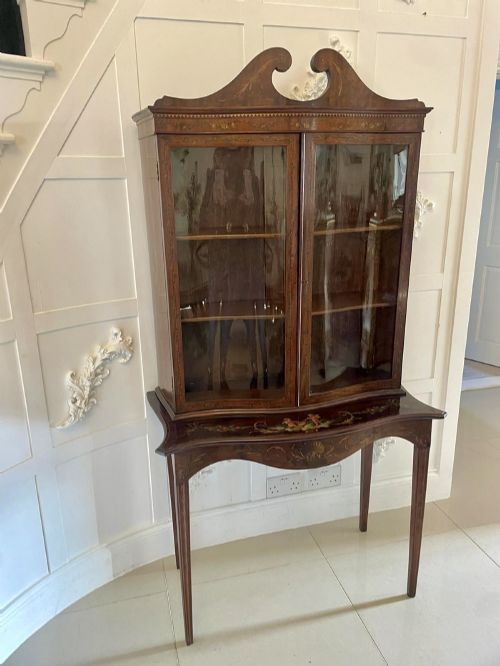
The version most commonly encountered on this page is the Edwardian or late Victorian mahogany display cabinet, often detailed with satinwood inlay or Sheraton Revival motifs. These upright glazed pieces frequently incorporate internal shelving and glass sides to flood the interior with light, housing collections behind single or double doors.
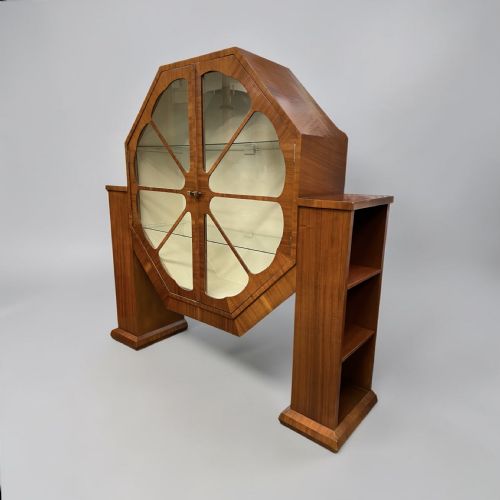
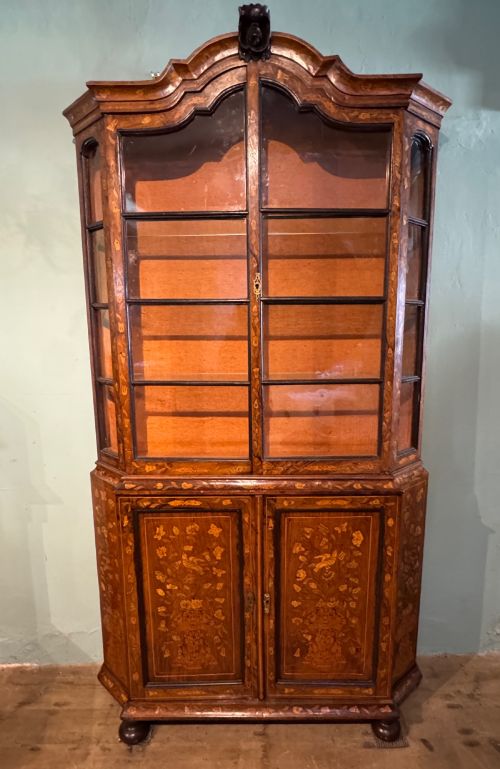
Beyond standard upright formats, the selection reaches into regional and stylistic diversities, including Dutch marquetry walnut pieces, Biedermeier rosewood designs, and occasional Art Deco forms. Whether standing upon a dedicated base, tucked into a corner, or combining shelving with cupboard storage below, each item reflects the domestic display priorities of its original period.
What varies in quality
The distinction between ordinary and superior examples rests upon the choice of timber and the precision of the cabinet work. Finer pieces employ deeply figured veneers, meticulous marquetry, and finely carved ornamentation executed by skilled hands rather than basic mechanical repetition.
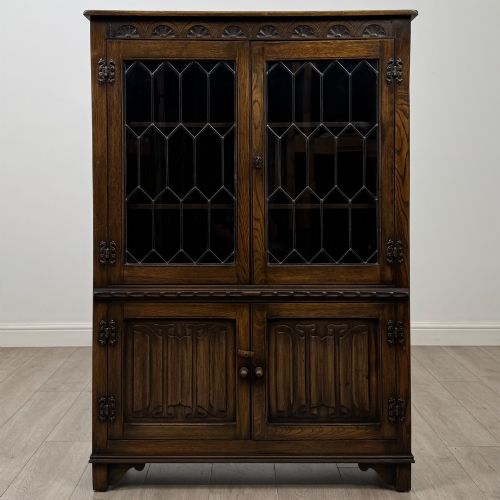
Some Edwardian cabinets hide their contents behind linenfold oak panels, keeping secrets from clumsy guests.
Jas Shoolbred·Edwards & Roberts
The Antique Vitrine Cupboard Glossary
- Vitrine
- A glass-fronted cabinet or case specifically designed for displaying fine objects and porcelain. This French term is frequently used interchangeably with display cabinet.
- Astragal
- A moulding profile used to hold panes of glass within a sash or door frame. Fine astragal bars divide the glazed area into smaller geometric sections.
- Marquetry
- The art of applying pieces of veneer to a structure to form decorative patterns and pictures. Makers often utilised various exotic and domestic woods to achieve tonal contrast.
- Sheraton Revival
- A late nineteenth and early twentieth-century design movement inspired by the neoclassical furniture of George Sheraton. These pieces typically feature light mahogany construction, satinwood inlay, and tapered legs.
- Biedermeier
- A central European style dating from the nineteenth century characterised by utilitarian comfort and clean lines. Walnut and rosewood veneers often take precedence over heavy carved ornamentation.
Antique Vitrine Cupboard: Frequently Asked Questions
What is an antique vitrine cupboard?
An antique vitrine cupboard is a glazed cabinet built to showcase and protect ornaments, books, or porcelain collections.
These pieces rely on glass panels and internal shelving to maximise visibility, distinguishing them from standard enclosed storage cupboards.
How were these cabinets used?
Historically, households used these cupboards in drawing rooms and parlours to display prized ceramics, silver, and curiosities.
They kept delicate items free from dust while allowing guests to admire the owner's collections.
How do I style one in a modern home?
Living with these cabinets involves using the internal shelves to curate a balanced arrangement of books, ceramics, or sculptural objects.
Allowing natural light to pass through the glass panels helps the timber frame sit comfortably alongside contemporary furniture.
How do I tell Edwardian pieces apart from Victorian ones?
Edwardian cabinets often feature lighter satinwood inlays, Sheraton Revival influences, and brighter mahogany tones reflecting a shift toward airier drawing-room aesthetics.
Victorian examples tend to display heavier carved mouldings, darker polished surfaces, and more robust structural proportions.