



Antique Valet Rack
An antique valet rack solves the daily friction of holding clothes with sturdy oak, mahogany, and brass.
Antique Valet Rack
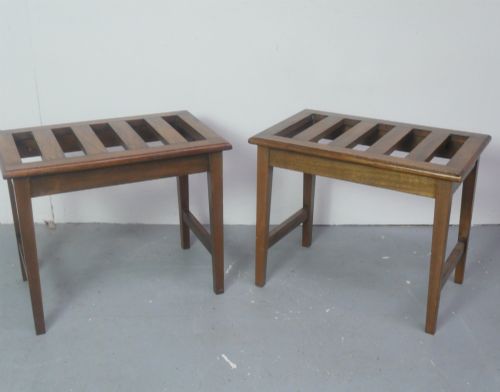
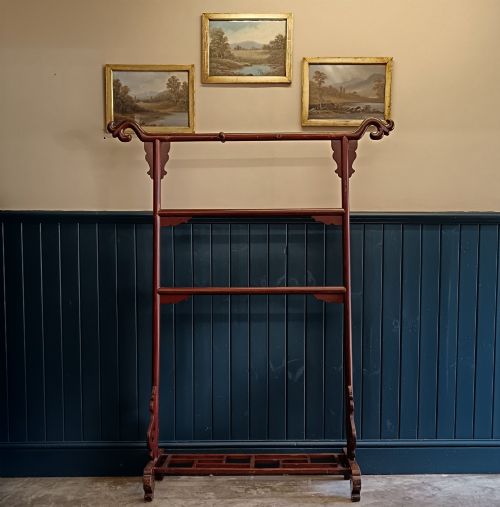
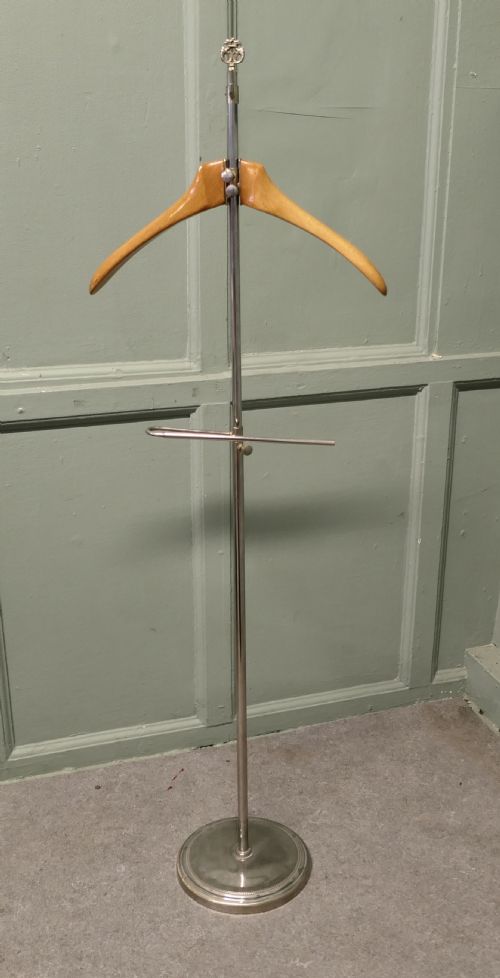
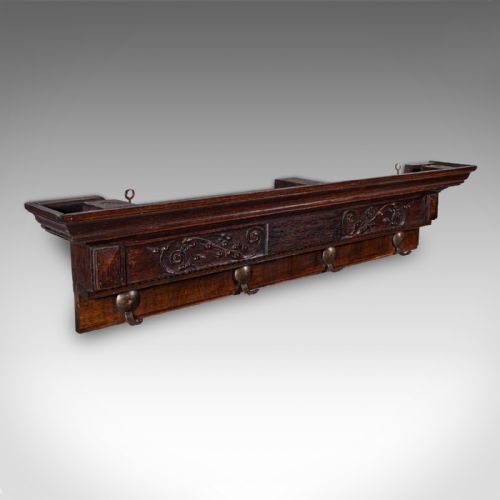
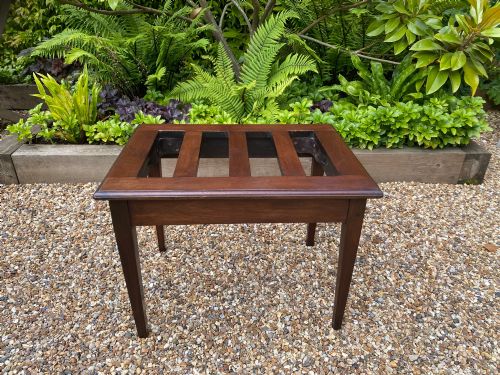
An antique valet rack combines the utility of luggage stands, clothes racks, and hall stands to keep garments organised in bedrooms and hallways. These pieces appear in Edwardian forms alongside Chinese Qing Dynasty examples, showing practical English country house utility and decorative carving.
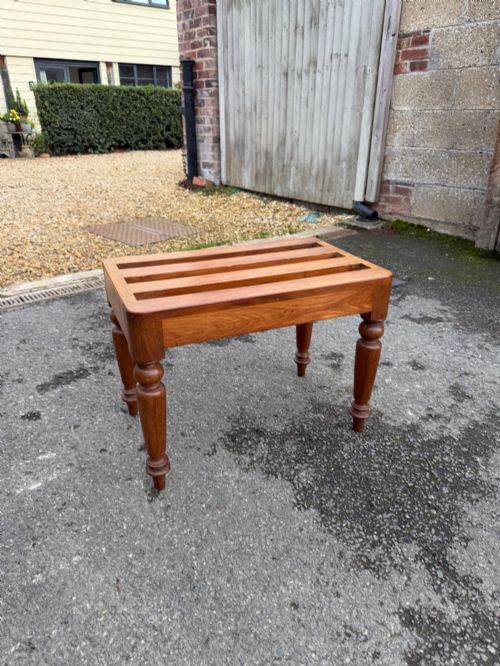
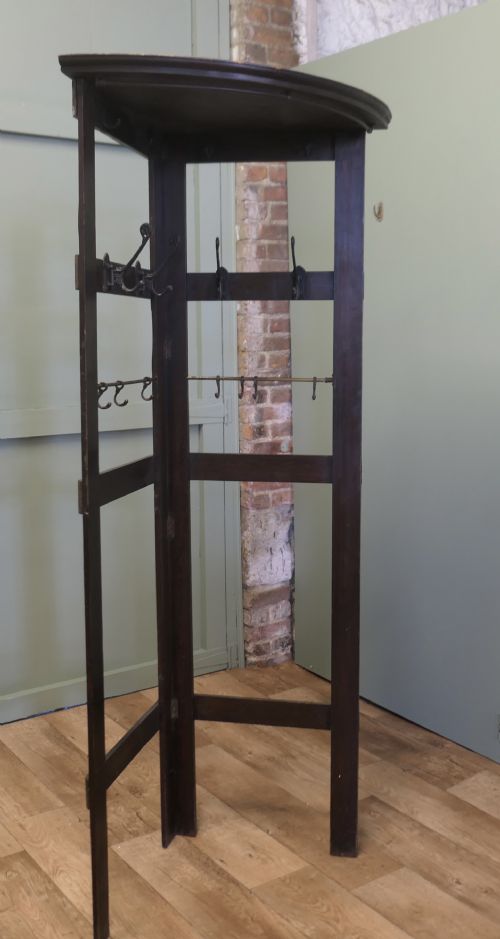
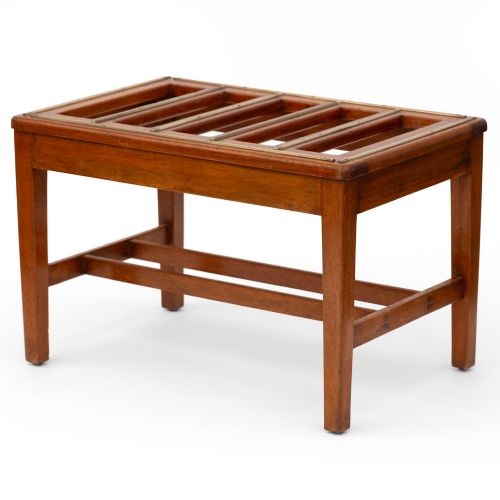
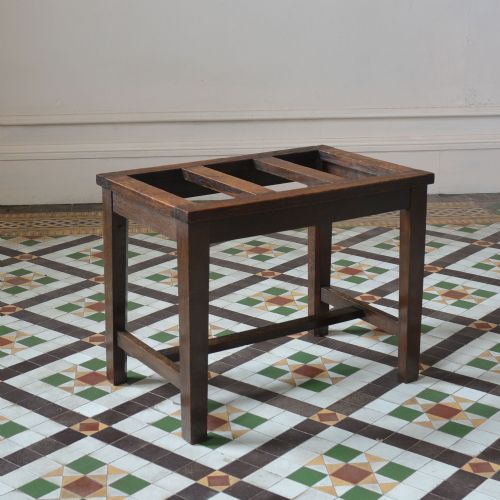
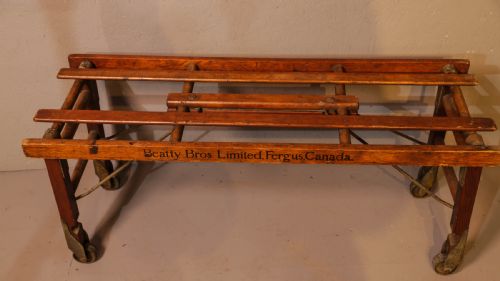
The items you are most likely to meet on this page include folding luggage stands in solid oak or mahogany, alongside wall-mounted hallway mirrors with integrated brass hooks. Makers from the Edwardian period utilised robust hardwoods to create portable folding sports wardrobes and clothes changing racks.
Beyond standard bedroom stands, the selection extends to robust hotel luggage stands bearing the provenance of former West End establishments. Every piece serves the fundamental purpose of holding coats, robes, and travelling baggage with period character.
How they were made
Joinery on these stands relies heavily on solid oak and mahogany, constructed to withstand the weight of heavy wool coats and packed luggage. Turned wooden supports and folding mechanisms demonstrate straightforward cabinet-making designed for portability and daily use.
Metal components introduce structural strength, utilising brass hooks for hanging garments and iron fittings on folding luggage stands. Chinese examples employ lacquered wood and intricate carving, contrasting with the plainer polished oak finishes typical of English country house utility.
Antique Valet Rack Retail Price Guide 2026
Typical asking prices for valet rack among the pieces listed under this phrase on Sellingantiques today, from the lower quarter to the upper quarter. They describe what is for sale here now, not the wider market.
Some luggage stands once carried the heavy bags of travellers staying in bustling West End hotels before finding a quieter retirement at home.
What varies in quality
The distinction between standard utility items and finer examples rests on material selection and origin, such as polished oak originating from West End hotels or detailed carving on Chinese Qing Dynasty pieces. Heavier hardwoods like solid mahogany and walnut elevate a simple luggage stand into a substantial furnishing.
Hardware execution also marks the grade of a piece, where heavy cast brass hooks and smoothly operating folding frames show superior workshop attention. Plain stained wood versions serve basic domestic functions, whereas matched pairs of walnut racks reflect a higher tier of domestic furnishing.
The Antique Valet Rack Glossary
- Luggage Stand
- A low folding or rigid frame designed for holding travelling trunks and bags at a convenient height. These folding stands are frequently constructed in oak or mahogany.
- Hall Stand
- A substantial piece placed in an entranceway to accommodate hats, coats, and walking sticks, often incorporating a mirror. Edwardian examples often feature multiple brass coat hooks.
- Qing Dynasty
- The final imperial dynasty of China, spanning from the seventeenth to the early twentieth century. Pieces from this period utilise lacquered wood and carved ornamentation.
- Edwardian Campaign
- A style reflecting portable and practical furnishings intended for travel or easy relocation. These items emphasise folding mechanisms and robust hardwoods like oak.
- Towel Rail Stand
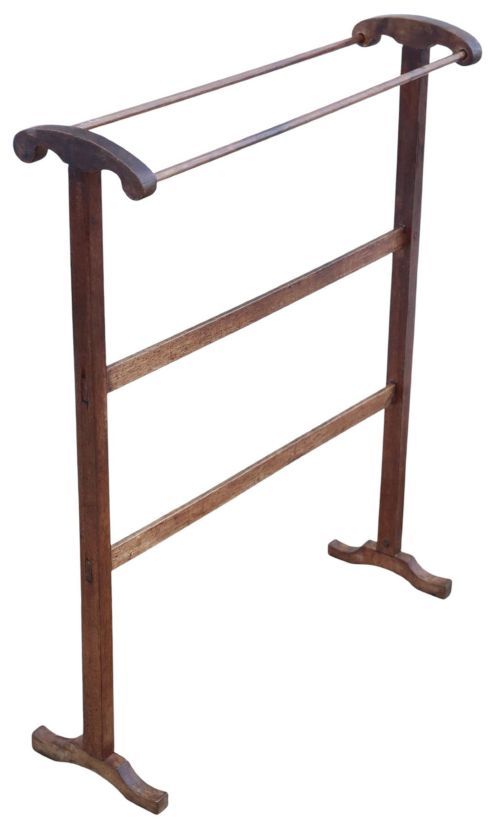
- A freestanding wooden frame utilised for hanging textiles and garments in bedrooms or bathrooms. They are typically built from turned oak or mahogany components.
Antique Valet Rack: Frequently Asked Questions
What is an antique valet rack used for?
These pieces serve as practical furniture for holding clothes, coats, and luggage in bedrooms and hallways. They provide accessible hanging space without requiring built-in wardrobes.
In period homes, they functioned as temporary stations for travelling bags or garments worn during the day.
How do I date an Edwardian valet rack?
Edwardian pieces generally date from the opening decade of the twentieth century up to the First World War. Look for characteristic solid oak construction, simple turned supports, and polished finishes.
Many pieces from this era also incorporate brass hooks and folding wooden frames designed for domestic portability.
Where were luggage stands placed in the home?
Luggage stands were traditionally kept in guest bedrooms to hold visitors' trunks and travelling bags off the floor. They offered a convenient surface for unpacking without bending down.
Hotel examples, such as those from West End establishments, served the same practical purpose for transient guests.
What materials are common on these racks?
Solid oak and mahogany form the primary wooden structures for most English pieces on this page. Brass and iron provide durable hardware for hooks, hinges, and folding brackets.
Chinese examples introduce lacquered wood and carved detailing, diverging from standard European utility designs.