
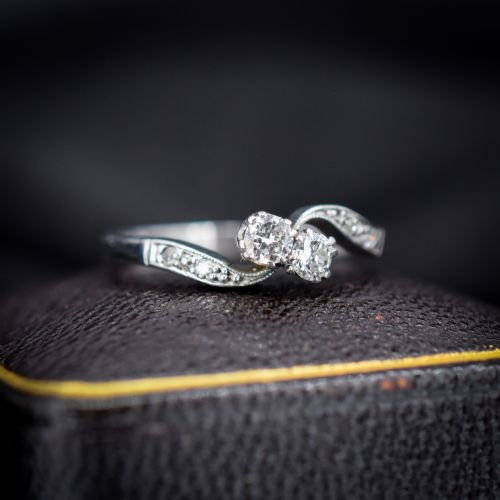
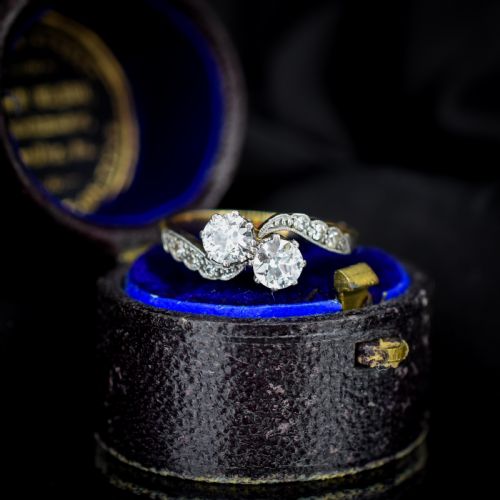
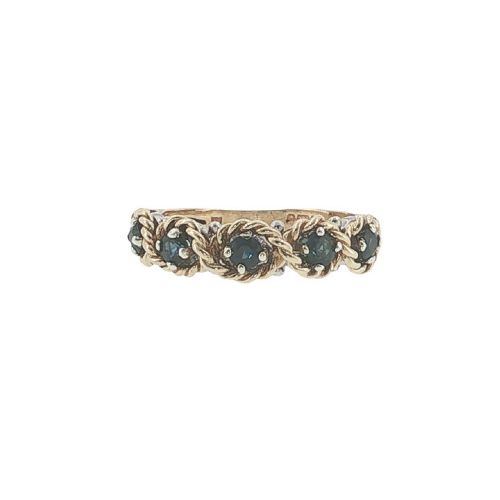
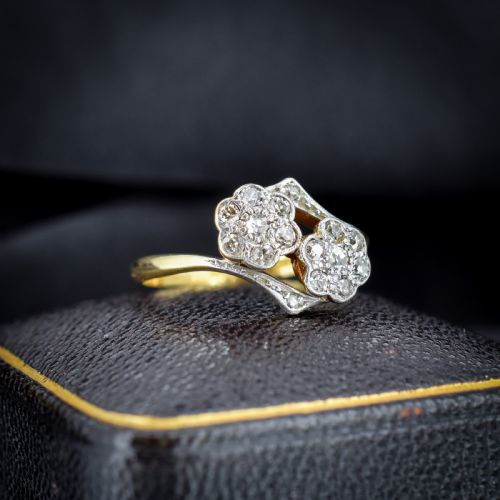



Antique Twist Ring
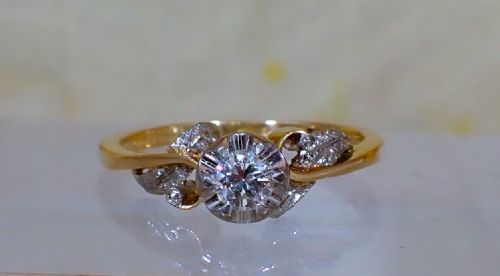
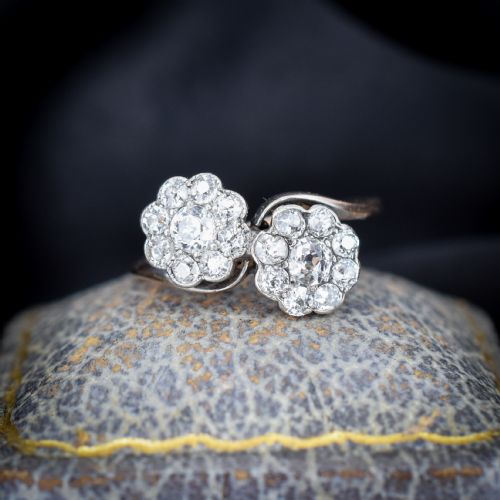
When you handle an antique twist ring, you hold a piece designed to wrap the finger with fluid lines, often pairing diamonds, sapphires, or opals in dynamic crossover settings.
Antique Twist Ring
Beyond jewellery, the broader design lineage occasionally incorporates architectural forms and domestic objects displaying similar helical motifs, though the rings remain the primary focus of this collection. These pieces cross diverse eras, spanning the late nineteenth century through mid-century revivals.
Makers utilised distinct regional styles, from delicate Edwardian platinum and gold cluster arrangements to bolder geometric Art Deco platings. Each era contributes specific structural traits, allowing collectors to trace shifting aesthetic priorities across decades of goldsmithing.
How they were made
Goldsmiths constructed these bands primarily using 18ct yellow gold, 18ct white gold, and platinum, frequently combining metals to highlight specific stones or geometric facets. Platinum emerged as a favored setting material during the Edwardian and Art Deco periods because its strength allowed for delicate, secure claw and bezel arrangements without bulk.
Stones such as old-cut diamonds, sapphires, and opals were hand-set into twisting shoulders that required precise metallurgical alignment to maintain tension and symmetry. Artisans shaped the shanks to taper smoothly into the central motif, ensuring the spiral or crossover effect appeared effortless despite the rigidity of the precious metals.
Beyond finger adornments, the archive proves that Victorians loved the twist motif so intensely they applied it to towering oak candlesticks.
What varies in quality
Quality rests heavily on the harmony of the design and the integrity of the stone setting, where superior examples exhibit seamless transitions in the metal and secure, flush mountings. Master goldsmiths achieved balanced proportions that kept the twist organic and comfortable against the adjacent fingers, avoiding heavy or blocky shoulders.
The selection of gemstones also dictates the standing of a piece, with well-matched sapphires, clean old-cut diamonds, and vibrant opals elevating the overall craftsmanship. Finer specimens retain crisp hallmarks and minimal wear to the underlying metal, demonstrating careful preservation through successive generations.
The Antique Twist Ring Glossary
- Toi et Moi
- A French term translating to 'you and me', describing a ring featuring two principal gemstones set close together to symbolise two souls entwined.
- Crossover
- A ring design where the shank splits or sweeps over itself to embrace the central stone from opposing directions.
- Old Cut
- A precursor to the modern brilliant cut diamond, characterised by a smaller table, higher crown, and hand-faceted symmetry typical of Victorian and Edwardian stones.
- Trilogy
- A setting comprising three principal gemstones, often interpreted symbolically to represent the past, present, and future.
- Bypass
- A ring style where the ends of the band pass each other rather than meeting centrally, creating an asymmetrical flow.
Antique Twist Ring: Frequently Asked Questions
How do I date an antique twist ring?
Dating relies on examining the metal combinations, stone cuts, and manufacturing techniques present in the setting. Edwardian pieces often combine yellow gold shanks with platinum-topped settings for delicate diamond work.
Art Deco examples shift toward geometric precision and all-platinum constructions. Hallmarks stamped inside the band provide definitive registration years and maker marks when legible.
Are platinum and white gold used differently?
Platinum was favoured in early twentieth-century jewellery for its tensile strength, which permitted ultra-fine wirework and secure claw settings without adding weight. White gold emerged as a desirable, accessible alternative that offered a similar silvery hue.
Examining the patina and weight helps differentiate the two metals. Platinum develops a soft, durable finish over time, whereas white gold highlights the crisp brilliance of rhodium plating.
How should I care for an antique ring?
Antique rings require gentle handling due to their age and delicate claw settings. Avoid wearing them during manual labour or heavy physical activities to protect the structural integrity of the twist.
Professional cleaning by a specialist jeweler ensures that old-cut stones and delicate shoulder metals remain secure. Regular inspections prevent unexpected stone loss.