
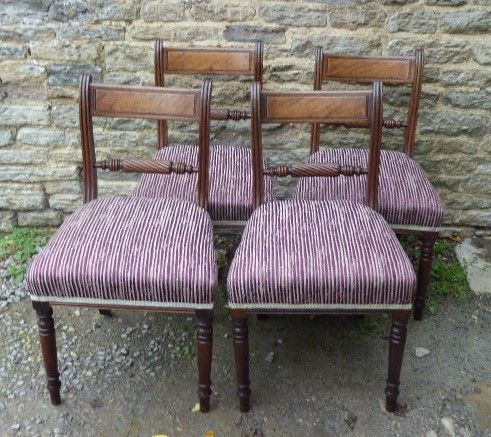
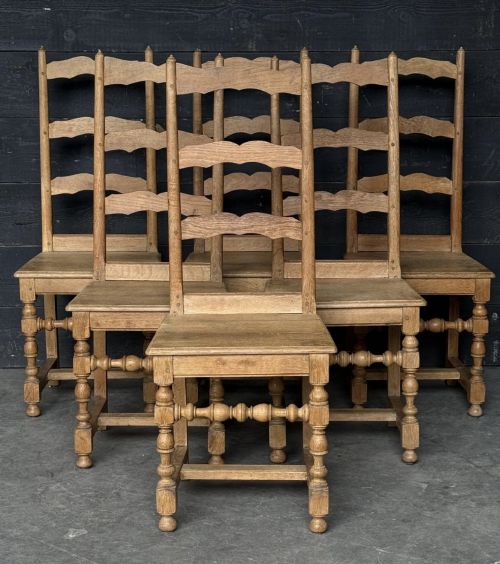
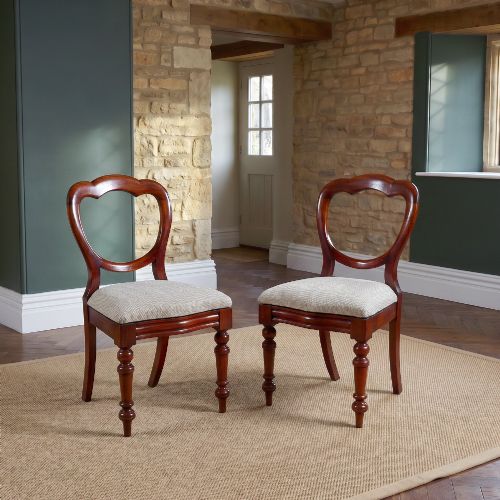
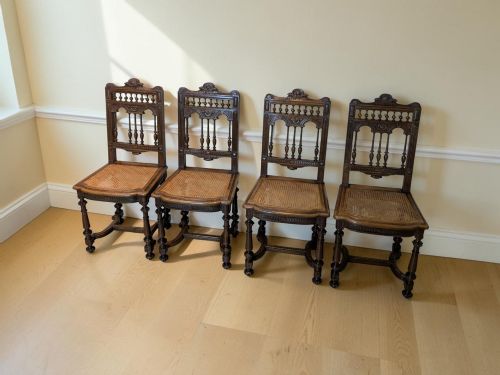
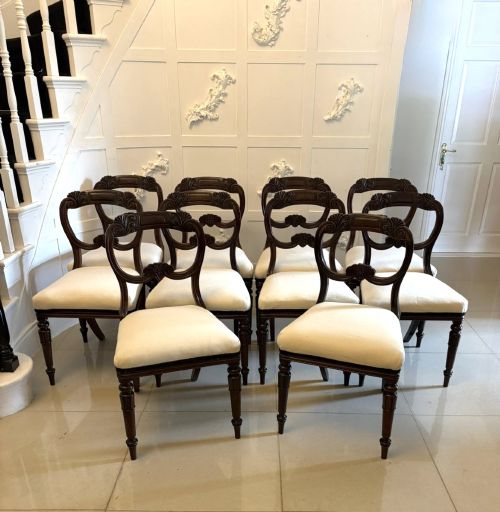
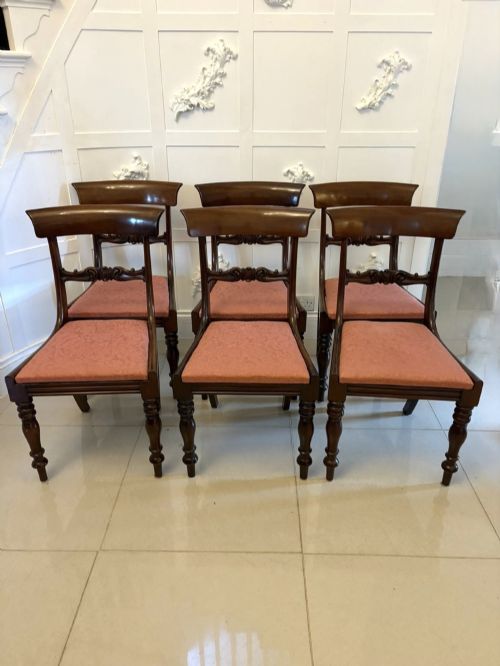
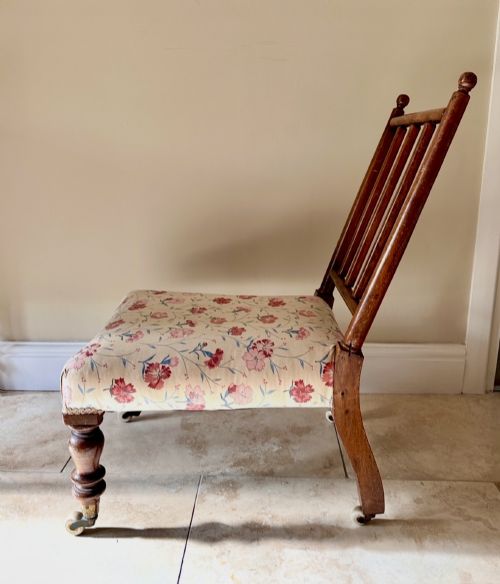
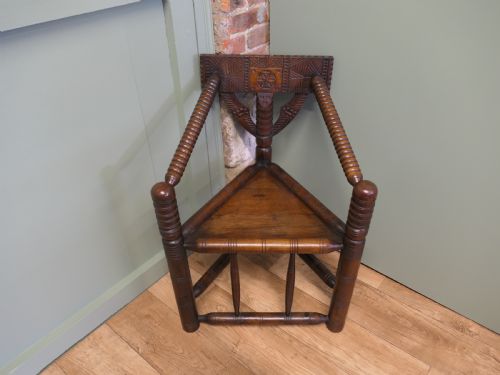
Antique Turned Wooden Chair
An antique turned wooden chair brings tactile warmth and enduring domestic utility to any interior.
Antique Turned Wooden Chair
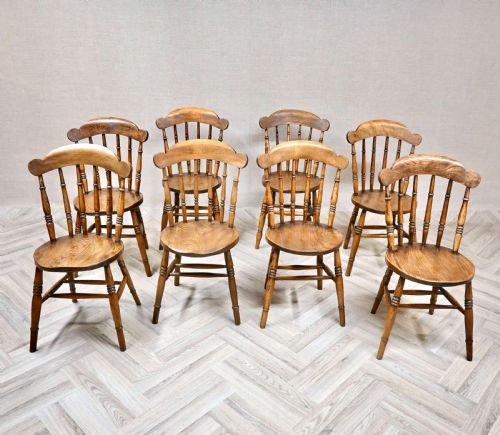
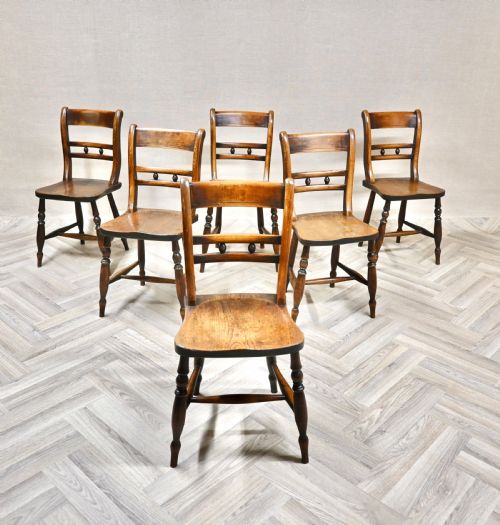
The selection frequently includes country armchairs, captain's chairs, and rocking chairs originating from English rural workshops. Woods such as elm, ash, beech, and oak dominate the selection, often paired with rush or timber seats.
Regional variations appear across the inventory, ranging from Thames Valley Windsor designs to stick-back and wheel-back forms. Buyers find single accent pieces as well as matched sets intended for dining spaces.
Materials and Construction Techniques
Cabinetmakers and rural artisans utilised contrasting native timbers, frequently combining bent ash or beech for structural bows and spindles with solid elm for comfortable, dished seats. Turning lathes shaped spindles and legs, relying on pegged mortise and tenon joints to secure the framework without modern adhesives.
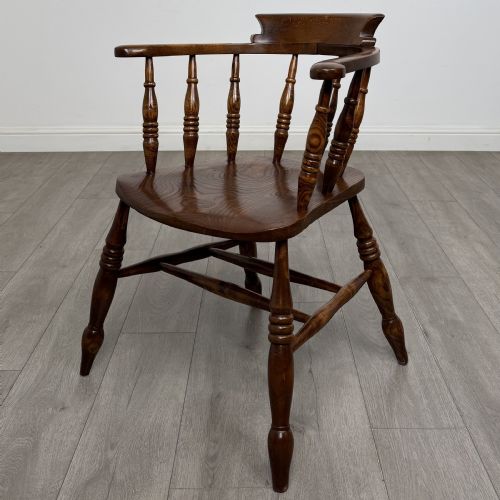
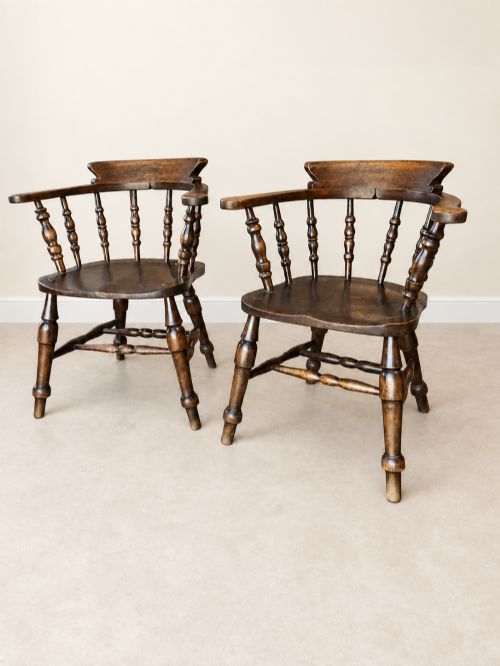
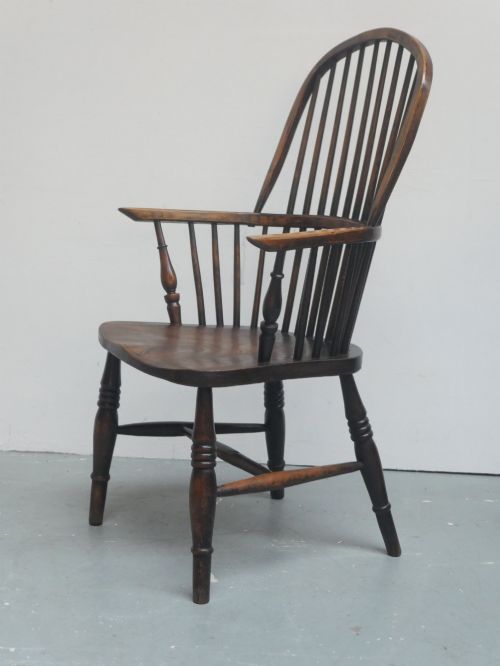
Bobbin and spindle turning created decorative yet rigid structural components, whilst steam-bending achieved the characteristic curved armrests and back rails of Windsor and smokers bow designs. Finishing involved natural wax polishing or oiling that allowed the grain of the oak, mahogany, birch, or walnut to show through years of handling.
Listings feature turned wooden chairs spanning the eighteenth, nineteenth, and early twentieth centuries, utilising native hardwoods like elm, ash, and beech alongside mahogany.
Distinctions in Quality and Execution
Quality separates chairs retaining their original timber patination and structural integrity from those compromised by aggressive sanding or replaced components. Superior examples display crisp turning details on legs and stretchers that have survived generations of sitting without excessive wear or loose joints.
The choice of materials dictates refinement, with dense fruitwoods, yew, or figured mahogany denoting higher status seating, whereas utilitarian kitchen chairs relied on sturdier, plainer elm and beech. The depth of the saddle seat carving and the balance of the spindle proportions further distinguish master-built seating from standard vernacular production.
Morris & Co·Philip Webb·J Spencer
The Antique Turned Wooden Chair Glossary
- Windsor chair
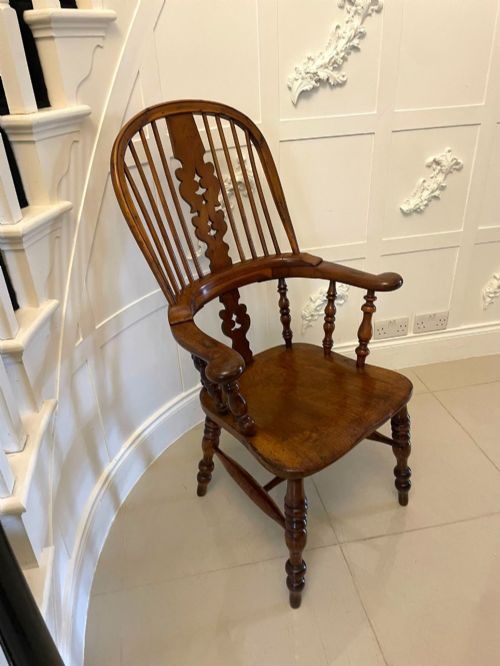
- A wooden chair constructed with a solid timber saddle-shaped seat into which the legs and back spindles are directly fitted. These chairs often feature a bowed backrest supported by vertical spindles.
- Smoker's bow
- A low-backed Windsor armchair designed for smoking rooms and parlours, typically featuring a continuous curved armrail resting on short spindles above an elm seat.
- Bobbin turning
- A form of woodturning on a lathe that produces a series of rounded, bead-like shapes resembling spools of thread. This technique appears frequently on seventeenth and eighteenth-century joined furniture.
- Captain's chair
- A sturdy wooden armchair with a rounded low back designed for office or domestic use, frequently constructed with a combination of ash and elm.
- Rush seat
- A seating surface woven from dried marsh rushes or sedges to form a strong, patterned matting. This traditional method provides a resilient and slightly flexible platform.
Antique Turned Wooden Chair: Frequently Asked Questions
How do I identify a Windsor chair?
A Windsor chair is defined by its thick wooden seat into which the legs and back components are wedged rather than connected through a traditional frame. Look for vertical spindles surrounding the sitter and a bentwood bow forming the upper backrest.
These chairs rely on structural rigidity provided by turned under-stretchers linking the legs. The wood selection often combines elm for the seat with ash or beech for the bent parts.
How should I care for an antique wooden chair?
Maintain antique turned wooden chairs by keeping them away from direct heat sources and sudden humidity changes that cause timber to split. Apply a microcrystalline wax periodically to nourish the surface and preserve the historic patina.
Avoid harsh chemical cleaning agents that strip natural oils from the wood. Gentle dusting with a soft, dry cloth protects the finish during everyday use.
Can I use these chairs for daily dining?
Many nineteenth-century dining and kitchen chairs remain sturdy enough for regular daily seating when joints are secure. Inspect the structural stability of the legs and stretcher connections before putting them into heavy service.
Rush or wooden seats handle everyday use well, provided moisture is kept away from the organic materials. Pairing antique chairs with a modern table adds character to a contemporary dining space.