




Antique Tiered Canterbury
An antique tiered canterbury is a practical holder for folios and journals, combining display shelves with divided compartments for a handsome room centrepiece.
Antique Tiered Canterbury
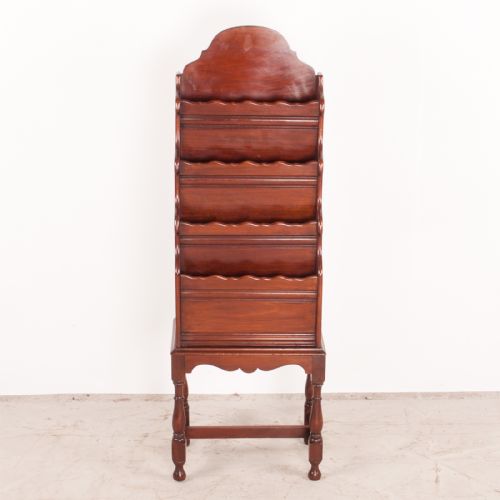
When you search for an antique tiered canterbury, you are looking at multi-functional furniture designed to hold sheet music, periodicals, and books while offering display tiers above. These hybrid pieces merge the compartmentalised base of a traditional stand with the open shelving of a whatnot or etagere.
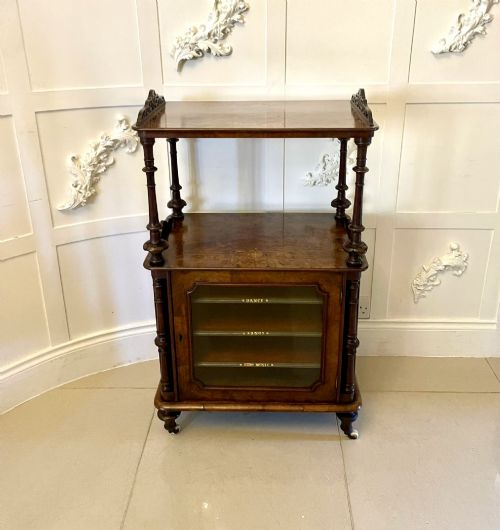
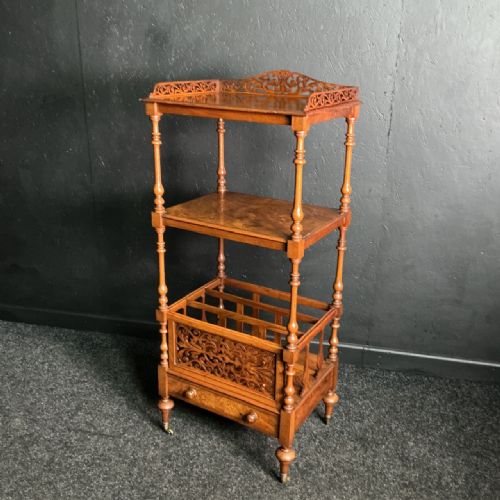
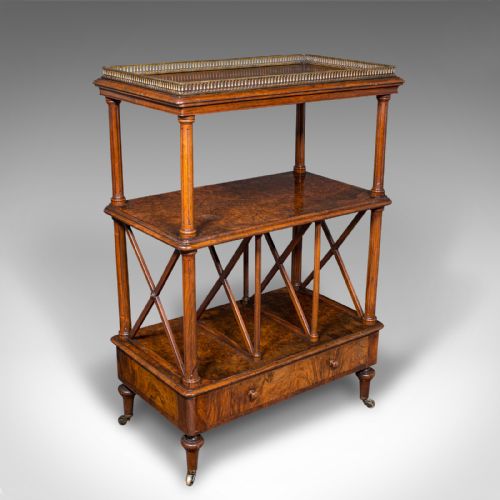
The version you are most likely to meet on this page is a Victorian example in burr walnut or mahogany. These pieces often feature partitioned sections for papers alongside drawers or upper display platforms supported by slender turned columns.
Origins span the nineteenth century, taking in Regency origins and evolving through Edwardian and later periods. Forms frequently overlap with music cabinets, lamp standards, and occasional tables, reflecting how versatile these tiered items proved in nineteenth-century interiors.
Materials and construction
Cabinet makers utilised richly figured hardwoods such as burr walnut, mahogany, and rosewood to construct these stands. These timbers were selected for their grain pattern and stability when fashioned into slender uprights and delicate pierced fretwork.
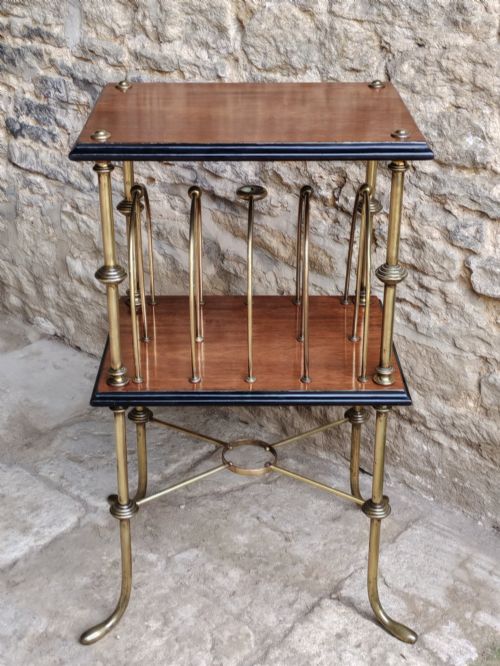
Brass castors, handles, and gallery rails appear frequently across the pieces, providing functional movement and structural contrast to the dark woods. Ceramic castors and glass elements also emerge in the physical record.
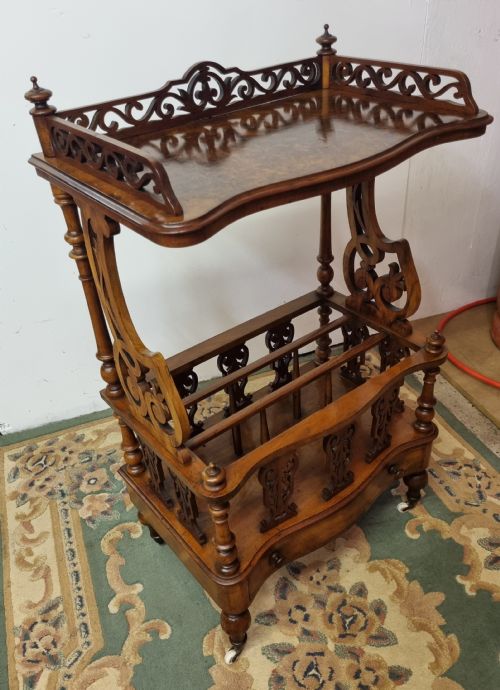
Inlay and carving mark the execution of finer examples, where contrasting veneers and ebony stringing decorate the drawers and tiers. Pierced fretwork panels form the partitions of the lower sections, requiring precise hand-sawing.
Antique Tiered Canterbury Retail Price Guide 2026
Typical asking prices for tiered canterbury among the pieces listed under this phrase on Sellingantiques today, from the lower quarter to the upper quarter. They describe what is for sale here now, not the wider market.
Listings demonstrate that burr walnut and mahogany are the predominant timbers used for these tiered stands across the Victorian period.
What separates the grades
The choice of timber veneer fundamentally dictates quality, with highly figured burr walnut and rich rosewood occupying the upper tiers of craftsmanship. Plain mahogany and later twentieth-century interpretations demonstrate simpler construction without the decorative ambition of mid-Victorian pieces.
Detailing in the fretwork and hardware marks the distinction between standard production and superior execution. Fine hand-pierced partitions, intricate ebony inlay, and original brass castors demonstrate a higher tier of workshop output.
Structural integration of the tiers also varies, as multi-functional pieces combining music cabinets, drawers, and display shelves require more complex joinery than straightforward single-purpose racks.
The Antique Tiered Canterbury Glossary
- Canterbury
- A low stand fitted with divisions for holding sheet music or books, often combined with shelves or a drawer. It evolved in the late eighteenth century and remained popular through the Victorian era.
- Whatnot
- An open set of shelves for displaying ornaments, books, or curiosities, standing on upright supports. They typically feature three or more tiers.
- Etagere
- A piece of furniture consisting of a set of open shelves for displaying small objects. The term is often used interchangeably with whatnot in nineteenth-century contexts.
- Burr walnut
- Timber taken from the warted excrescence of a walnut tree, yielding highly decorative swirling grain patterns. It was favoured by Victorian cabinet makers for veneering prominent surfaces.
- Fretwork
- Ornamental design work consisting of perforated patterns cut through wood. This technique provides decorative lightness to the partitions of magazine racks.
Antique Tiered Canterbury: Frequently Asked Questions
What is an antique tiered canterbury?
An antique tiered canterbury is a hybrid piece of furniture combining divided vertical slots for papers or music with open display shelves above. They bridge the gap between storage racks and decorative etageres.
These pieces were produced primarily during the nineteenth and early twentieth centuries in timbers such as walnut, mahogany, and rosewood.
How were canterburys used originally?
Originally designed to hold folios of sheet music near a piano or music stand, these furnishings quickly adapted to hold newspapers, periodicals, and books. The upper tiers served to display ornaments or house writing materials.
In period drawing rooms, they offered accessible storage that could be moved about on castors as required.
How do I style a canterbury in a modern room?
These versatile stands function well beside sofas or armchairs to hold current magazines, or as side tables in a study. The upper tiers provide a surface for small lamps, ceramics, or framed photographs.
Their narrow footprints allow them to fit into alcoves or smaller spaces where bulkier cabinetry would overwhelm the room.
How can I tell Victorian pieces from later ones?
Victorian examples frequently utilise burr walnut or rosewood veneers, featuring hand-turned supports and hand-pierced fretwork divisions. The presence of drawer construction details, such as hand-cut dovetails, points to nineteenth-century manufacture.
Later pieces from the Edwardian period or the twentieth century tend to feature simpler mahogany construction and machine-cut elements.