



Antique Table Striker
These antique table striker pieces combine functional bell-ringing mallets and desktop match holders, offering solid period charm for the home.
Antique Table Striker
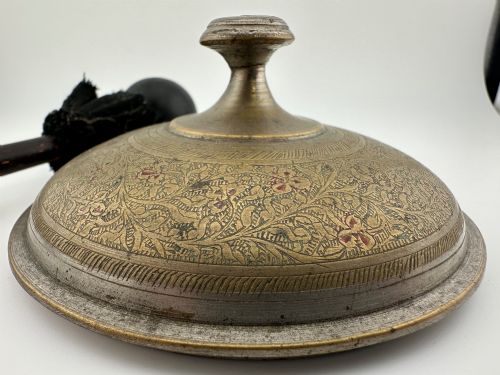
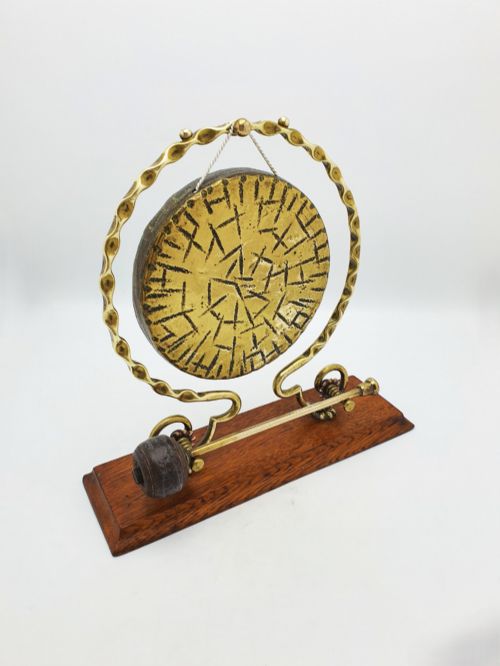
An antique table striker encompasses both handheld wooden mallets used for tabletop dinner gongs and desk accessories designed to ignite matches. The examples found here span the late nineteenth century through to the nineteen-thirties, covering Victorian, Edwardian, and Art Nouveau periods.
The most common forms on this page are brass dinner gongs mounted on wooden bases alongside tabletop match strikers made from glass and silver. These objects served practical domestic roles in calling diners to meals or providing a ready flame in the study.
Origins range from English workshops to Anglo-Indian and Chinese export pieces, reflecting diverse global influences in nineteenth and twentieth-century interiors.
Materials and construction
Maker construction relies heavily on cast brass, sterling silver, and carved woods such as oak and mango wood. Metal components are frequently paired with glass, cord, and felt to create stable bases and resonant gongs.
Techniques combine metal casting and engraving with stonework such as onyx and lapis lazuli. Stoneware and precious metals are utilised in bespoke novelty items, showing careful mounting and silver gilding.
Antique Table Striker Retail Price Guide 2026
Typical asking prices for table striker among the pieces listed under this phrase on Sellingantiques today, from the lower quarter to the upper quarter. They describe what is for sale here now, not the wider market.
Assessing quality
Quality rests upon the fineness of the metal engraving and the precision of the woodwork joining the base to the gong. Superior pieces feature detailed hand-carved motifs and solid mounts rather than simpler, mass-produced frames.
Materials dictate distinction, with sterling silver mountings, semi-precious stones, and textured glass marking out the finer examples from standard brass and oak items.
George Betjemann
The Antique Table Striker Glossary
- Dinner Gong
- A suspended metal disc or bowl struck with a handheld mallet to announce meals. They range from small tabletop versions to large carved wooden frames.
- Match Striker
- A desktop accessory featuring a textured surface designed to ignite strike-anywhere matches. They often incorporate glass, silver mounts, or ceramic bodies.
- Vesta Case
- A small pocket or tabletop box used for holding safety matches or wax vestas. These frequently feature hinged lids and integrated striking surfaces.
- Silver Gilt
- Silver that has been coated with a thin layer of gold. This technique provides the appearance of solid gold while utilising a strong silver base.
- Aesthetic Movement
- A late nineteenth-century design style emphasising visual beauty over narrative or moral themes. Items in this style often incorporate simplified forms and exotic decorative motifs.
Antique Table Striker: Frequently Asked Questions
What is an antique table striker?
An antique table striker refers to either the handheld mallet used with a dinner gong or a desktop match-striking container. These items were common household accessories in the nineteenth and early twentieth centuries.
They combine utility with decorative craftsmanship, utilising materials like brass, silver, glass, and carved wood to suit dining rooms and studies.
How were dinner gongs used?
Dinner gongs were placed on dining tables or sideboards and struck with a matching mallet to signal that a meal was served. They produced a resonant tone that carried through large Victorian and Edwardian homes.
The handheld strikers were kept nearby on dedicated hooks or resting on the wooden bases of the gongs.
How do I date an Edwardian striker?
Edwardian pieces date from the reign of King Edward VII between nineteen-0-one and nineteen-10. Hallmarks on silver mounts or associated registration numbers often provide exact year markers.
Stylistic cues such as Art Nouveau curves or specific wood types like oak also help anchor these pieces to the early twentieth century.
Where should I display a table striker?
Table strikers suit sideboards, entrance hall tables, or office desks where their materials can be easily appreciated. Match strikers work well alongside other desktop collectables, while gongs form striking sculptural centerpieces.
Ensure wooden bases and delicate glass surfaces are kept away from direct heat sources and excessive moisture.