
Antique Table Desk
An antique table desk is a functional writing surface designed for domestic workspace, combining period craftsmanship with everyday utility.
Antique Table Desk
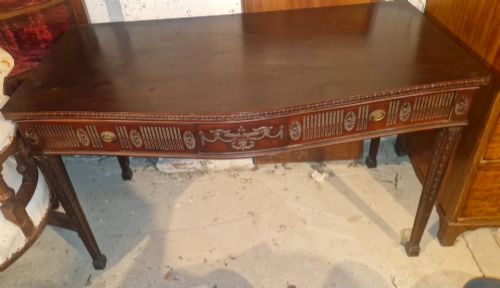
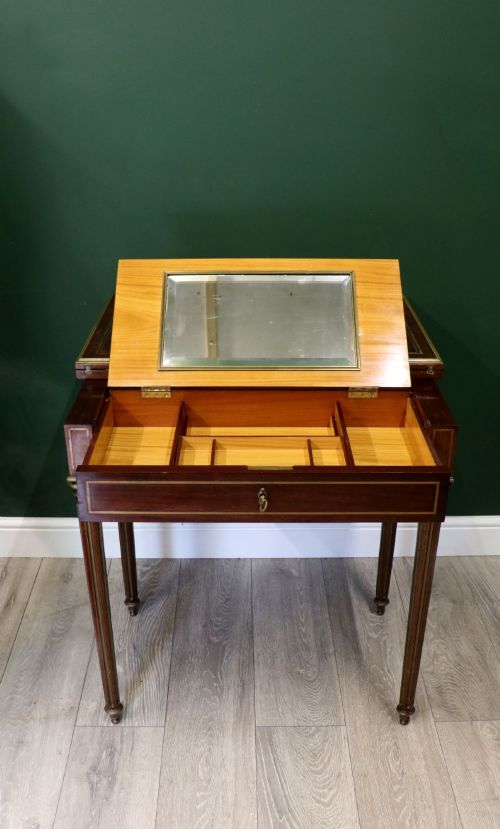
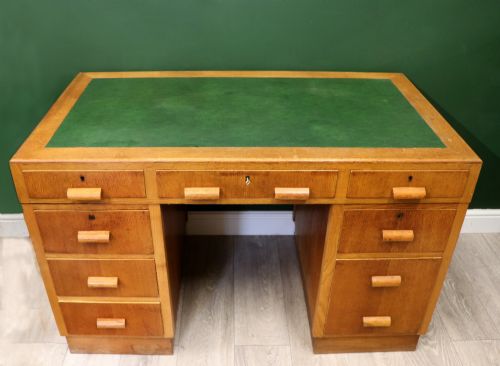
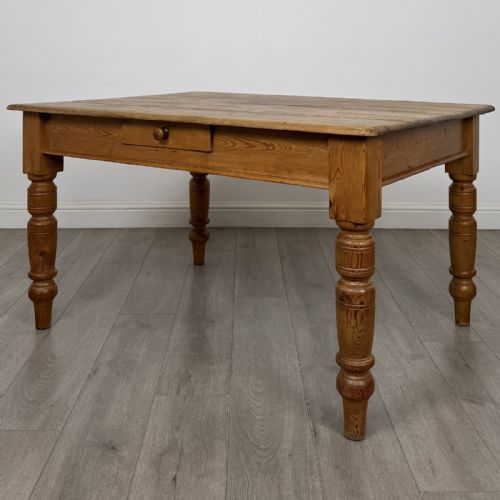
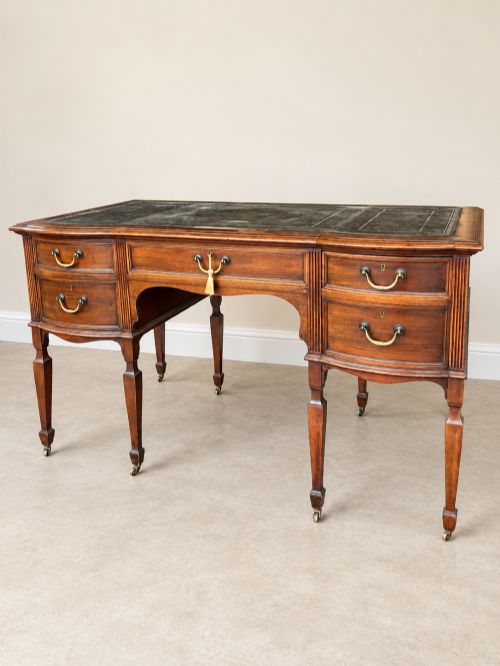
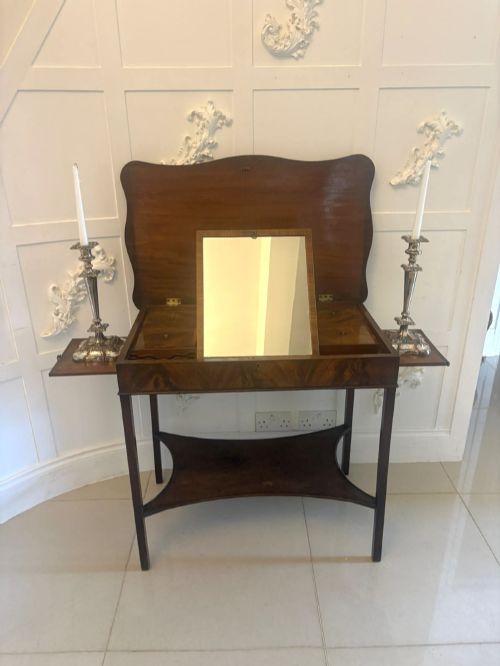
When buyers search for an antique table desk, they encounter diverse forms ranging from compact writing tables to twin pedestal desks. These pieces span periods from the eighteenth century through the Edwardian era, reflecting shifting domestic habits.
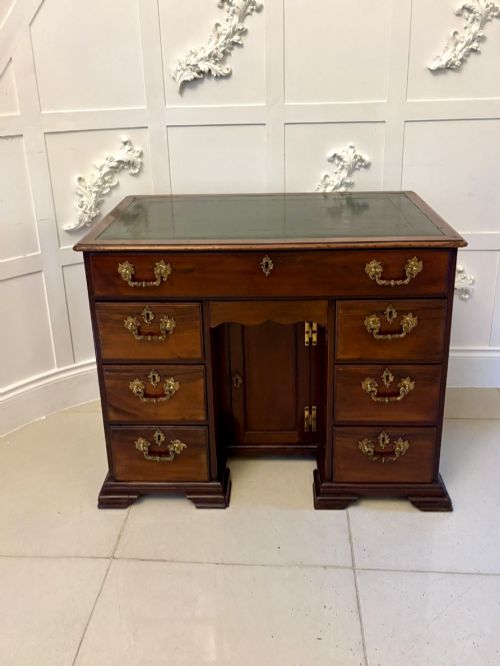
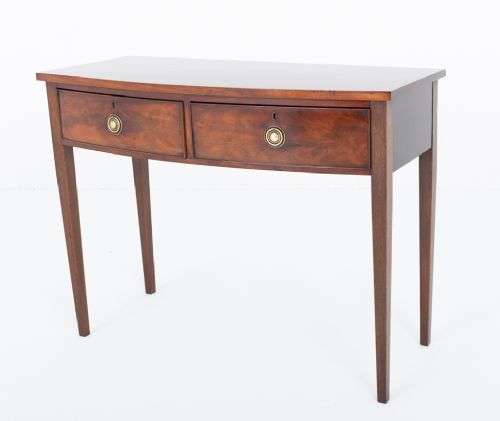
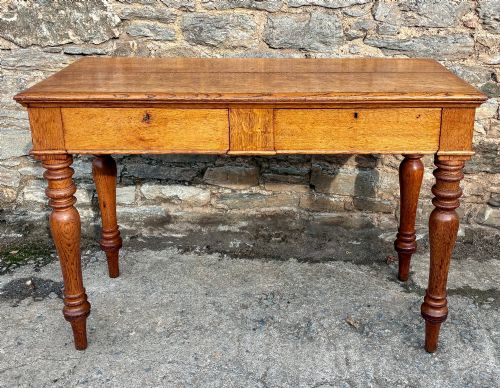
Mahogany and oak dominate the surviving examples on this page, often accompanied by burr walnut surfaces. Writing tables and pedestal desks provide the primary configurations for working surfaces.
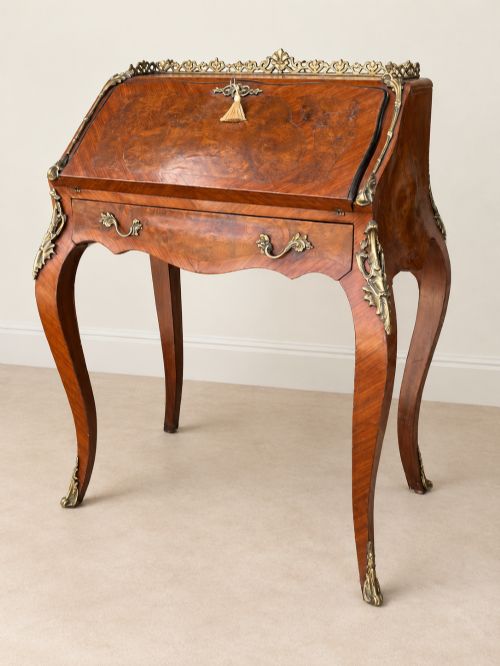
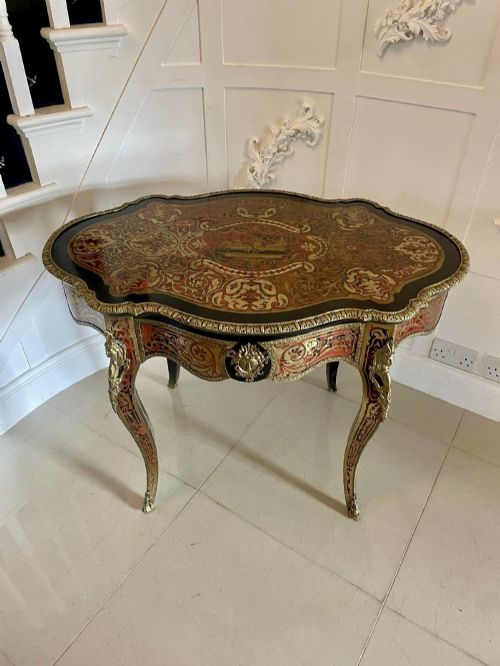
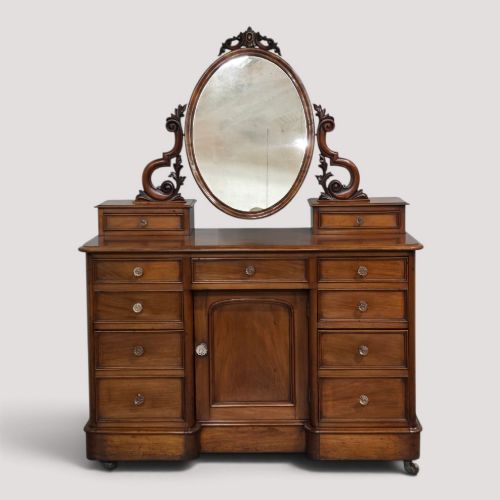
Georgian and Victorian examples offer traditional proportions, while Edwardian pieces introduce lighter inlay work and cabriole legs. Side tables and lowboys frequently double as compact writing surfaces in smaller rooms.
How they were made
Cabinet makers utilised solid timbers such as mahogany, oak, and yew wood for structural integrity and longevity. Burr walnut veneer was applied to surfaces to create decorative grain patterns on drawer fronts and tops.
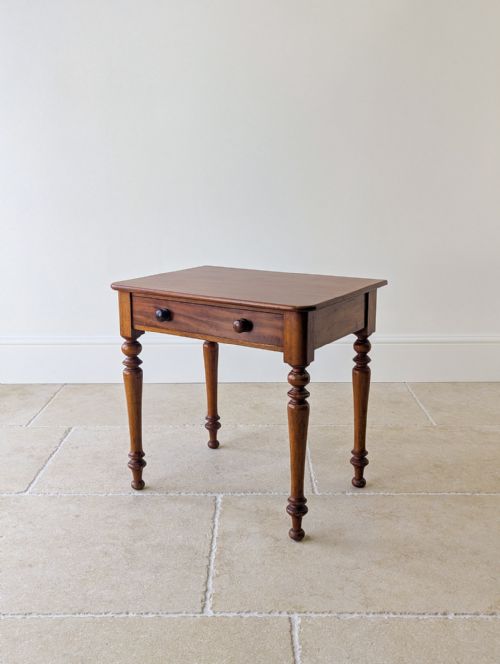
Brass handles, escutcheons, and leather writing inserts completed the construction of writing desks and tables. Turned legs, tapered legs, and carved knees provided structural support across Georgian, Victorian, and Edwardian styles.
Several pieces double as domestic multitasking stations, proving our ancestors also needed places to hide their bills.
What varies in quality
The selection of timber grain, particularly in burr walnut and figured mahogany, distinguishes standard examples from superior pieces. Fine craftsmanship shows in the precision of inlaid detailing and the smooth operation of drawer construction.
Original hardware, balanced proportions, and integrated leather inserts elevate certain writing tables above utilitarian counterparts. The architectural harmony between the base, legs, and top surface determines overall refinement.
W Walker and Sons London·Walker and Hall·Cary London
The Antique Table Desk Glossary
- Pedestal desk
- A heavy writing desk supported by two banks of drawers rather than conventional legs. These provide substantial storage beneath the main writing surface.
- Lowboy
- A small side table with drawers, typically originating in the eighteenth century and often utilised as a dressing or writing table. They stand on slender legs.
- Cabriole leg
- A furniture leg that curves outward at the knee and tapers inward toward the foot, inspired by animal limbs. This form appears frequently on Edwardian and walnut pieces.
- Inlay
- A technique where pieces of contrasting timber or brass are inserted into the primary surface to form decorative patterns. Edwardian and Georgian tables frequently display this work.
- Gallery
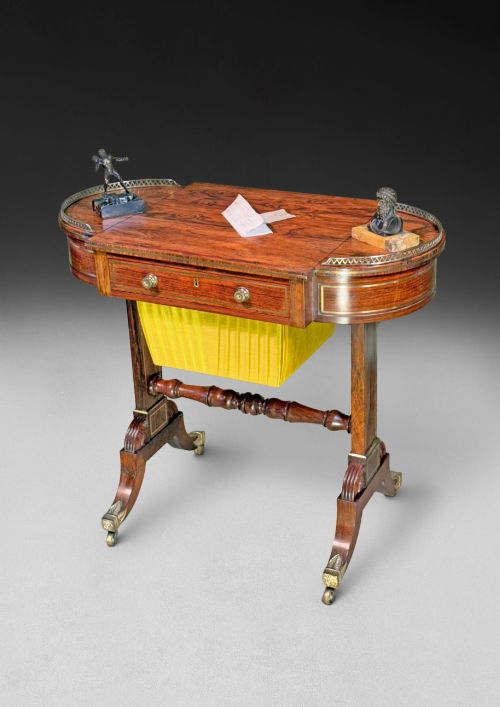
- A raised wooden or metal rim running along the edge of a table or desk top to prevent items from rolling off. Regency dressing and writing tables often incorporate this feature.
Antique Table Desk: Frequently Asked Questions
What is an antique table desk?
An antique table desk is a freestanding piece of furniture designed primarily for writing, correspondence, and administrative tasks. These surfaces incorporate drawers for stationery storage while maintaining domestic proportions suitable for principal rooms.
Surviving examples on this page span the Georgian, Victorian, and Edwardian eras, constructed from timbers such as mahogany, oak, and walnut. They bridge the gap between utilitarian workspace and decorative furniture.
How do I distinguish a Georgian desk?
Georgian desks are characterised by solid timber construction, restrained proportions, and architectural details such as bracket feet or brass drop handles. Mahogany and oak predominate, showing straightforward joinery without excessive ornamentation.
Later Victorian and Edwardian iterations often introduce turned legs, heavier breakfront configurations, or lighter inlaid banding. Examining the secondary timbers inside the drawers helps confirm the period.
Can I use an antique desk daily?
Many antique writing tables and pedestal desks remain robust enough for daily computer and paperwork use. Solid timber frames and durable leather inserts withstand standard modern office requirements.
Careful placement away from direct heat sources and sunlight protects the polished wood finishes and historic veneers from drying or cracking over time.