


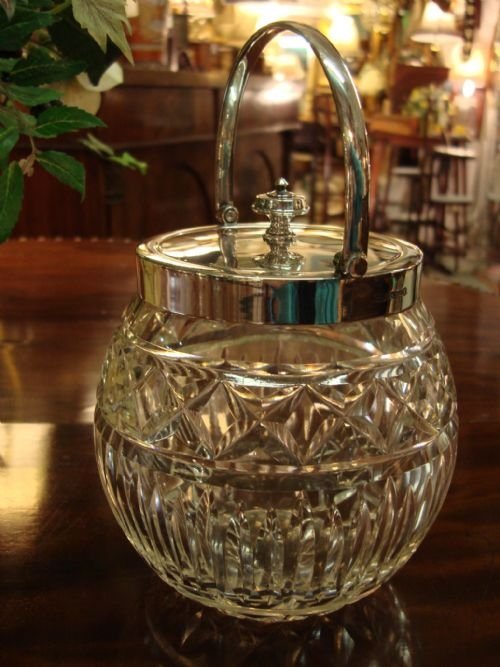


Antique Sweet Jar
These antique sweet jar pieces are glass and ceramic vessels designed for treats, offering period charm for any interior.
Antique Sweet Jar
When you search for an antique sweet jar, you encounter a variety of glass and ceramic containers designed for storing confectionery and biscuits. The forms span Victorian, Edwardian, and Art Deco periods, ranging from functional storage vessels to decorative table centrepieces.
You are most likely to meet biscuit barrels and covered jars made from clear cut glass, cranberry glass, and earthenware. These items often feature silver-plated mounts, enamel decoration, or lids, originating from the late nineteenth and early twentieth centuries.
How they were made
Makers shaped these containers using traditional glassblowing and crystal cutting techniques, producing deep facets that catch the light. Ceramic versions utilise earthenware and porcelain bodies shaped on a wheel or in moulds.
Mounts and lids frequently employ silver plating, Dutch silver, or gold leaf applied to metal rims and handles. Enamel decoration is hand-painted onto the glass or ceramic surface before firing to secure the pigment.
Antique Sweet Jar Retail Price Guide 2026
Typical asking prices for sweet jar among the pieces listed under this phrase on Sellingantiques today, from the lower quarter to the upper quarter. They describe what is for sale here now, not the wider market.
Listings feature items from the Victorian, Edwardian, and 1930s periods, incorporating cut glass, cranberry glass, and sterling silver.
What varies in quality
Quality rests in the crispness of the cut glass facets and the weight of the crystal or ceramic body. Heavy, deep-cut lead crystal represents a higher standard of manufacture than thin, moulded alternatives.
The sophistication of the metal mounts dictates the tier of the piece, with substantial silver plating or hallmarked sterling silver lifting an item above standard plated brass or white metal.
James Dixon and Sons·Limoges
The Antique Sweet Jar Glossary
- Biscuit Barrel
- A covered container designed specifically for storing dry biscuits or sweets on the dining table or sideboard. These vessels often include a matching swing handle and fitted metal lid.
- Cranberry Glass
- A type of rich red or pink transparent glass coloured using gold chloride during the melting process. It is frequently seen in Victorian and Edwardian tableware.
- Cut Glass
- Glassware decorated by grinding patterns into the surface using rotating wheels. Deeper cuts produce sharper refractions and heavier items.
- Silver Plate
- A thin layer of silver fused to a base metal such as copper, brass, or nickel silver. It provides the appearance of solid silver at a lower production cost.
- Bonbonniere
- A small ornamental box or jar intended for holding sweets or bonbons. These pieces often feature fine ceramic or glass bodies with decorative lids.
Antique Sweet Jar: Frequently Asked Questions
What is an antique sweet jar?
An antique sweet jar is a covered glass or ceramic container used historically for holding confectionery, biscuits, or sweetmeats. These vessels date from the Victorian, Edwardian, and Art Deco eras.
They combine practical storage with decorative craftsmanship, often featuring cut crystal bodies and silver-plated mounts designed to sit on dining tables or sideboards.
How do I identify a Victorian sweet jar?
Victorian examples typically feature heavy cut glass, rich cranberry colouring, or ornate ceramic bodies combined with silver-plated hardware. Look for robust construction and traditional period ornamentation.
Earlier pieces often display deeper hand-cut facets and heavier lids compared to later twentieth-century production methods.
How were these jars used historically?
These containers were kept in formal parlours and dining rooms to serve biscuits, sweets, or dried fruits to guests. The fitted lids kept the contents fresh and protected from dust.
They served as both functional pantry items and decorative display pieces that reflected the household's taste and social standing.
How do I care for an antique glass jar?
Clean glass and crystal pieces gently by hand using lukewarm water and mild soap, avoiding harsh scrubbing on silver-plated mounts. Dry them immediately with a soft cloth to prevent water spots.
Keep them away from extreme temperature fluctuations to protect the glass and any applied enamel decoration from stress.