
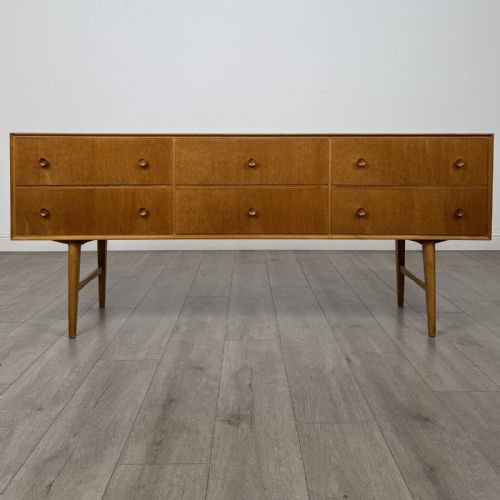
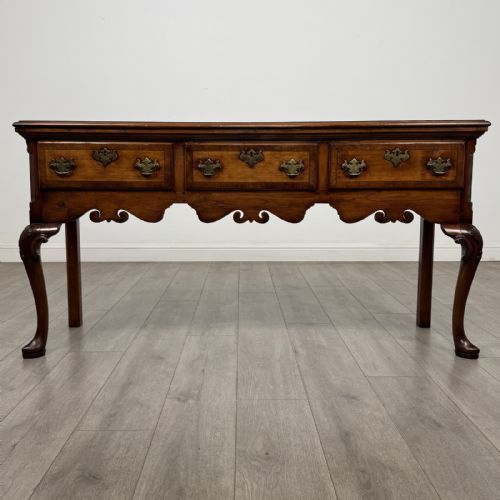
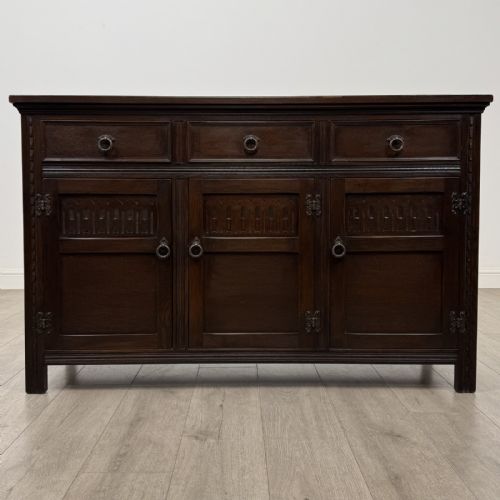
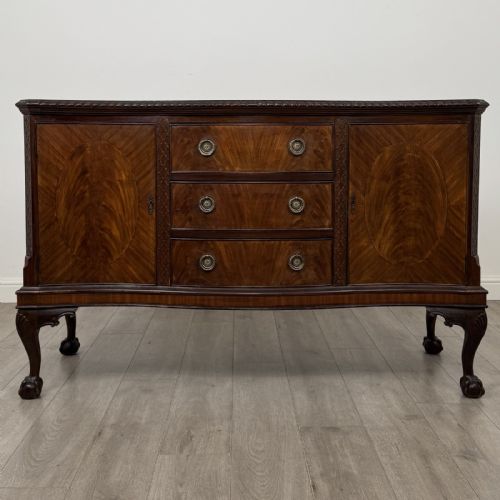
Antique Style Sideboards
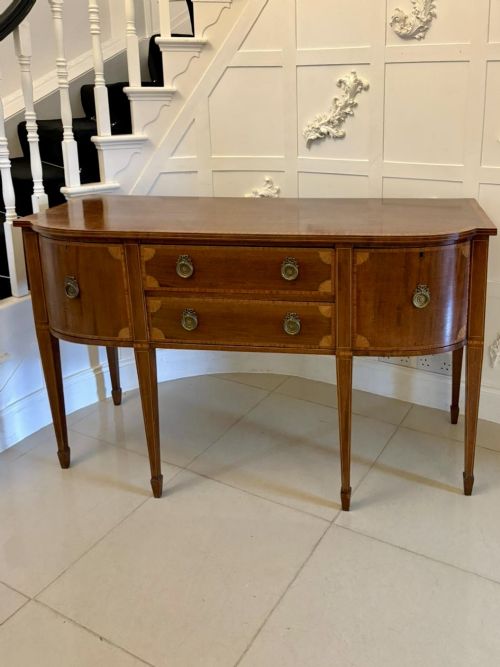
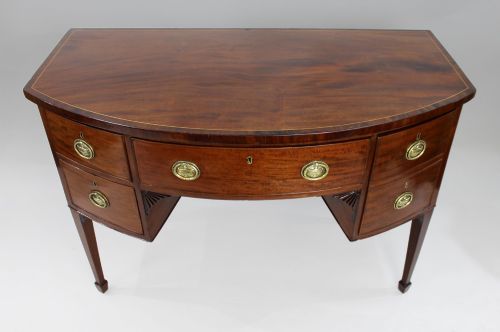
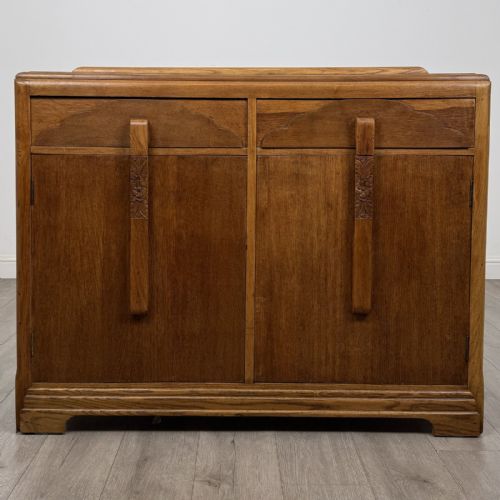
These antique style sideboards bring substantial dining room storage and period character through mahogany, oak, and burr walnut construction.
Antique Style Sideboards
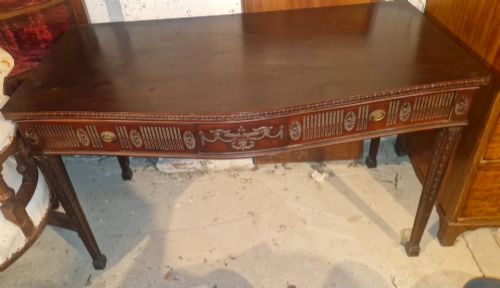
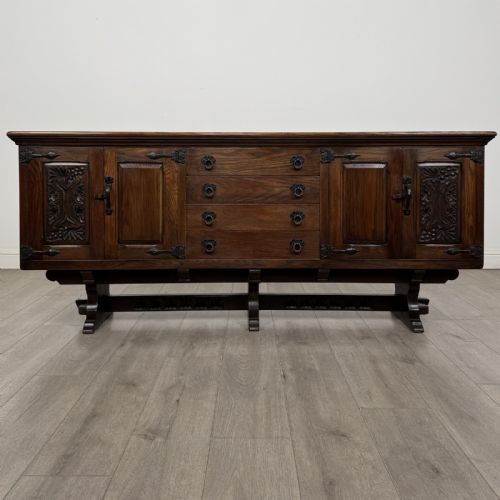
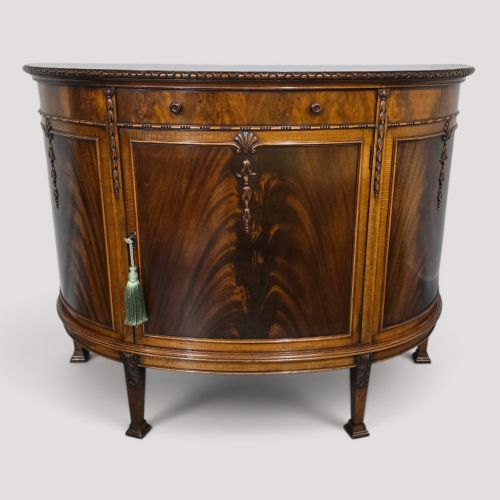
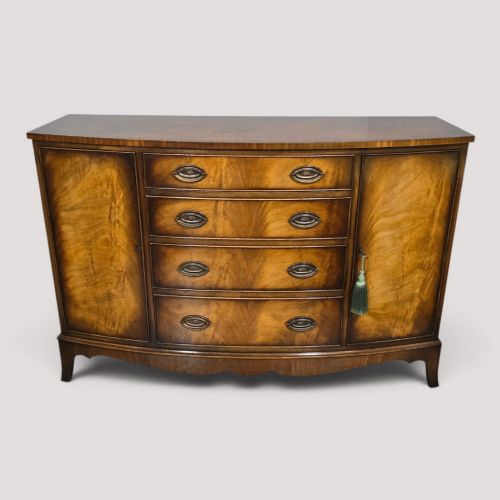
Antique style sideboards encompass a varied range of large dining room and entertaining furniture designed for serving food and storing tableware. Buyers seeking antique style sideboards encounter multiple forms, including serving tables, credenzas, breakfront bookcases, and fitted cupboards.
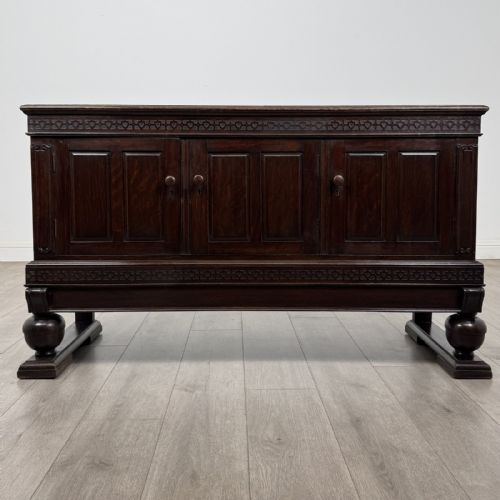
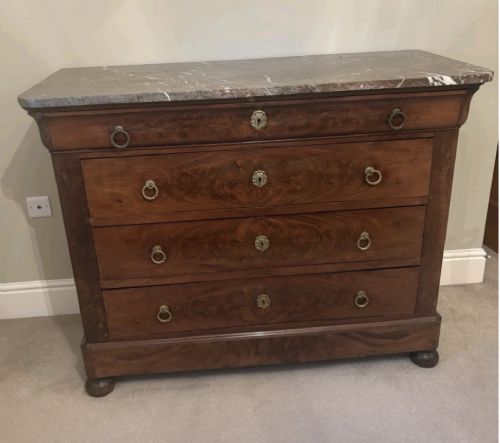
Revival styles heavily shape the offerings, particularly Georgian, Jacobean, and Louis XV revivals. Buyers find both British provincial pieces and continental examples featuring marble tops or ormolu mounts.
How they were made
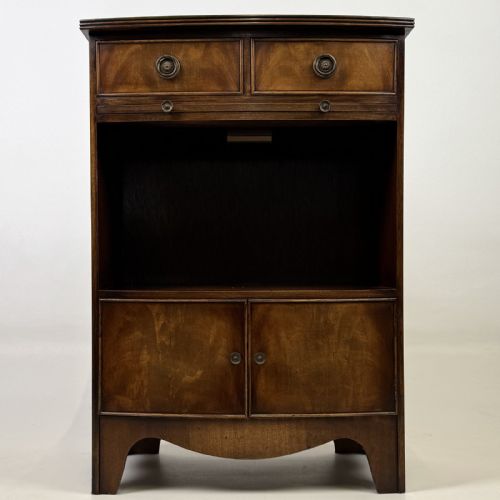
Cabinet makers utilised dense hardwoods like mahogany and oak for structural integrity, often applying figured veneers such as burr walnut or satinwood crossbanding to visible surfaces. Joinery methods relied on traditional techniques like dovetailing for drawers and mortise and tenon joints for frames.
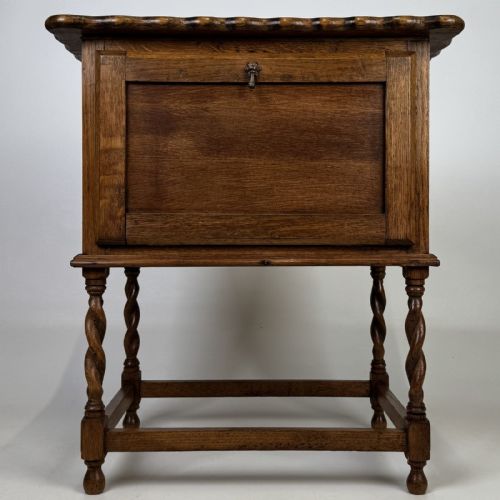
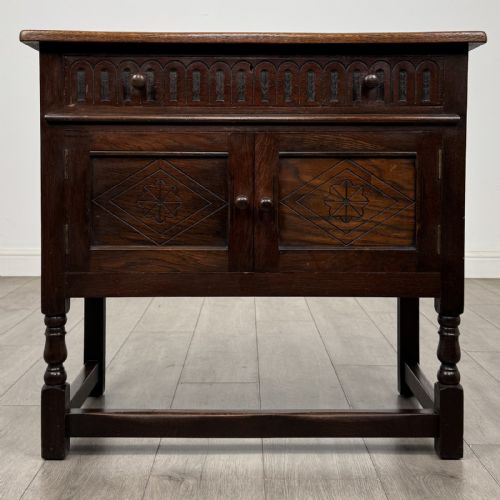
Carving, turning, and applied mouldings define the decorative vocabulary, visible in barley twist legs, linenfold panels, and claw and ball feet. Metalwork fittings in brass and cast iron, alongside marble inserts and ormolu mounts, completed the high-status storage pieces.
Some cupboards hide barley twist legs beneath modest linenfold panels, keeping their festive turns strictly private.
What varies in quality
Quality diverges significantly in the selection and application of timber veneers, where highly figured burr walnut or carefully matched mahogany elevation elevate a piece above standard utility items. The precision of hand-carved details, such as crisp linenfold panels or deeply chiselled oak motifs, marks the distinction between workshop outputs.
Internal construction standards establish longevity, seen in solid secondary woods for drawer linings and robust framing that prevents warping over centuries of use. The integration of high-grade hardware, including original brass handles, locks, and heavy marble tops, separates utilitarian storage from exceptional cabinet work.
Epstein·Whytock and Reid·Gillows
The Antique Style Sideboards Glossary
- Crossbanding
- A decorative border of veneer laid around the perimeter of a tabletop or drawer front with the grain running perpendicular to the central panel.
- Serpentine
- A furniture front characterised by a convex central section flanked by two concave curves, creating a gentle undulating shape.
- Ormolu
- Gilt bronze mounts applied to furniture for decorative effect, frequently found on continental and high-end Victorian cabinets.
- Credenza
- A sideboard or display cabinet originating in Italy, typically standing low to the ground with cupboards and sometimes glass-fronted end sections.
- Enfilade
- A long sideboard or cabinet with a series of adjoining doors, commonly associated with formal European dining rooms.
- Demi-lune
- A half-moon shape applied to table tops and small side cabinets designed to sit flush against a wall.
Antique Style Sideboards: Frequently Asked Questions
What is an antique style sideboard used for?
These pieces provide heavy storage in dining rooms and living spaces for china, cutlery, and linens while serving as a surface for food and display.
Many incorporate drawers, pull-out slides, and shelved cupboards behind panelled doors to organise dining accessories.
How do I identify a revival style?
Revival pieces copy the decorative motifs and proportions of earlier eras, such as seventeenth-century Jacobean oak carving or eighteenth-century Georgian mahogany lines.
Examining the construction methods, secondary timbers, and tool marks helps date the actual manufacture separate from the historical style referenced.
Where should I place a sideboard?
Sideboards suit dining rooms, large hallways, and living areas where their length and depth balance other heavy furniture.
Consider clearance for opening cabinet doors and pulling out internal drawers when measuring your floor space.
Are marble top sideboards heavy?
Marble top pieces carry substantial weight due to the stone slab resting or fixed upon the wooden base cabinet.
Lift the marble separately from the wooden carcase if moving the furniture to prevent structural strain on the joinery.