

Antique Storage Stand
An antique storage stand organises the hallway or parlour, bringing refined timber and metalwork to daily household utility.
Antique Storage Stand
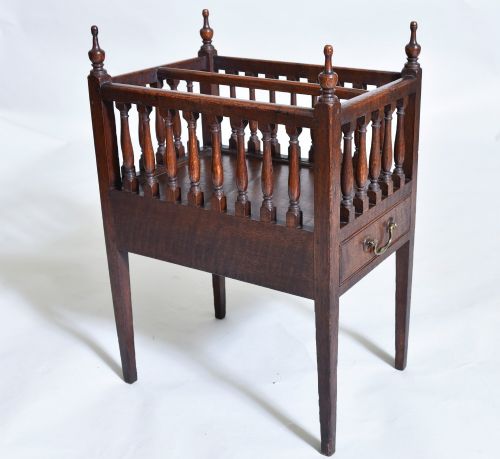
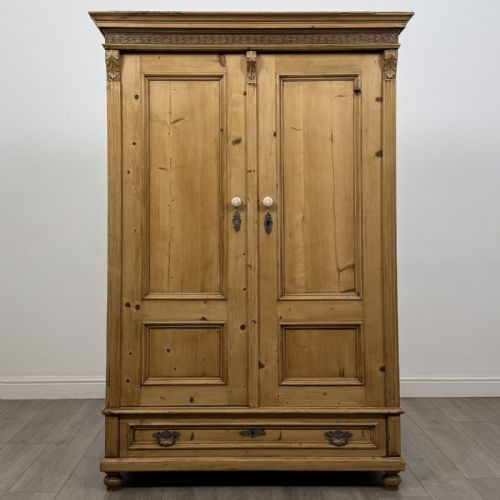
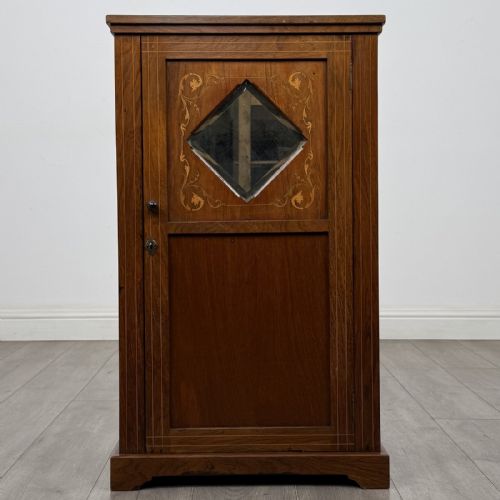
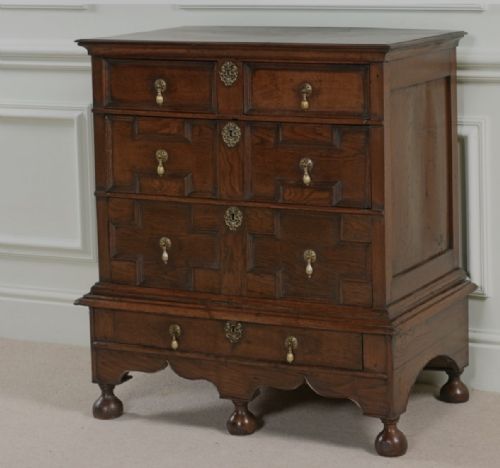
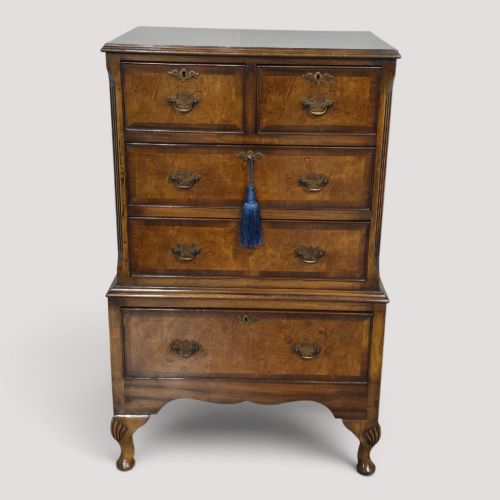
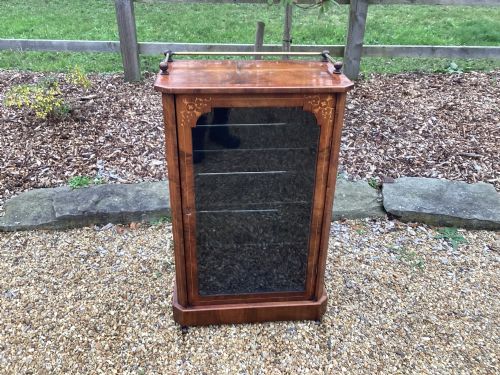
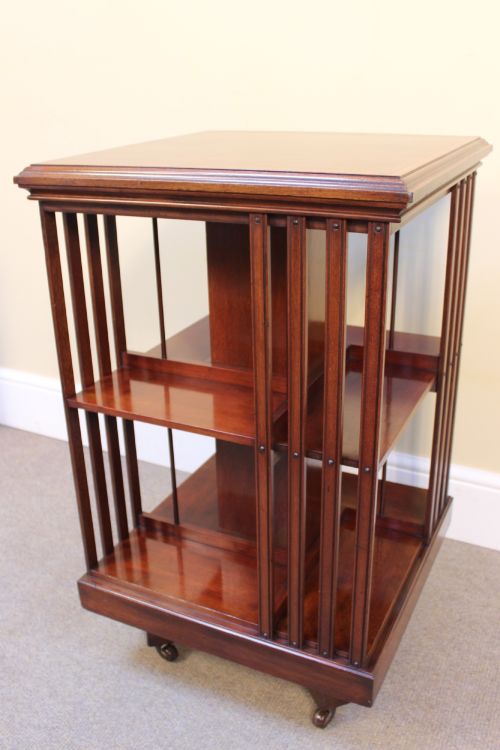
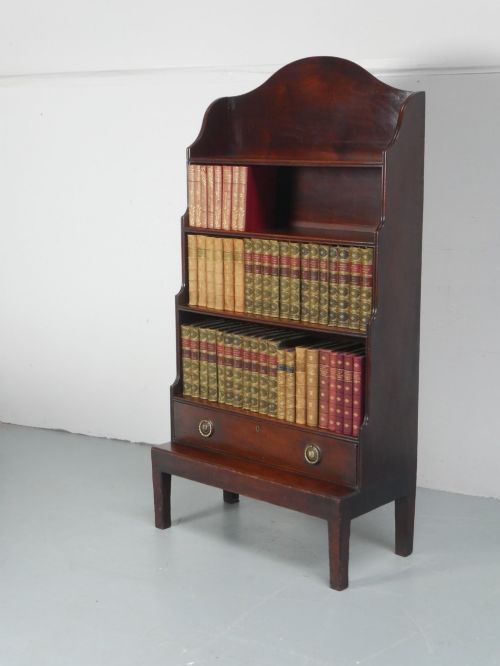
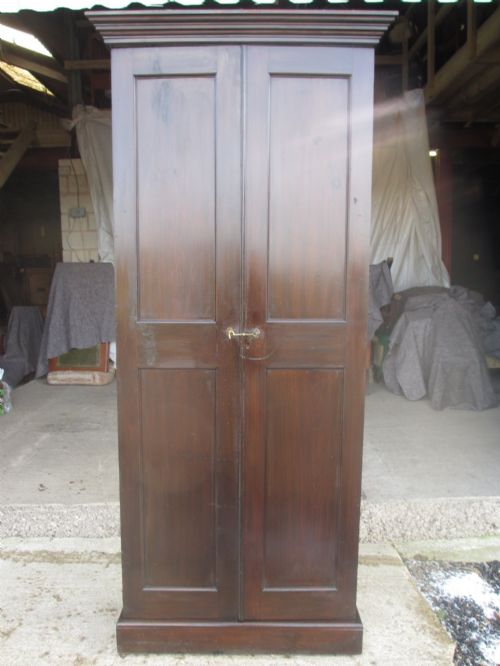
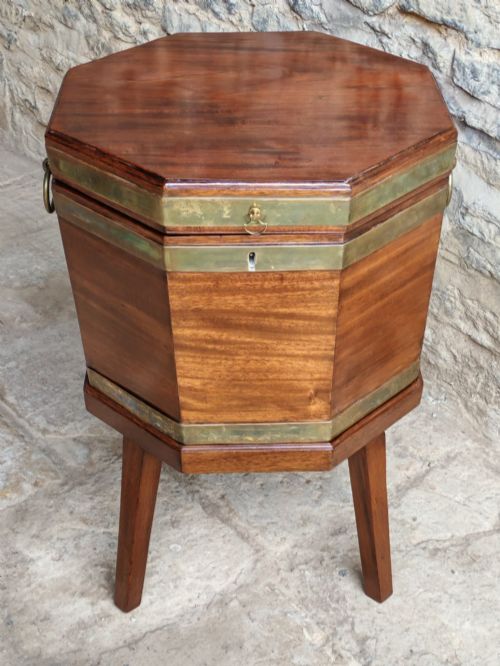
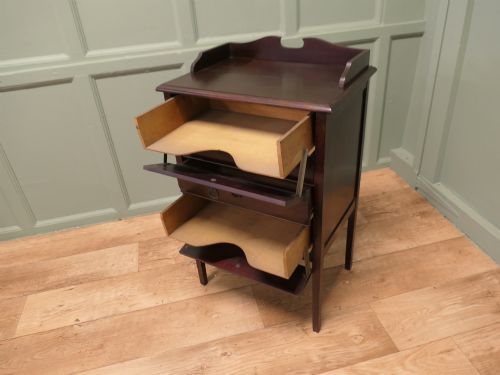
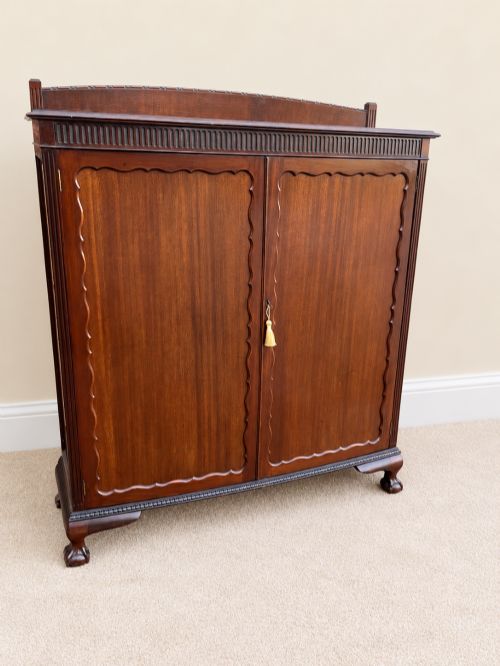
An antique storage stand encompasses functional furniture designed to hold books, garments, coats, umbrellas, and sheet music across multiple historical periods. Pieces range from seventeenth-century walnut cabinets on stands to Edwardian oak umbrella stands and Victorian music cabinets.
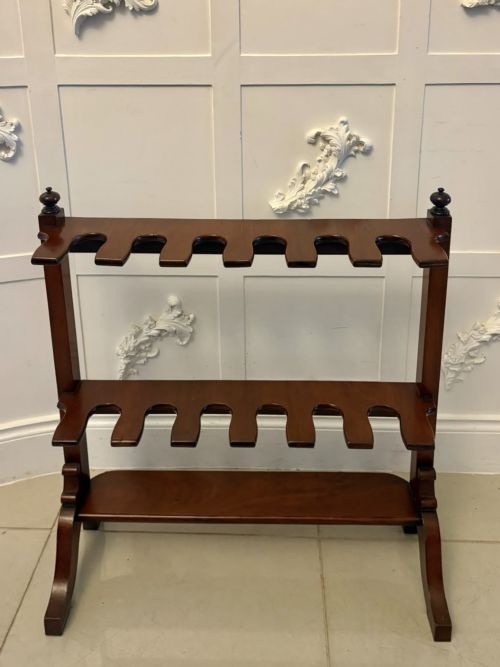
Origins span English country workshops, formal cabinet makers, and continental studios, reflecting diverse domestic requirements from stately libraries to modest hallways. The selection includes specialised items such as boot racks, coat racks, and portable wardrobes.
Materials and Technique
Construction relies heavily on timbers such as mahogany, oak, walnut, and burr walnut, frequently enhanced with crossbanding, inlay, or lacquer. Cabinet makers joined solid woods and veneers using traditional methods appropriate to each period, from seventeenth-century joinery to Edwardian production.
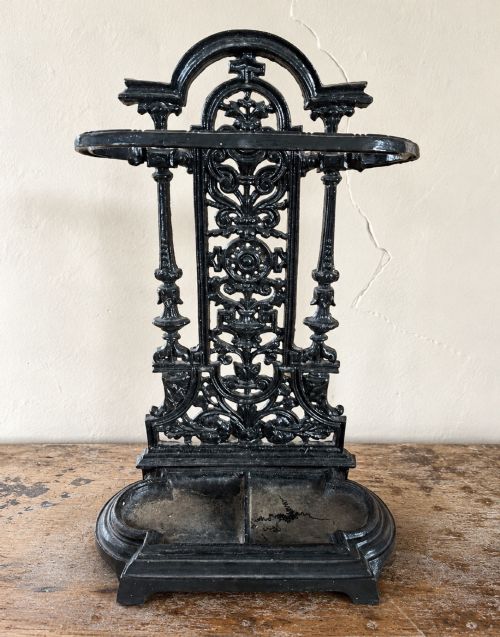
Metal elements provide both structural support and decorative detail, utilising brass, cast iron, iron, and nickel plating. Stick stands and coat racks often incorporate heavy cast iron or brass hooks, whilst cabinets feature glazed panels and specialised drop-front drawers.
Antique Storage Stand Retail Price Guide 2026
Typical asking prices for storage stand among the pieces listed under this phrase on Sellingantiques today, from the lower quarter to the upper quarter. They describe what is for sale here now, not the wider market.
Materials across the inventory include cast iron, brass, glass, and burr walnut applied to diverse forms like umbrella stands and music cabinets.
The Measure of Craft
Quality reveals itself in the selection of timber figures, such as burr walnut or figured mahogany, and the precision of inlaid veneers. Superior examples display thoughtful proportions, integrated brass or iron hardware, and harmonious integration of the stand with the upper cabinet or rack.
Construction integrity distinguishes workshop output, seen in the seamless fit of drop-front music drawers, smooth operation of adjustable shelving, and stability in weight-bearing items like umbrella and boot stands. Finer pieces maintain original surfaces and period-correct fixings.
Coalbrookdale·GM Elwood for JS Henry·Shoolbred & Co
The Antique Storage Stand Glossary
- Chest on stand
- A two-part storage unit where an upper chest rests upon a separate support frame with legs. This form elevates storage off the floor and dates from the seventeenth century onwards.
- Music cabinet
- A specialised piece of furniture featuring multiple shallow drawers or drop-fronts designed to hold sheet music. Edwardian and Victorian examples frequently utilise mahogany or burr walnut.
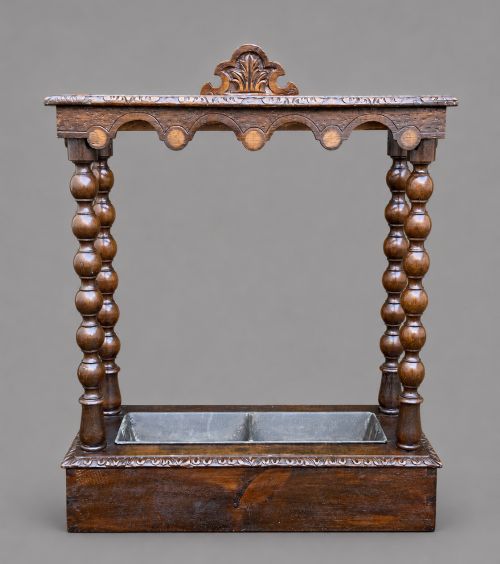
- Stick stand
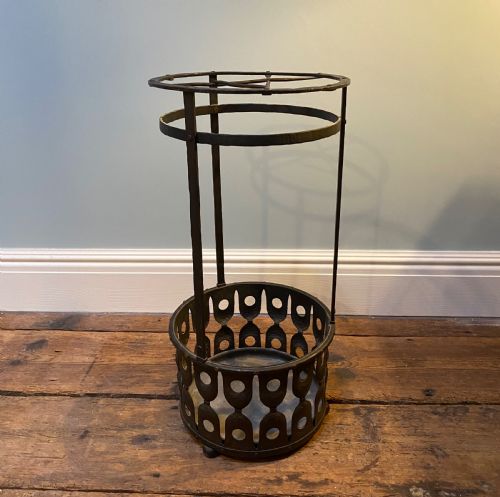
- A compact hallway fixture built to hold umbrellas and walking sticks, often incorporating a metal drip tray. Materials commonly include oak, cast iron, and brass.
- Crossbanding
- A decorative border technique where veneer is laid with the grain running perpendicular to the main panel. It frames surfaces on drawers and cabinet doors.
- Serpentine front
- A furniture front characterised by a concave central section flanked by two convex curves. This undulating shape requires advanced cabinet-making skill.
Antique Storage Stand: Frequently Asked Questions
What is an antique storage stand?
An antique storage stand is a piece of furniture designed to hold specific items like umbrellas, books, coats, or music sheets off the floor. They combine practical utility with period craftsmanship across centuries of domestic life.
These versatile units range from tall hallway stands with coat hooks to compact cabinets on raised legs, reflecting the specific organising needs of Georgian, Victorian, and Edwardian households.
Where were storage stands placed?
Storage stands were traditionally placed in hallways, entryways, parlours, and libraries depending on their specific function. Hall stands and stick stands greeted visitors near the front door.
Music cabinets and bookcases stayed within living quarters where reading materials and sheet music needed neat containment close to instruments and seating areas.
How do I care for wooden stands?
Caring for antique wooden stands requires keeping them away from direct sunlight and steady heat sources to prevent timber from splitting or warping. Regular dusting with a soft, dry cloth maintains the polished surface.
Period finishes benefit from occasional applications of appropriate wax rather than modern silicone sprays, preserving the natural patina accumulated over the centuries.