



Antique Silk Screen
An antique silk screen brings soft textile texture and historical craftsmanship into a room.
Antique Silk Screen
When you search for an antique silk screen, you find decorative panels and dividers designed to manage light, heat or space using woven or embroidered fabrics. These pieces range from substantial folding room dividers to delicate table displays and adjustable fireplace guards.
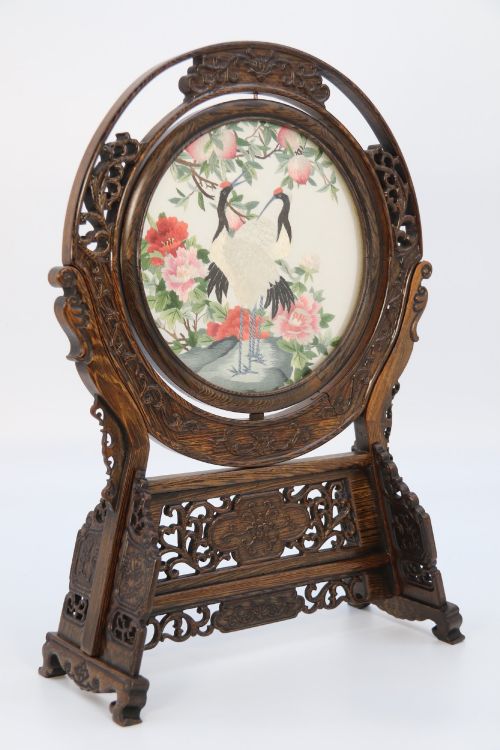
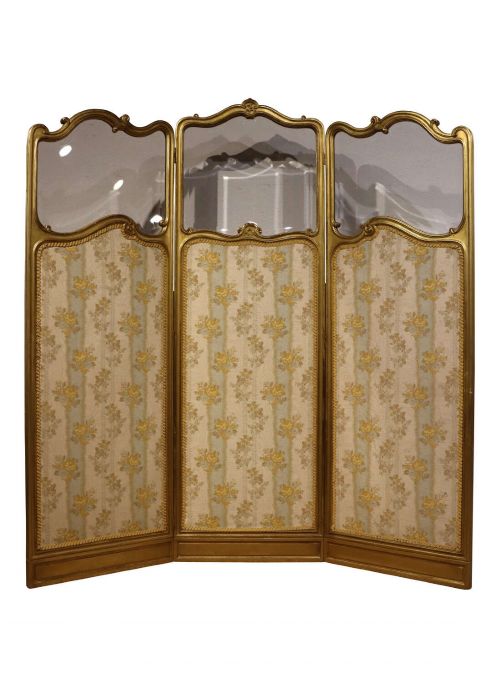
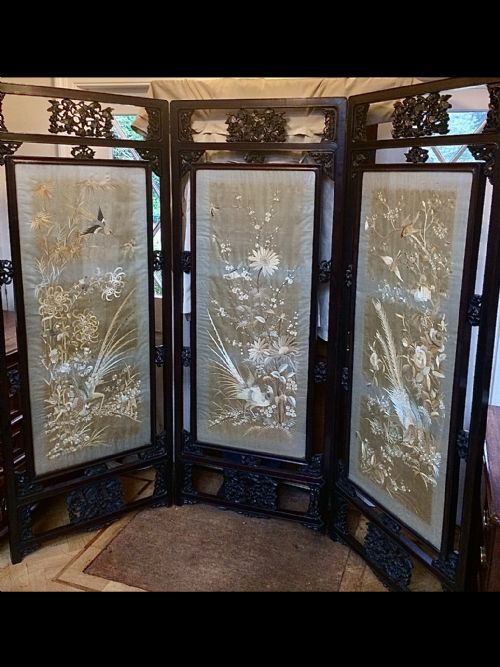
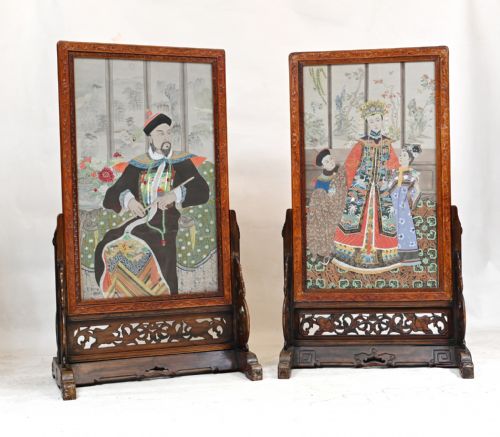
The versions you are most likely to meet on this page span the Georgian, Victorian, and early twentieth-century periods. They include English mahogany pole screens, French giltwood multi-fold designs, and intricate Chinese or Japanese hardwood framed pieces.
Makers utilised various formats, from large multi-fold panels down to small rotating display stands. Each object served a practical purpose in period interiors while showcasing fine textile work.
How they were made
Frames are constructed from timbers such as mahogany, hardwood, and giltwood, frequently incorporating brass fittings or inlaid details. These structural elements support the central textile components, providing both stability and decorative framing.
The panels employ silk, damask silk, and embroidered or woven textile work, sometimes protected by bevelled glass. Artisans combined fine woodworking with needlecraft, creating double-sided embroideries and textile panels set into folding or adjustable supports.
Some screens doubled as photographic props, proving Victorians enjoyed staging their living rooms just as much as we do.
What varies in quality
Quality rests in the precision of the woodwork and the complexity of the textile work within the frame. Pieces with finely carved hardwood, detailed inlay, or intricate double-sided silk embroidery stand apart from simpler utility items.
The integration of materials also defines the standard of the piece, such as clean bevelling in glass panels and robust joinery in multi-fold frames. The sophistication of the period style, from Georgian proportion to Victorian Baroque revival, influences the overall execution.
The Antique Silk Screen Glossary
- Pole screen
- A vertical screen mounted on a tall wooden pole with a tripod or weighted base, designed to be adjusted up and down. This form protected faces from the direct heat of an open fire.
- Fire screen
- A protective panel placed in front of a fireplace when the hearth was not in use. They often used fabric or embroidered panels held within wooden frames.
- Giltwood
- Timber coated with a thin layer of gold leaf. This finish was common on decorative French frames from the nineteenth century.
- Damask silk
- A reversible figured fabric woven on a loom, featuring patterns formed by contrasting warps and wefts. It appears frequently in period decorative panels.
- Hardwood
- Dense timber derived from broad-leaved trees, utilised for durable furniture frames and display stands. It provides the necessary strength for folding and rotating mechanisms.
Antique Silk Screen: Frequently Asked Questions
What is a pole screen?
A pole screen is a small vertical panel mounted on a tall wooden shaft with a base, designed to be slid up and down.
They were placed near fireplaces to shield people from radiant heat.
How were fire screens used?
Fire screens served to block excess heat from hearths or to hide unlit fireplaces during warmer months.
Over time, they evolved into purely decorative furnishings within period drawing rooms.
What materials make up these screens?
Frames are built from woods like mahogany, hardwood, and giltwood, sometimes featuring brass hardware or glass.
The central panels incorporate silk, damask silk, or detailed embroidery.
How do I date a screen?
Dating relies on stylistic clues like Georgian proportions, Victorian revival details, or early twentieth-century construction.
Timber choice and the type of textile work also point to specific periods.