




Antique Shirt Studs
Antique shirt studs are small, refined fastenings designed to secure formal gentleman's attire, offering a subtle flash of period craftsmanship.
Antique Shirt Studs
When you search for antique shirt studs, you encounter small dress accessories designed to fasten starched buttonholes on formal shirts. The examples appearing here connect directly to the broader category of antique cufflinks and dress buttons seen across the inventory. These small fastenings served a practical purpose while signalling the wearer's attention to detail during formal evening wear.
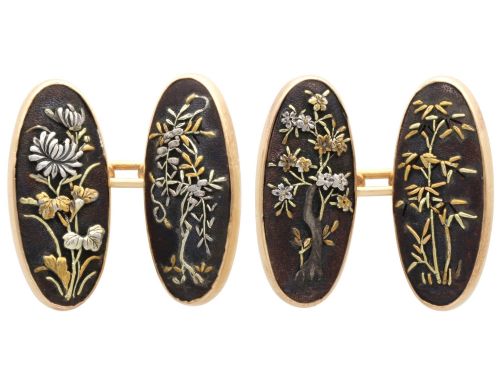
The pieces on this page span the Victorian era through the Edwardian period and into the Art Deco years of the 1930s. You find items executed in gold, silver, brass, enamel, pearl, and mother of pearl. While many items in the wider evidence function as cufflinks, the underlying forms mirror the construction and decorative styles applied to matching shirt studs.
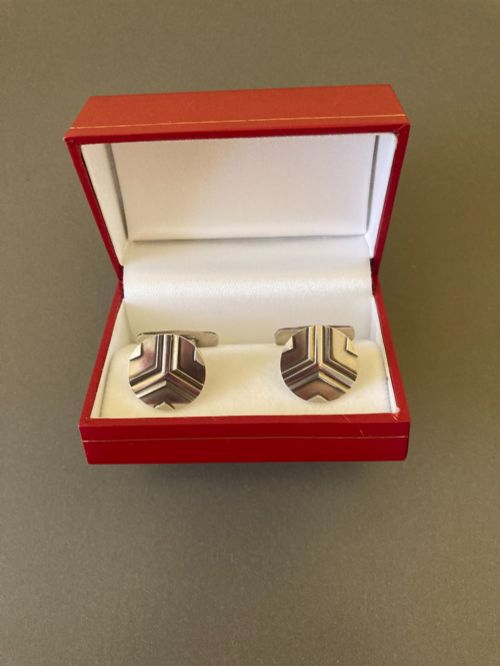
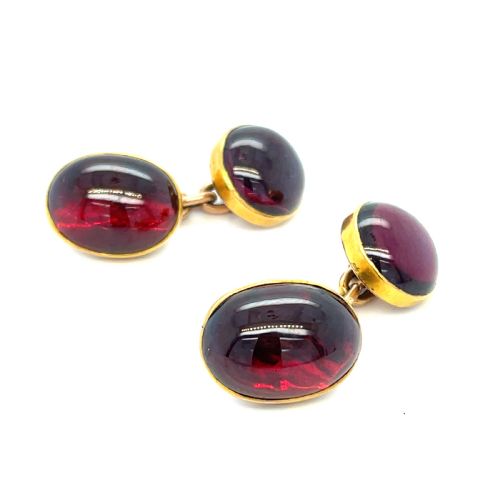
Makers often coordinated shirt studs with matching double-sided cufflinks or dress buttons to create a unified suite for formal dress. The designs range from simple geometric enamel work of the nineteen-thirties to earlier cabochon stones and engraved motifs set in yellow gold. Examining these pieces reveals how gentlemen's tailoring relied on miniature decorative hardware to complete a polished silhouette.
How they were made
Goldsmiths and jewellers utilised precious metals such as nine-carat, fifteen-carat, and eighteen-carat gold alongside silver, brass, and platinum as structural bases. These metals were shaped into bezels and links to hold decorative faces securely. The reverse sides often incorporated swivel bars or double-sided heads designed to pass easily through stiff buttonholes.
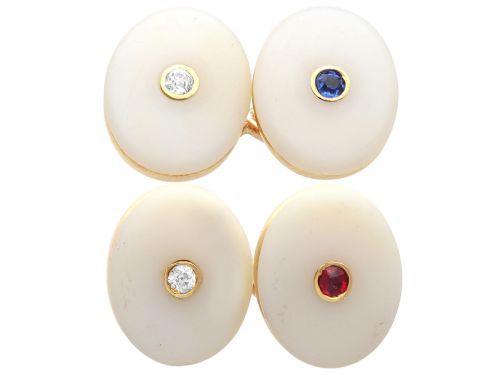
Surface decoration frequently relied on vitreous enamel, applying coloured glass pastes fired at high temperatures to achieve geometric patterns or solid colour fields. Natural materials like mother of pearl and pearls were sliced, polished, and fitted directly into metal housings. Artisans also integrated cabochon-cut gemstones including garnet, banded agate, and multi-gem stones into the metal settings.
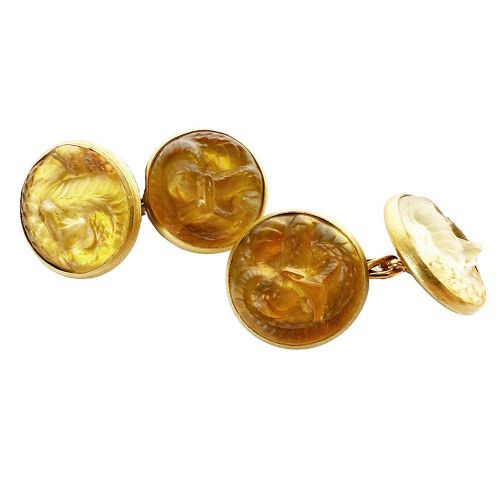
Engraving techniques added linear texture, such as belt motif engravings seen on Victorian pieces, while specific makers like Rene Lalique worked with moulded glass to form serpent motifs. Metal components were soldered together with precision, leaving minimal trace of the joinery. The resulting objects combined durability with miniaturised decorative arts.
Antique Shirt Studs Retail Price Guide 2026
Typical asking prices for shirt studs among the pieces listed under this phrase on Sellingantiques today, from the lower quarter to the upper quarter. They describe what is for sale here now, not the wider market.
What varies in quality
The degree of material refinement immediately separates examples across the range. Pieces fashioned from higher carat golds or platinum combined with genuine sapphires and pearls represent a more substantial investment of resources than brass or lower-grade alloys. The selection of stones, from simple banded agate to multi-gem arrangements, dictates the visual richness of the face.
Execution of technique dictates the finesse of each piece. Crispness in geometric enamel work, clean bezel settings around cabochon stones, and sharply struck hallmarks indicate superior workshop standards. Finer items display meticulous attention to the hidden reverses and connecting chain links, ensuring both beauty and structural integrity during regular wear.
R Lalique
The Antique Shirt Studs Glossary
- Cabochon
- A gemstone shaped and polished with a smooth, convex dome rather than faceted edges. This style highlights the natural colour and internal patterns of stones like garnet and banded agate.
- Enamel
- Vitreous glass fused to a metal base through high-temperature firing. It provides smooth, durable colour fields particularly prominent in Art Deco geometric designs.
- Double-sided
- A construction featuring decorative faces on both ends of a connecting link or bar rather than a fixed T-bar or post. This design allows the fastening to be reversed or viewed from multiple angles.
- Mother of pearl
- The iridescent inner layer of mollusc shells, valued for its pearlescent sheen. It provides a luminous white surface frequently paired with gold and enamel in formal dress sets.
Antique Shirt Studs: Frequently Asked Questions
What are antique shirt studs?
Antique shirt studs are small decorative fasteners used to secure the front placket of a gentleman's formal dress shirt. They perform the function of standard buttons while introducing precious metals and gemstones to the outfit.
These pieces typically date from the Victorian, Edwardian, and Art Deco eras, often matching larger sets of cufflinks. They remain collectable examples of miniature period jewellery.
How do you wear shirt studs?
Shirt studs are inserted through the buttonholes of stiffly starched formal shirt fronts in place of sewn-on buttons. The base or toggle passes through the fabric to hold the decorative face firmly in position.
They coordinate with matching cufflinks and dress buttons to create a cohesive appearance for black tie or white tie attire.
How do you date shirt studs?
Dating involves examining the materials, motifs, and manufacturing techniques characteristic of specific historical periods. For instance, geometric enamel work points to the nineteen-thirties, while yellow gold and garnet selections often indicate Victorian origin.
Maker marks, metal purity stamps, and accompanying hallmarks provide precise chronological markers when present on the reverse fittings.
Are shirt studs still used?
Shirt studs are worn today with traditional formal evening wear and bespoke tailoring requiring stiff-fronted shirts. They offer a connection to historical menswear traditions.
Collectors also acquire them as miniature art objects or display them alongside period cufflinks in dedicated presentation cases.