




Antique Shirt Links
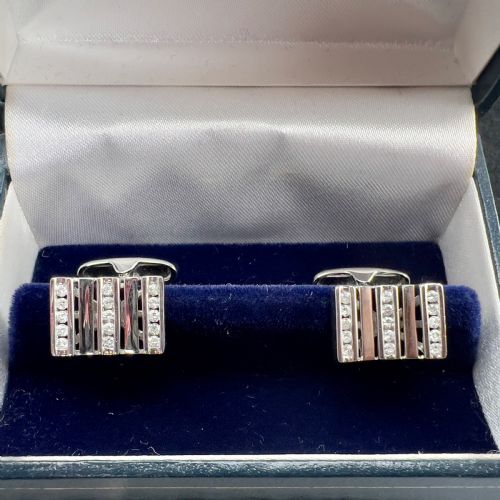
Antique shirt links fasten formal cuffs with precious metals and hardstones forged across the Victorian, Edwardian and Art Deco eras.
Antique Shirt Links
The selection ranges from geometric enamel faces to double-sided gold pieces featuring belt motif engraving. Formats span simple chains joining twin decorative faces to hinged bars and toggle mechanisms.
Makers utilise precious foundations like yellow gold, rose gold and silver plate. These mount stones such as agate, garnet, sapphire, ruby, pearl and diamond, or finish with vitreous enamel.
Craftsmanship and Materials
Goldsmiths shape 9ct, 15ct and 18ct yellow and rose gold to form the structural mounts and links. Metalwork often incorporates fine engraving, such as belt motifs, or relies on clean geometric lines typical of the 1930s.
Enamel work provides vibrant colour contrasts, ranging from modernist designs to French blue applications. Gemstones including banded agate, cabochon garnets and multi-gem settings are secured into the gold faces.
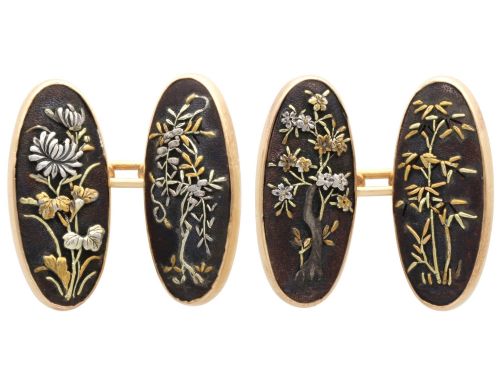
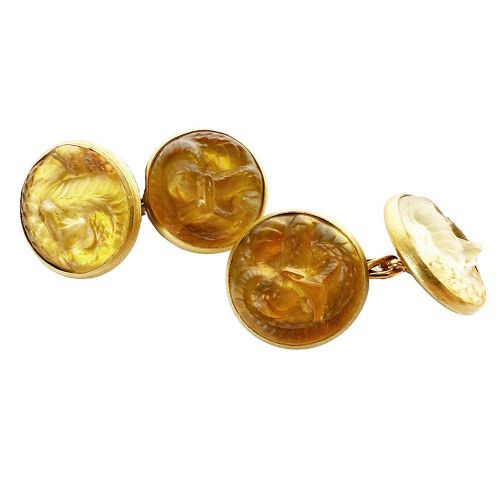
Specialised techniques include Shakudo metalwork and glass moulding, as seen in serpent designs by René Lalique. Components join via delicate chain links or rigid bars depending on the period.
Slither through the decades with glass serpents guarding your cuffs.
Distinctions in Quality
Quality rests in the weight and purity of the gold mount, moving from silver plate and 9ct up to substantial 18ct constructions. Superior pieces employ heavier gauge metals that maintain structural integrity along the connecting chains.
The choice and setting of decorative elements dictate the upper tier of pieces. Natural cabochon gems, matched hardstones like banded agate, and flawless enamel show greater artisanal mastery than simpler stamped plates.
Design coherence separates standard production from exceptional examples, particularly in Art Deco modernist pieces and signed or attributed works. The precision of the engraving and the crispness of geometric enamel execution define the finest specimens.
Payton Pepper Co·R Lalique
The Antique Shirt Links Glossary
- Shakudo
- A Japanese alloy of copper and gold treated to produce a dark blue-black patina. It is often utilised for carved or applied decorative plaques on nineteenth-century jewellery.
- Cabochon
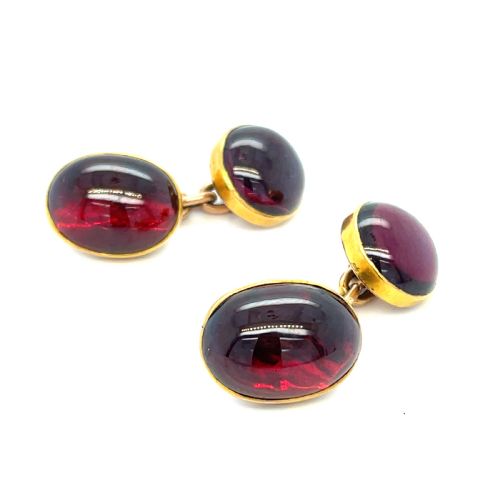
- A gemstone shaped and polished with a smooth, rounded surface rather than faceted. This style highlights the natural patterns of stones such as garnet and banded agate.
- Japonisme
- The influence of Japanese art on Western aesthetics during the late nineteenth century. It appears in motifs and metalworking techniques like Shakudo.
- Double-sided
- A cuff link configuration featuring decorative faces connected by a short chain instead of a simple T-bar or fixed post. Both ends display the primary design.
- Enamel
- A glassy substance fused to metal through high-temperature firing. It supplies durable colour decoration across Edwardian and Art Deco designs.
Antique Shirt Links: Frequently Asked Questions
How do you wear antique shirt links?
These pieces thread through the buttonholes of doubled French cuffs on dress shirts. The decorative faces sit outward on the wrist while the connecting bar or chain bridges the fabric.
Pairs featuring double-sided faces display ornamentation on both sides of the wrist opening. Rigid bar mechanisms offer a simpler insertion method compared to delicate chain links.
What periods do antique shirt links span?
The available selection covers the Victorian era through the Edwardian period and into the Art Deco 1930s and 1940s. Each era brings distinct materials, from heavy gold belt motifs to modernist enamel.
Early pieces often incorporate garnets and agates in yellow gold settings. Later twentieth-century examples favour geometric coloured enamel and streamlined profiles.
How are different gold purities identified?
Gold components are stamped with hallmarks denoting 9ct, 15ct, or 18ct purity levels depending on the date of manufacture. French items utilise distinct regional assay marks on yellow gold elements.
Colour variations between yellow gold and rose gold reflect changing stylistic preferences across the nineteenth and twentieth centuries.
What materials decorate the faces?
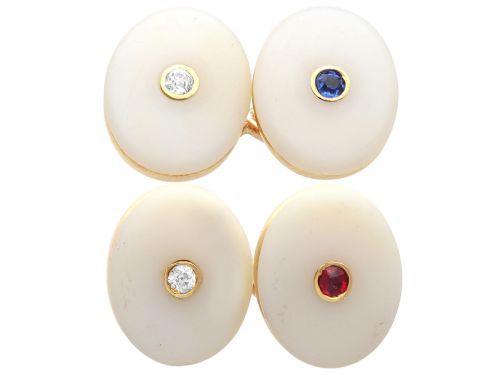
Faces incorporate vitreous enamel, diamonds, sapphires, rubies, pearls, mother of pearl, and hardstones like agate and garnet. Metal techniques include Shakudo and silver plating.
Glass also appears, notably in moulded serpent forms attributed to specific designers. These varied elements define the visual character of each distinct decade.