

Antique Scroll Leg Chairs
Antique scroll leg chairs bring architectural curves to seating, combining solid timber frames with upholstered comfort across nineteenth-century styles.
Antique Scroll Leg Chairs
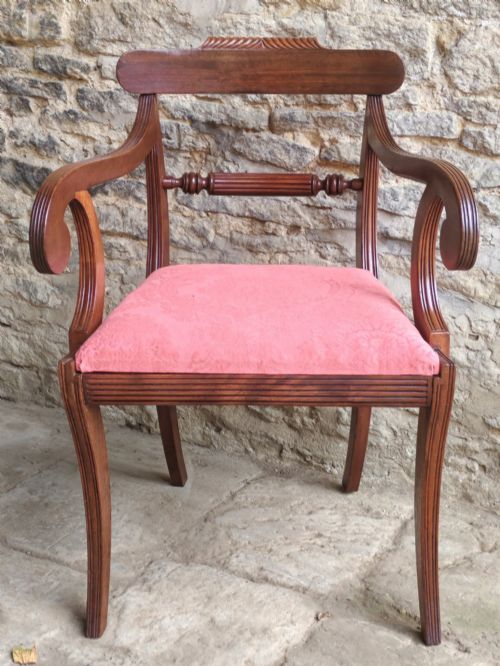
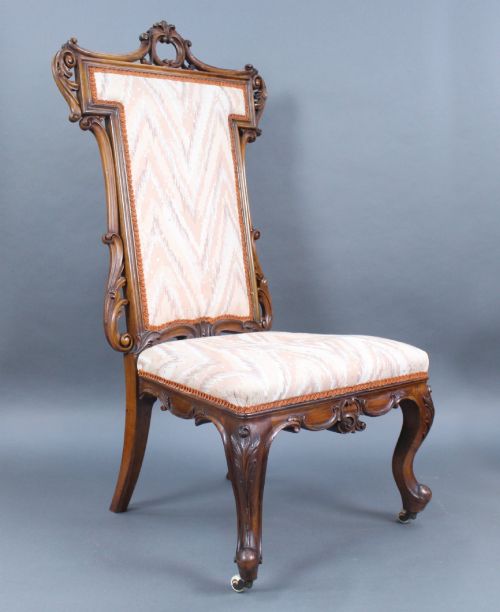
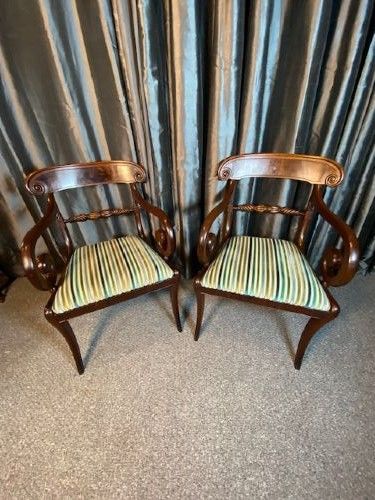
When you search for antique scroll leg chairs, you encounter a diverse group of nineteenth-century seating spanning dining chairs, library armchairs, and daybeds. These forms range from formal Regency and William IV mahogany pieces to relaxed English country house armchairs and French slipper chairs. The selection centres heavily on nineteenth-century examples, incorporating periods from Regency through to the Edwardian era.
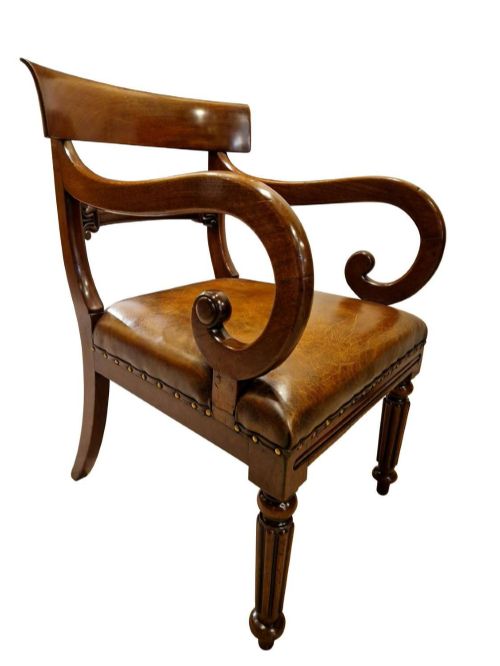
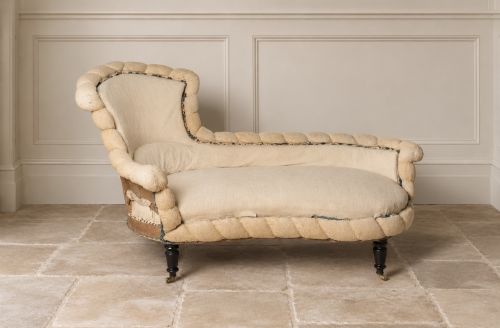
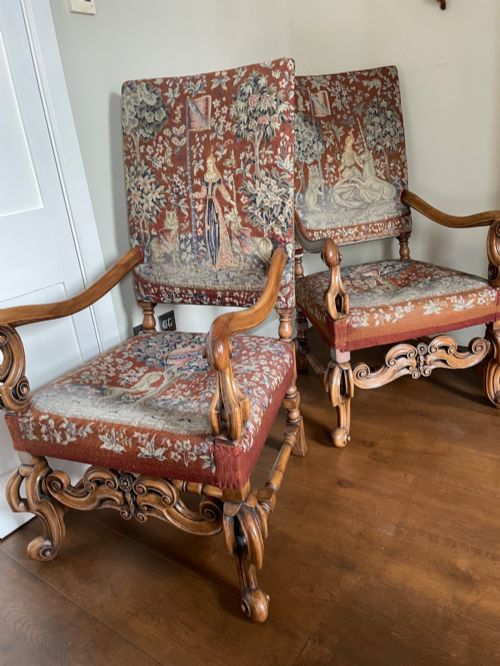
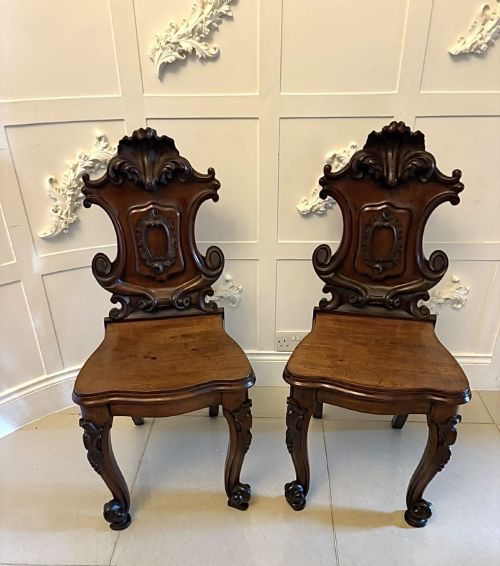
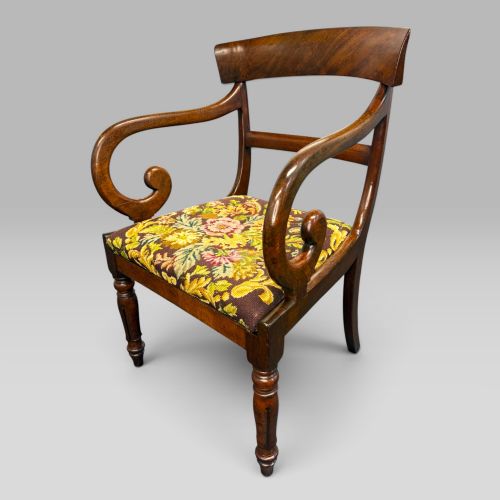
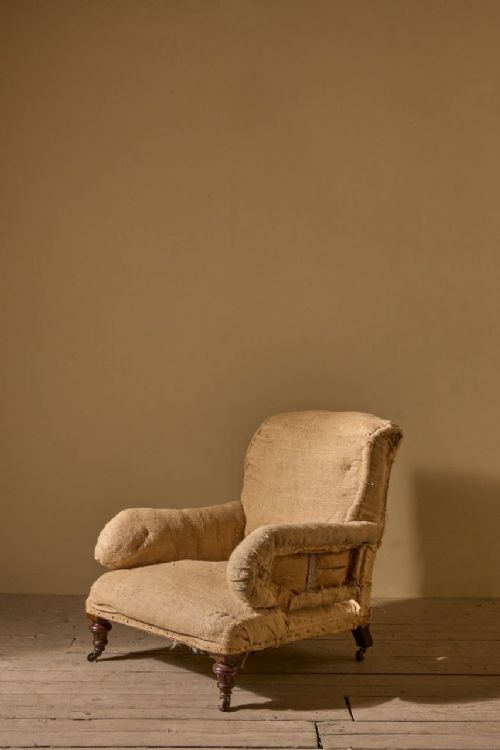
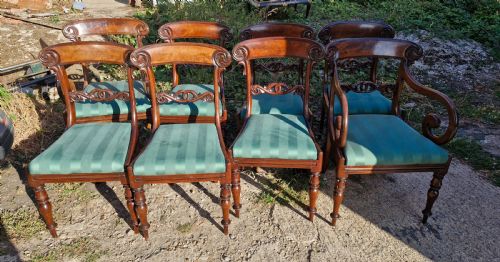
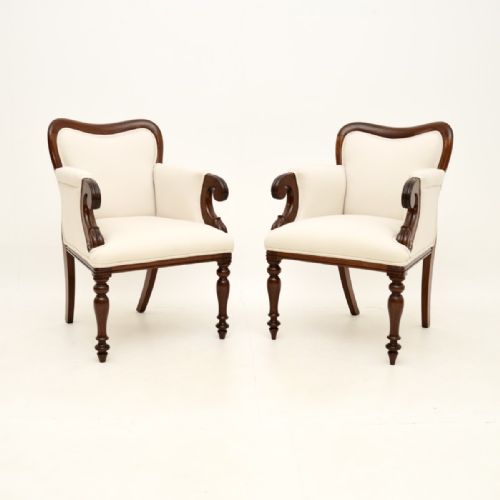
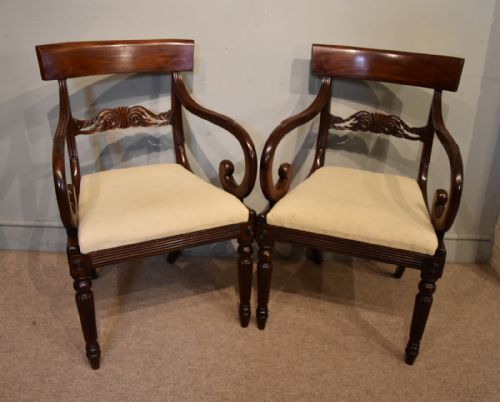
The most common forms on this page include mahogany elbow chairs, deep-seated library armchairs, and occasional chairs featuring distinct scrolled arm or back terminals. Dining chairs and hall chairs also appear, often built in sets using timbers such as mahogany and oak. Alongside these are chaise longues and daybeds, providing extended seating forms with similar curvilinear woodwork.
Materials and construction
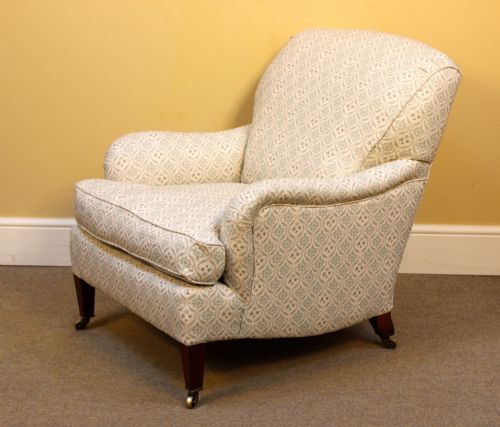
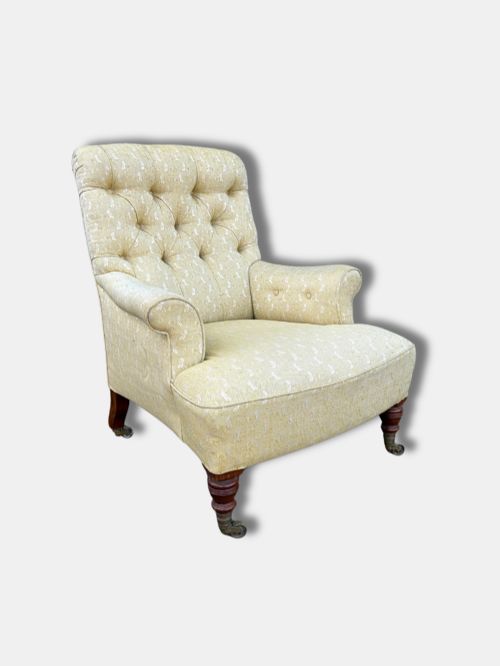
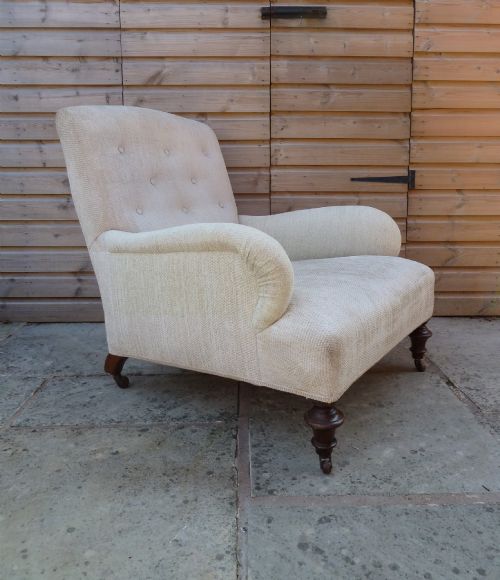
Makers relied principally on dense hardwoods like mahogany, rosewood, and oak for the structural frames, ensuring stability for the sweeping scroll work. Brass castors frequently appeared on the feet of heavier armchairs and library seating to ease movement across carpets. Timber selection dictated the carving depth, with mahogany and rosewood accepting sharp, clean lines at the scroll terminals.
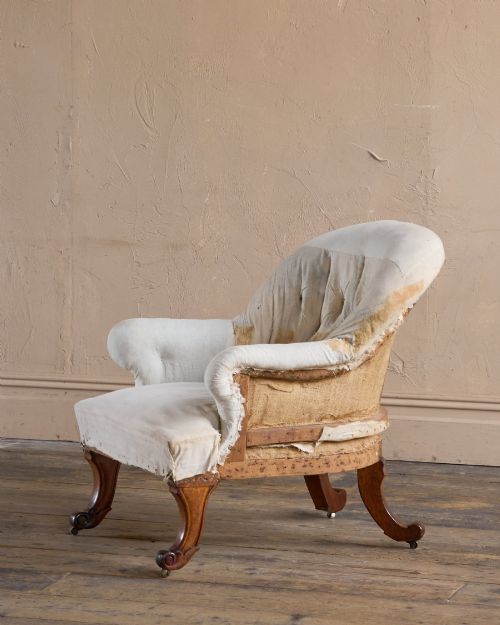
Upholstery techniques involved traditional stuffing secured over webbing, using materials such as calico, velvet, hessian, and tapestry. Show-wood frames displayed polished timber surfaces, while occasional chairs utilised gilt finishes or simpler polished hardwood. Internal padding relied on natural fibres before later twentieth-century foam replacements took over.
Antique Scroll Leg Chairs Retail Price Guide 2026
Typical asking prices for scroll leg chairs among the pieces listed under this phrase on Sellingantiques today, from the lower quarter to the upper quarter. They describe what is for sale here now, not the wider market.
Listings feature nineteenth-century seating across mahogany, rosewood, and oak, incorporating upholstered elements in velvet, calico, and hessian.
Evaluating craftsmanship and condition
Quality reveals itself in the crispness of the timber carving at the scroll terminals and the structural integrity of the joints. Finer pieces demonstrate seamless integration between the scrolled arm and the main upright supports, showing no looseness in the underlying frame. Timber selection also marks the difference between standard production and top-tier workshop output.
The integrity of the upholstery foundation and the preservation of original secondary woods further separate standard examples from superior ones. Pieces retaining their initial webbing and traditional stuffing systems command greater respect from collectors. Surface patina, showing decades of gentle polishing, distinguishes untouched timber from over-restored examples.
Howard and Sons·Holland and Sons·Trollope and Sons·John Taylor and Sons·Gillows
The Antique Scroll Leg Chairs Glossary
- Scroll arm
- An armrest featuring a curved, voluted terminal resembling a rolled scroll. This decorative shape defines much of the nineteenth-century seating design.
- Elbow chair
- An armchair featuring open sides, typically smaller than a fully upholstered club chair. These were frequently used as desk or library seating.
- Daybed
- An elongated piece of furniture designed for reclining, combining elements of a chair and a bed. They often feature scrolled ends matching contemporary chair designs.
- Sabre leg
- A concave-curving chair leg that tapers toward the foot, commonly seen on Regency furniture. This form provides both stability and a sense of lightness.
- Carver chair
- A sturdy armchair, often part of a larger dining set, designed for the head of the table. They share stylistic motifs with the smaller side chairs in the set.
Antique Scroll Leg Chairs: Frequently Asked Questions
How do I date an antique scroll leg chair?
Dating relies on stylistic clues, secondary woods, and construction methods characteristic of specific nineteenth-century decades. Regency and William IV pieces often display heavier mahogany frames with distinct classical proportions.
Later Victorian and Edwardian examples introduce softer upholstery profiles and alternative timber treatments. Examining the underlying webbing and frame assembly provides further chronological context.
Are these chairs suitable for daily use?
Most nineteenth-century armchairs and dining chairs remain robust enough for regular domestic seating when properly maintained. Sound frame construction ensures structural stability under normal daily loads.
Upholstery condition dictates comfort, and many pieces benefit from professional reupholstery using traditional supportive materials. Brass castors should be checked to ensure smooth movement without straining the timber legs.
What is the difference between a library armchair and a dining chair?
Library armchairs are built for prolonged seated comfort, featuring deep seats, padded armrests, and robust hardwood frames. They prioritise relaxed posture for reading and working.
Dining chairs are lighter, upright, and frequently sold in sets with open arms or as armless side chairs. Their design focuses on upright posture around a dining table rather than deep lounging.
How should I care for antique mahogany frames?
Maintain polished mahogany surfaces by dusting regularly with a soft, dry cloth to prevent abrasive particle buildup. Avoid placing timber furniture in direct sunlight or near heat sources to prevent wood splitting.
Apply a quality beeswax periodically to nourish the grain and preserve the deep reddish-brown patina. Avoid silicone-based sprays, which can penetrate old finishes and damage the wood.