



Antique Refectory Furniture
Antique refectory furniture brings substantial timber dining tables and long benches into the home, offering robust surfaces built for communal meals.
Antique Refectory Furniture
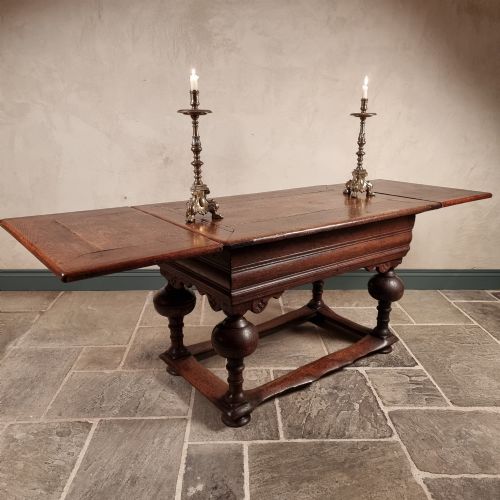
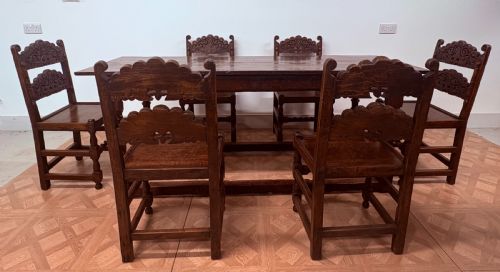
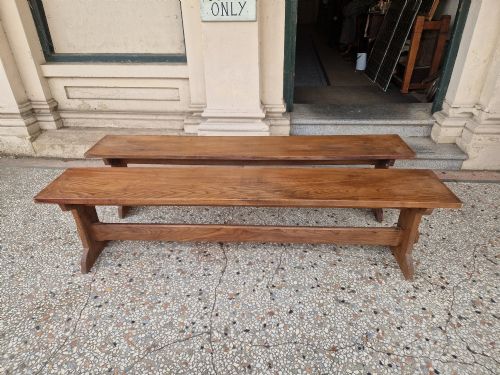
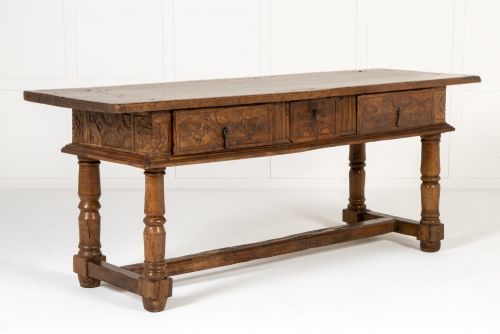
When you search for antique refectory furniture, you encounter heavy timber dining tables, benches, and dining suites originating from the seventeenth century through to the Edwardian period. The most common forms on this page are long dining tables paired with matching benches, constructed to accommodate large gatherings in domestic or institutional settings.
The material palette is dominated by solid oak and walnut, alongside elm, fruitwood, pine, and wrought iron. Pieces range from seventeenth-century oak tables bearing the marks of early joinery to later Arts and Crafts and revival pieces produced around nineteen hundred and nineteen twenty.
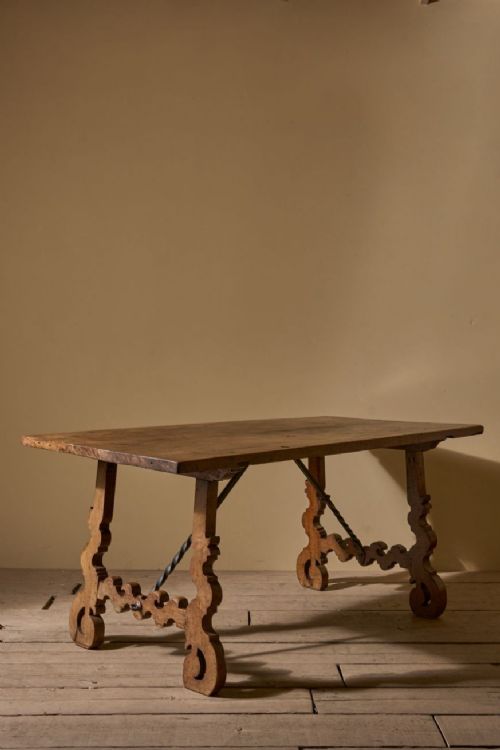
The selection includes regional interpretations such as Spanish walnut tables, French fruitwood benches, and Welsh oak tavern tables. Buyers often select these items to anchor a large dining room or kitchen with historic character and enduring utility.
Materials and construction methods
Makers utilised dense native and imported timbers, selecting solid oak and walnut for their structural rigidity and resistance to heavy daily use. Elm and pine appeared frequently for table tops and secondary framing, while wrought iron and cast iron reinforced trestle bases on industrial or ships tables.
Construction relied on traditional joinery techniques, visible in pegged mortise and tenon joints, single plank surfaces, and shaped trestle ends. Surfaces were finished by hand, developing deep patinas over centuries of polishing and handling.
Antique Refectory Furniture Retail Price Guide 2026
Typical asking prices for refectory furniture among the pieces listed under this phrase on Sellingantiques today, from the lower quarter to the upper quarter. They describe what is for sale here now, not the wider market.
The inventory includes single plank top tables, draw-leaf mechanisms, and cast iron ships tables alongside matched dining benches.
Factors that distinguish the work
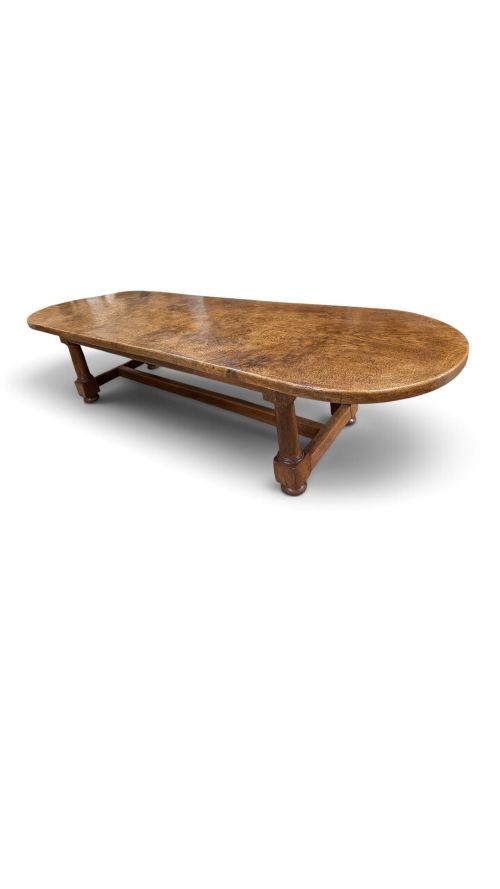
Quality rests upon the integrity of the timber and the retention of original surfaces. Tables featuring single plank tops in oak, elm, or walnut represent superior craftsmanship compared to multi-board tops joined later.
The degree of original patination and the survival of untouched structural elements dictate the standing of a piece. Finer examples display crisp hand-carved detailing on the base and frieze, whereas lesser pieces show heavy replacement timber or unsympathetic surface stripping.
Jack Grimble·Sir Robert Lorimer
The Antique Refectory Furniture Glossary
- Refectory table
- A long, narrow dining table originally used in monastic dining halls. These tables typically feature sturdy legs connected by low stretchers for stability.
- Trestle table
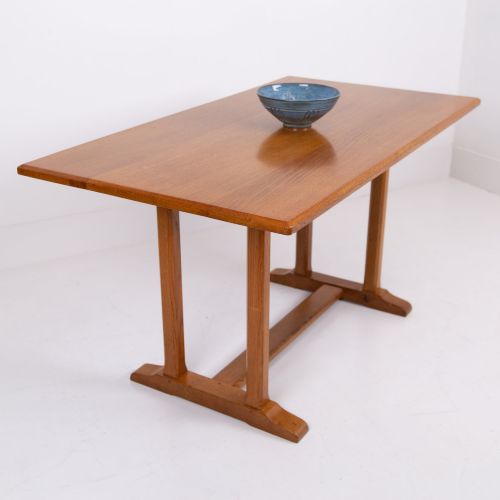
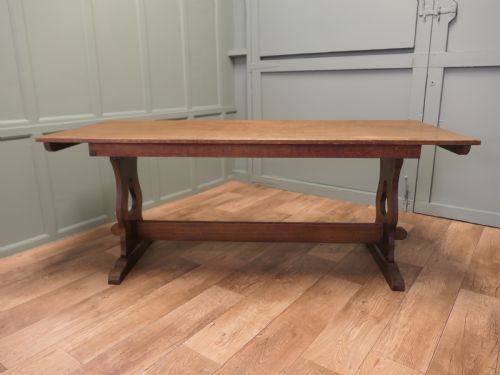
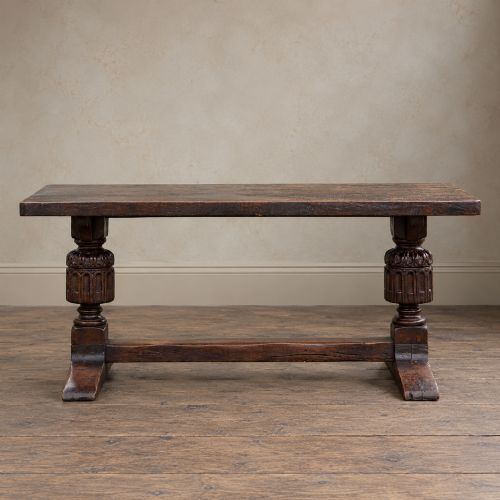
- A table supported by two or more upright frames connected by a horizontal beam. This design provides maximum legroom along the length of the table.
- Draw-leaf table
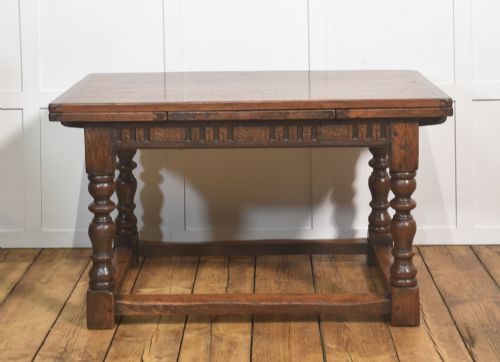
- An extending table equipped with sliding leaves tucked beneath the main top. Pulling the leaves extends the surface length instantly.
- Patina
- The surface sheen and colour acquired by wood through age and use. A good patina indicates untouched historical surfaces.
- Mortise and tenon
- A traditional woodworking joint where a projecting tongue fits snugly into a corresponding cavity. This method secures wooden frames without relying on modern metal fasteners.
Antique Refectory Furniture: Frequently Asked Questions
What is antique refectory furniture?
Antique refectory furniture comprises long dining tables, benches, and associated dining suites built primarily for communal dining from the seventeenth century onward. These pieces are characterised by sturdy timber construction and extended proportions.
Makers built them to withstand heavy daily use in large halls, farmhouses, and institutions. Today, they serve as focal points for large modern dining spaces.
How do I care for an antique oak table?
Maintaining an antique oak or walnut table involves keeping it away from direct heat sources and sudden humidity changes to prevent timber splitting. Regular dusting with a dry cloth preserves the finish.
Applying a traditional beeswax periodically helps nourish the wood and maintain its historic lustre. Avoid using modern silicone-based polishes that can damage the patina.
How do I date an old refectory table?
Dating relies on examining the tool marks, timber species, joinery methods, and wear patterns visible on the underside and frame. Seventeenth-century examples often show adze marks and pegged joints.
Later revival pieces from the Arts and Crafts period or nineteen twenty display machine-sawn elements and different hardware styles. Comparing the construction to documented pieces helps confirm the era.
Can I use benches with a dining table?
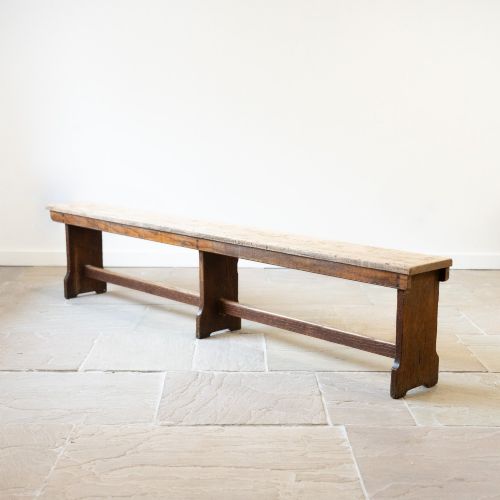
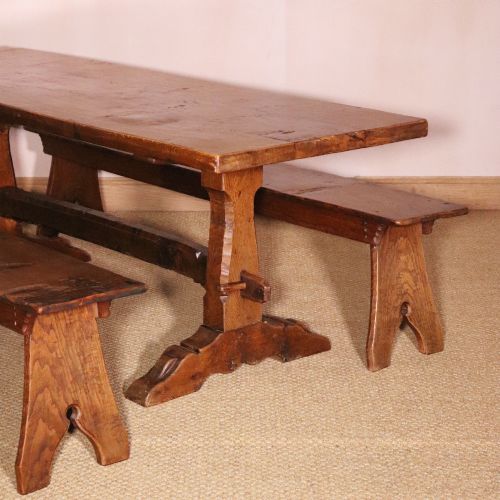
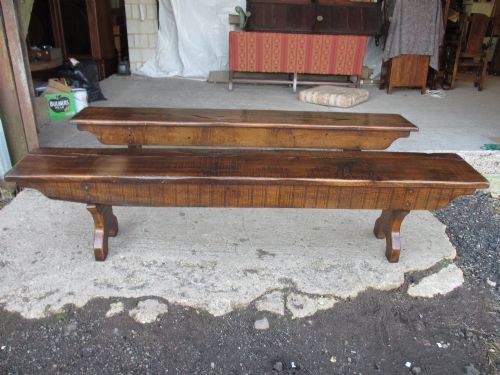
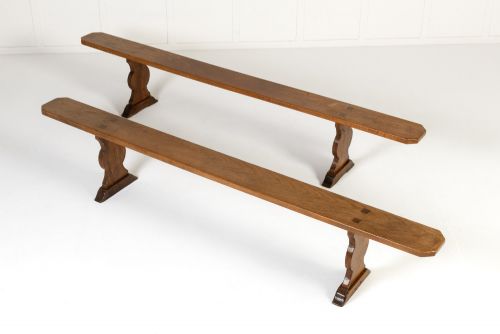
Pairing long benches with refectory tables reflects historical seating arrangements where diners sat side by side on communal benches. This configuration saves floor space when benches are tucked underneath.
Benches also offer flexibility for seating variable numbers of guests during meals. Ensure the height of the bench matches the apron clearance of the table for comfortable seating.