



Antique Red Earrings
Antique red earrings bring rich colour to the earlobe, spanning periods from Regency drop designs to mid-century studs.
Antique Red Earrings
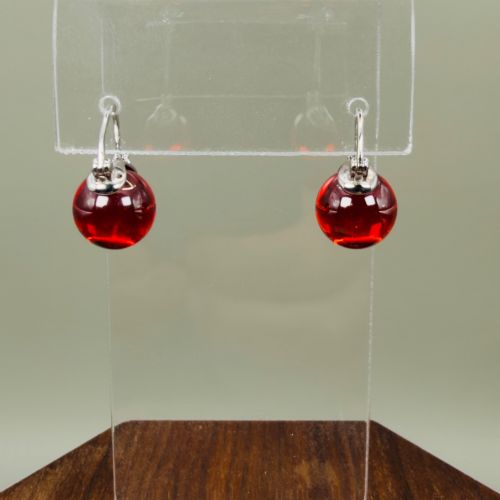
When you search for antique red earrings, you enter a field defined by deep crimson stones and warm organic coral set across multiple eras. The pieces you meet most often on this page take the form of drops, studs, and clusters originating in the Victorian, Edwardian, and mid-century periods.
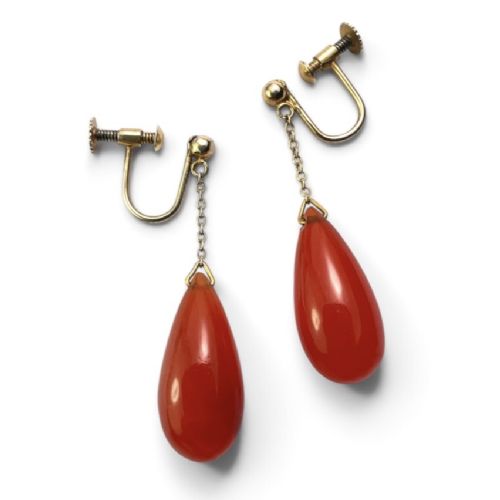
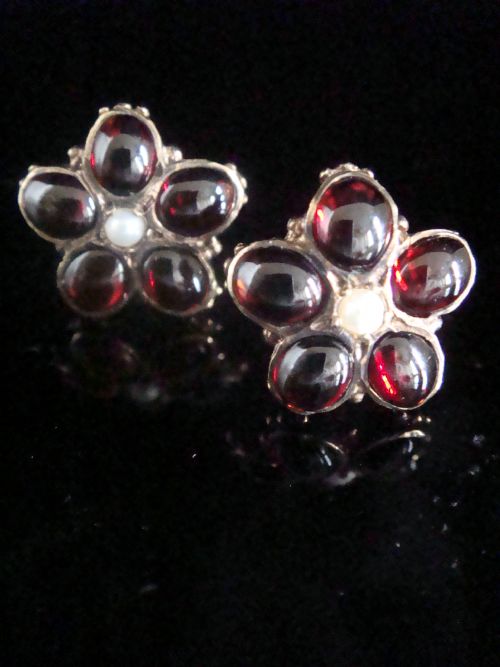
Victorian examples frequently showcase bohemian garnets or carved coral shaped into leaves and bells, often mounted in gold or gilt silver. Edwardian and later twentieth-century iterations bring lighter chain drops and screw-back fittings using synthetic rubies and red agates alongside pearls and diamonds.
Materials and construction
Makers set garnets, rubies, coral, and red paste into yellow, rose, and white gold, alongside sterling silver and silver gilt. Construction methods range from filigreed 9ct gold wirework and Etruscan revival gilt work to hinge backs, screw backs, and clip-on mechanisms.
Stones are secured in varied settings including halo arrangements, cluster formations, and bezel mounts. Natural materials like coral and baroque pearls are carved or drilled to hang as drops or sit tight as studs.
Antique Red Earrings Retail Price Guide 2026
Typical asking prices for red earrings among the pieces listed under this phrase on Sellingantiques today, from the lower quarter to the upper quarter. They describe what is for sale here now, not the wider market.
The period selection spans the Regency era through to the late twentieth century.
Assessing quality in red earrings
Quality rests on the depth of lapidary work and the integrity of the metal settings. Superior pieces display finely matched natural stones with precise faceting or detailed hand-carved organic forms like ivy leaves and flies.
The sophistication of the metalwork, such as intricate gold filigree or robust hinge and screw-back mechanisms, distinguishes finer examples from simpler production.
The Antique Red Earrings Glossary
- Garnet
- A deep red silicate mineral frequently cut into rose or table facets for Victorian cluster and drop earrings.
- Coral
- An organic marine material carved into floral motifs or shaped into beads for drop and stud earrings.
- Paste
- Hand-cut glass used to imitate gemstones in historical jewellery, secured in gilt or gold mounts.
- Screw back
- A mechanical earring finding utilising a threaded post and nut to secure non-pierced lobes.
- Drop earring
- A design featuring an ornamental element that hangs below the earlobe on a wire or chain.
Antique Red Earrings: Frequently Asked Questions
How do I wear screw back earrings?
Screw back earrings rely on a threaded post and a small movable nut that tightens gently against the back of the lobe. You adjust the tension manually until the piece sits securely without pinching the skin.
This fitting is common in mid-century and earlier designs intended for non-pierced ears. Take care not to over-tighten the screw, as this can strain vintage metal threads.
What is bohemian garnet?
Bohemian garnet refers to small, dark red pyrope garnets mined in Central Europe and clustered densely in nineteenth-century jewellery. These stones are typically rose-cut and set close together to maximise the reflection of red light.
Jewellery featuring these stones often uses low-purity gold or gilt silver as a supportive backing metal. The tight cluster technique creates a continuous field of deep crimson colour.
How can I date Victorian coral earrings?
Dating relies on the carving style and the metal testing results found in the mountings. Early Victorian and Regency examples often feature hand-carved organic subjects like insects, ivy, and bells set in higher carat gold.
Later Victorian pieces introduce different clasp mechanisms and standardised wire gauges. Examining the reverse side of the setting reveals construction clues specific to nineteenth-century bench work.
Are ruby earrings always natural?
Historical inventory includes both natural mined rubies and synthetic stones produced in the twentieth century. Listings specify materials such as synthetic ruby or Burmese ruby to distinguish stone origins.
Laboratory-grown stones appear frequently in mid-century pieces alongside white spinels and diamonds. Documentation within the title indicates whether the ruby is natural or synthetic.