


Antique Quadruped Dining Table
An antique quadruped dining table is a heavy-footed central pedestal piece built for dining, offering solid timber surfaces and stable four-legged bases.
Antique Quadruped Dining Table
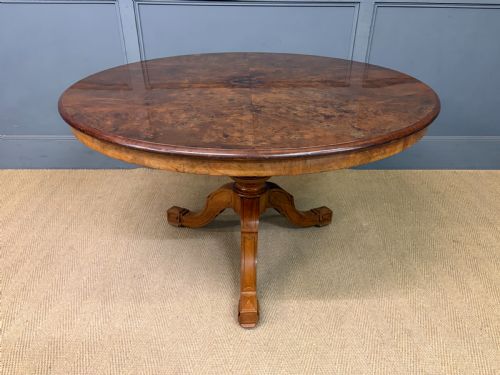
An antique quadruped dining table is a pedestal-based dining or breakfast piece supported by four distinct feet radiating from a central pillar. These tables appear across the Georgian, Regency, and Victorian periods, often taking breakfast, centre, or loo table forms alongside standard dining tables.
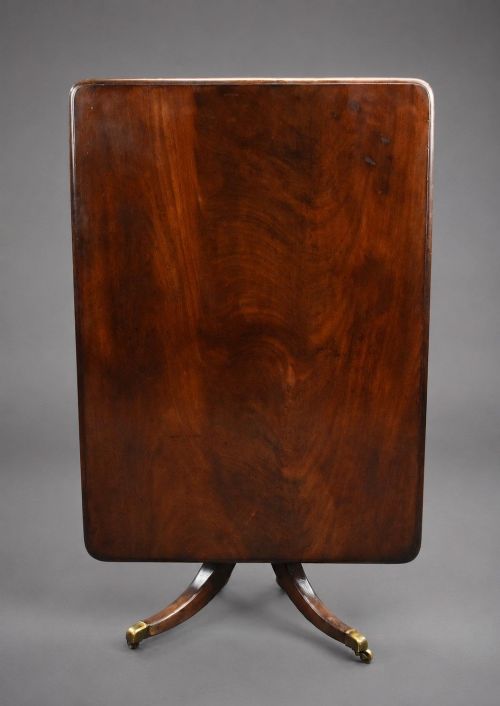
The version most commonly met on this page is the mahogany breakfast or loo table featuring a tilt top mechanism. Examples span from the early nineteenth century through to the late Victorian era, utilising various timbers and pedestal designs.
What varies in quality
Quality shows in the choice and preparation of timber, particularly where figured mahogany, burr walnut, or rosewood veneers are selected for the top. The depth and definition of the carved pedestal and the four supporting feet separate standard production from finer cabinet work.
Construction methods such as tilt-top mechanisms and the integration of brass fittings indicate the standard of craftsmanship applied during the Regency and Victorian periods.
Listings span from the Georgian period through Regency, William IV, and Victorian eras, utilising mahogany, rosewood, walnut, and satinwood.
James Mein·William Trotter
The Antique Quadruped Dining Table Glossary
- Quadruped
- A table supported by a central pillar resting on four feet rather than three. This design provides added stability for large dining and breakfast tops.
- Tilt top
- A tabletop hinged to the pedestal so it can tilt vertically when not in use. This allowed tables to be stored against walls in period rooms.
- Crossbanding
- A strip of veneer applied around the border of a tabletop with the grain running perpendicular to the centre. It creates a contrasting decorative border.
- Loo table
- A round or oval Victorian table designed for the card game loo. These tables typically feature a tilt top and a heavy pillar base.
- Figured mahogany
- Mahogany timber exhibiting natural patterns such as flame or mottle in the grain. Cabinet makers selected these boards for prominent display surfaces.
Antique Quadruped Dining Table: Frequently Asked Questions
What is an antique quadruped dining table?
An antique quadruped dining table is a pedestal table supported by four feet branching from a central column, designed for dining and breakfast use.
These pieces date primarily from the Georgian, Regency, and Victorian periods, utilising solid mahogany, rosewood, and walnut timbers.
How do you use a tilt top table?
A tilt top mechanism allows the tabletop to release from the pedestal and lock into a vertical position. This function enabled owners to store the furniture flat against a wall when the room was needed for other purposes.
In daily use, the top locks down horizontally onto a catch to provide a stable dining surface.
How do I tell Regency from Victorian tables?
Regency tables generally feature clean architectural lines, brass paw castors, and pillar supports reflecting classical revival styles. They date from the early nineteenth century.
Victorian pieces often display heavier proportions, elaborate carving, and different timber choices such as burr walnut or rosewood, dating from the mid to late nineteenth century.
Where were centre tables placed?
Centre tables stood in the middle of principal rooms rather than against walls, accessible from all sides. They served multiple functions for displaying objects or holding books.
Their four-footed pedestal bases provided the stability needed for freestanding placement.