

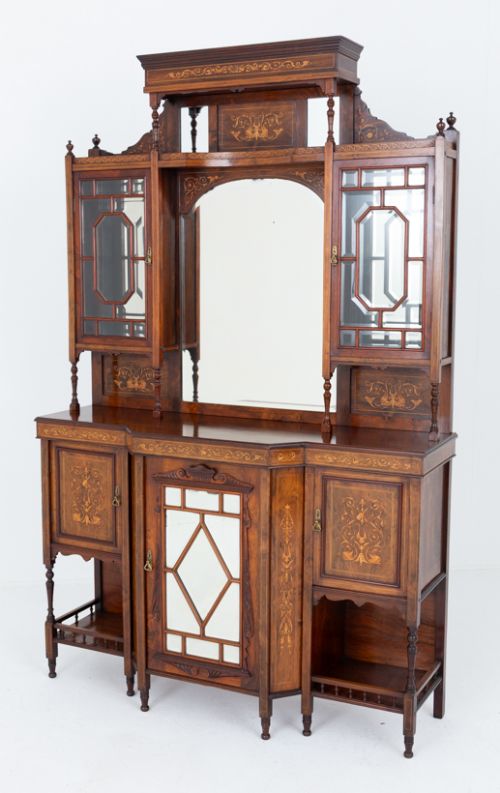


Antique Parlor Mirror
An antique parlor mirror is a substantial piece of period furniture designed to reflect light and anchor a Victorian or Edwardian interior.
Antique Parlor Mirror
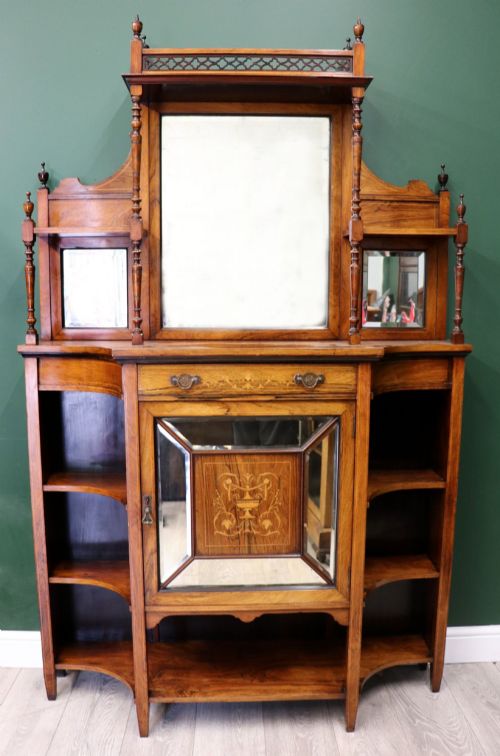
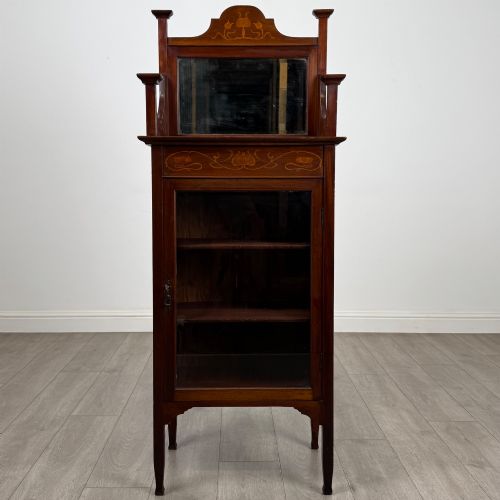
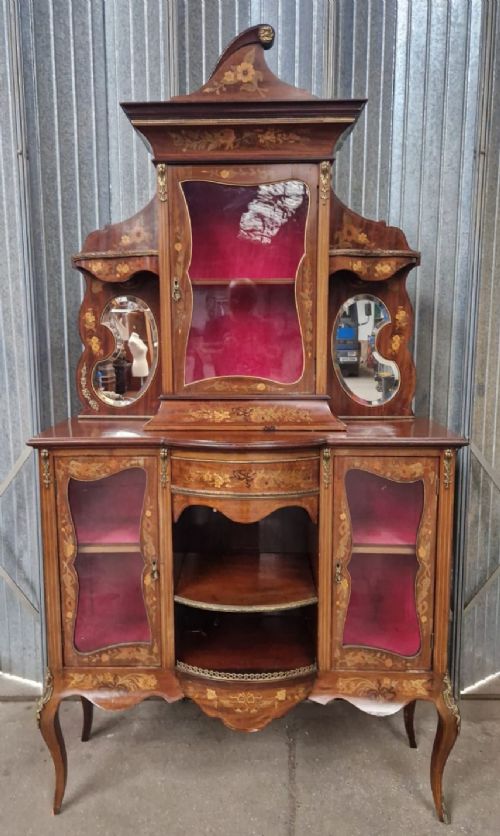
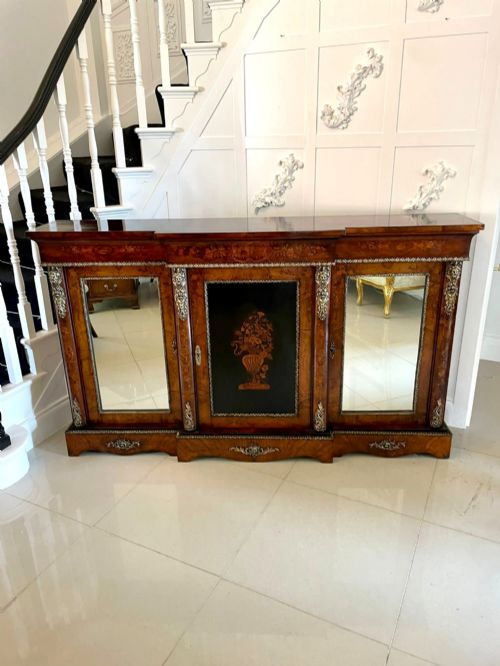
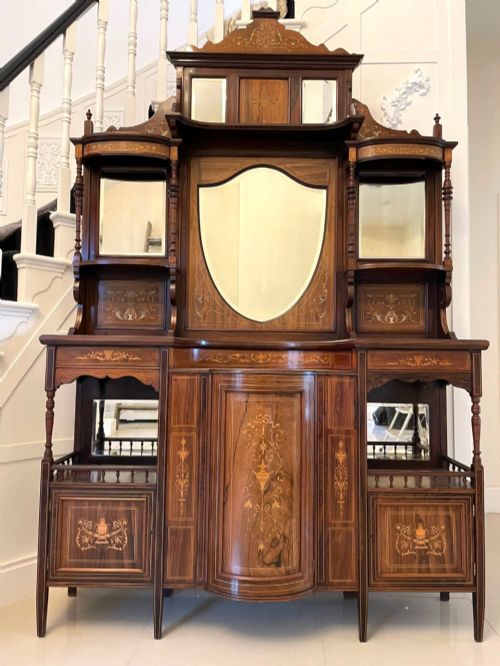
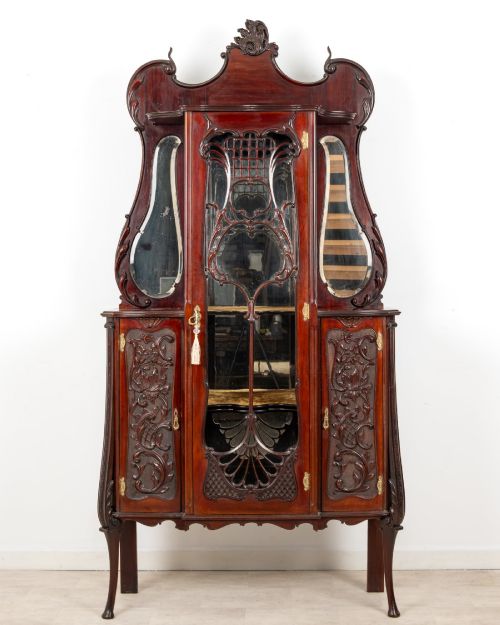
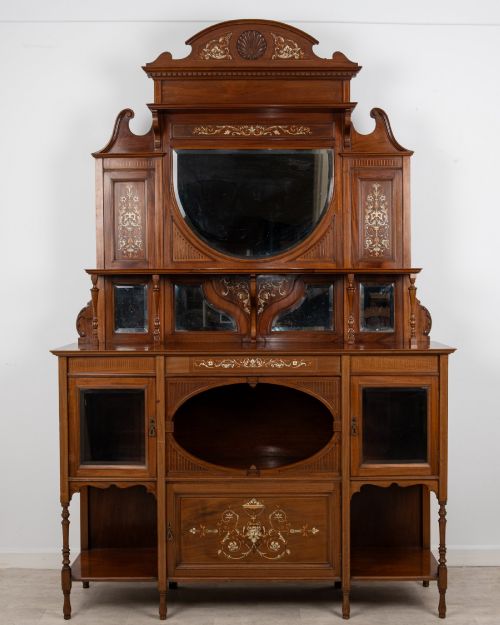
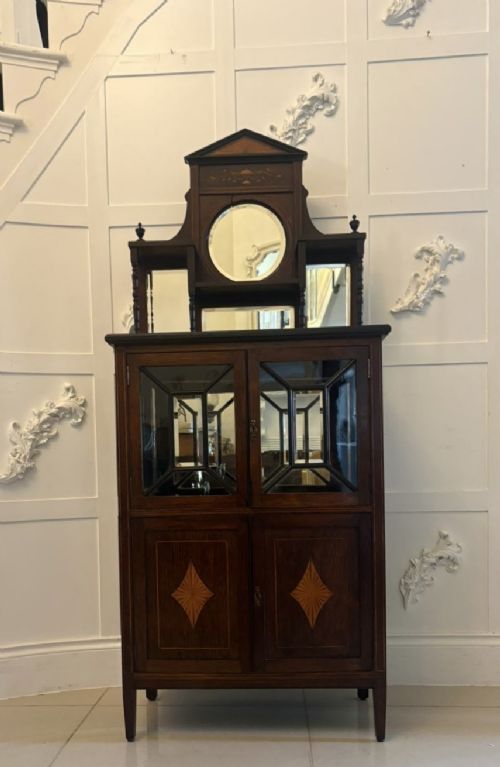
When you search for an antique parlor mirror, you encounter large display cabinets, sideboards, and credenzas incorporating integrated looking glasses into their upper frameworks. These multi-functional pieces served both decorative and practical purposes in formal rooms across the nineteenth and early twentieth centuries.
The versions most common on this page date from the Victorian and Edwardian eras, constructed in dense timbers like mahogany, rosewood, and walnut. They typically combine open shelving or glazed display spaces with enclosed cupboards below and a prominent mirror plate above.
Materials and construction
Cabinet makers utilised choice timbers such as mahogany, rosewood, and walnut, often applying intricate marquetry and contrasting satinwood inlays to the primary surfaces. Ebonised finishes and brass mounts appear frequently, reflecting the decorative tastes of the Aesthetic Movement and Art Nouveau periods.
The structural carcass supports heavy glass mirror plates, which are usually bevelled and set into carved or fretworked wooden superstructures. Joinery involves traditional cabinet-making techniques, pairing solid framing timbers with fine wood veneers.
Antique Parlor Mirror Retail Price Guide 2026
Typical asking prices for parlor mirror among the pieces listed under this phrase on Sellingantiques today, from the lower quarter to the upper quarter. They describe what is for sale here now, not the wider market.
The listings here span the Victorian and Edwardian periods, featuring display cabinets and credenzas built from rosewood, walnut, and mahogany.
Evaluating the craftsmanship
Quality rests in the precision of the marquetry and the depth of the timber selection, distinguishing simple utilitarian furniture from ambitious cabinet work. Dense burr walnut and profusely inlaid rosewood signify pieces commissioned from premier workshops.
The integration of the mirror back into the base carcass demonstrates the maker's architectural ambition, with superior examples featuring carved crestings, delicate astragal glazing bars, and balanced proportions.
Garnett and Sons·Gillows
The Antique Parlor Mirror Glossary
- Marquetry
- Decorative patterns formed by inserting pieces of contrasting wood and other materials into a veneer. This technique creates elaborate floral or geometric designs across cabinet doors and friezes.
- Credenza
- A sideboard or buffet cabinet used for storage and display. Victorian examples often incorporate central mirror backs and flanking glazed display cupboards.
- Chiffonier
- A low sideboard or cabinet featuring a raised shelf or mirror superstructure. It evolved from earlier dining room storage into a prominent parlor furnishing.
- Aesthetic Movement
- A late nineteenth-century design style emphasising visual beauty over narrative subject matter. Cabinets from this movement frequently utilise ebonised finishes and gilt detailing.
- Astragal
- A small wooden moulding used to hold panes of glass within a display door. Fine examples feature slender profiles that maximise the viewing area.
Antique Parlor Mirror: Frequently Asked Questions
What rooms suit these cabinets?
These large mirror-backed pieces work best in principal reception rooms or hallways where their reflective glass can brighten dark corners and create a sense of expanded space.
Position them against substantial walls away from direct sunlight to protect fragile rosewood and mahogany veneers from fading over time.
How do I date the piece?
Victorian examples tend to display heavier carved mouldings, burr walnut veneers, and darker ebonised finishes, while Edwardian pieces often present lighter mahogany and satinwood inlays.
Stylistic markers like Aesthetic Movement ebonising or Art Nouveau botanical motifs also help anchor the piece within a specific nineteenth or early twentieth-century decade.
Can I store heavy items inside?
The internal shelving is generally designed for porcelain, glassware, and decorative display rather than heavy household storage.
Enclosed lower cupboards handle books and linens securely, but upper display tiers require balanced weight distribution to protect old timber joints.
How do I care for the mirror plate?
Clean the glass using a soft cloth and a minimal amount of neutral cleaner, ensuring liquid does not seep behind the bevelled edges into the silvering.
Treat the surrounding wood frame and inlay with appropriate furniture wax rather than silicone polishes to maintain the traditional sheen of the timber.