
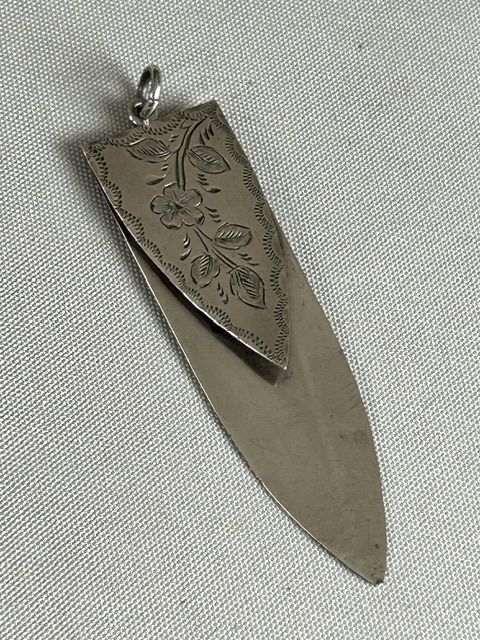


Antique Page Clip
These antique page clip pieces are desk accessories and bookmarks made to hold a place in a book, often shaped as trowels or novelties.
Antique Page Clip
An antique page clip search brings up small desk accessories and bookmarks shaped as trowels, swords, and novelty items like teddy bears. Buyers looking at this page meet Victorian, Edwardian, and twentieth century pieces designed for reading and writing desks.
The most common forms on this page are silver bookmarks, often styled as miniature garden trowels with engraved decoration. Alongside these sit skirt lifters and page turners that share the same metalwork and domestic function.
Origins span Birmingham, Glasgow, and English assay offices, reflecting regional manufacturing centres of the period. These items served both practical reading needs and ornamental desk presentation during the late nineteenth and early twentieth centuries.
How they were made
Silversmiths shaped sterling silver and silver into detailed novelties, employing stamping, piercing, and hand engraving techniques. Handles combined this metalwork with organic materials such as mother-of-pearl and banded agate.
Maker marks, town marks, and date letters were stamped directly into the metal to record the assay office and year of creation. Metal components were joined to natural handles using pins and secure mounts suited to daily desk use.
Wild boar heads and teddy bears quietly keep watch over your reading.
What varies in quality
Quality rests on the crispness of the engraving and the sculptural ambition of the novelty form, separating standard production items from more imaginative commissions. Well-defined details on animal figures or trowel blades indicate skilled workshop output.
The selection of natural materials like banded agate and mother-of-pearl affects the character of the piece. Clean integration of these inserts with the silver mount demonstrates the proficiency of the maker.
Crisford & Norris·Adie & Lovekin
The Antique Page Clip Glossary
- Sterling Silver
- A standard of silver alloy containing ninety-two point five percent pure silver by mass. This material forms the primary body for most bookmarks and desk accessories.
- Assay Office
- An official body that tested and hallmarked precious metals to guarantee purity. Birmingham and Glasgow offices appear frequently on these pieces.
- Trowel Bookmark
- A decorative bookmark fashioned in the shape of a miniature garden trowel. Victorian and Edwardian makers produced these with engraved blades.
- Novelty
- An object made in a whimsical or unusual shape rather than a standard geometric form. Teddy bears, swords, and advertising items fall into this group.
Antique Page Clip: Frequently Asked Questions
What is an antique page clip used for?
These items held pages in books or secured papers on a desk during the Victorian and Edwardian eras. They combined practical utility with ornamental design for the home library.
Many examples take the form of bookmarks or small clips designed to sit neatly between pages without damaging the paper.
How do I date an antique silver bookmark?
Dating relies on the hallmarks stamped directly into the silver metal. These tiny marks show the assay office, standard mark, and a specific letter corresponding to the year of manufacture.
Style also helps indicate the period, moving from ornate Victorian designs to cleaner Art Deco or 1920s novelty forms.
What materials were used in these pieces?
Makers relied heavily on sterling silver and standard silver for the main body and blades of the bookmarks. Handles and decorative panels frequently incorporate mother-of-pearl or banded agate.
These natural materials provided a textural contrast to the polished and engraved metal surfaces.
Are these desk accessories English in origin?
The pieces recorded here originate from English workshops and assay offices such as Birmingham, alongside Scottish production from Glasgow. Hallmarks provide clear evidence of where each item was tested and entered for sale.
Makers active in these regions produced a wide range of novelty forms for the domestic market.