




Antique Padded Nursing Chair
An antique padded nursing chair offers low seating and sprung comfort, bringing compact Victorian and Edwardian form to modern interiors.
Antique Padded Nursing Chair
An antique padded nursing chair is a low-slung seat designed for comfort and close domestic tasks during the nineteenth and early twentieth centuries. These pieces appear in forms such as low salon seats, boudoir chairs, and button-backed armchairs from the Victorian and Edwardian periods.
How they were made
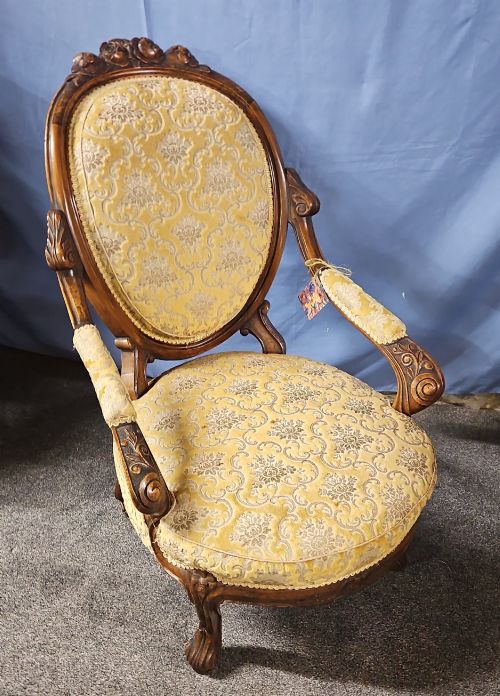
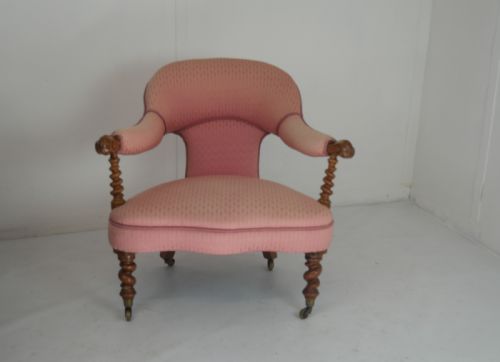
Cabinet makers constructed frames using hardwoods including walnut, mahogany, and oak, often shaping the timber with carved details or modest inlay work. Workshops then applied padding and upholstery in textiles such as velvet and woven fabric, securing the suspension with traditional stuffing and button-back techniques.
Structural variety includes turned wooden legs fitted with brass castors alongside fixed side and rocking chair bases. Joinery relies on nineteenth-century carpentry methods, supporting the padded forms typical of ladies chairs and boudoir seating.
Current listings span the Victorian and Edwardian eras, utilising walnut and mahogany timber alongside brass hardware.
What varies in quality
Quality rests in the crispness of timber carving, the depth of frame shaping, and the integrity of the original wood rather than superficial additions. Walnut and mahogany examples with deliberate decorative flourishes or inlaid mahogany show greater ambition than plain structural frames.
The sophistication of the upholstery execution, from button-back tension to the harmony of the textile choice, distinguishes standard regional seating from finer parlour and salon pieces.
The Antique Padded Nursing Chair Glossary
- Button back
- An upholstery method where tufts are pulled deep into the padding and secured with fabric-covered buttons to create a diamond pattern. This technique provides firm support while adding decorative texture to the backrest.
- Prie-dieu chair
- A devotional chair featuring a low seat and an elevated, padded top rail designed for kneeling or leaning during prayer. Victorian examples frequently share the low profile and upholstery style of standard nursing chairs.
- Boudoir chair
- A small, decorative seat intended for private chambers or dressing rooms. These pieces prioritize compact proportions and soft upholstery over heavy structural framing.
- Salon chair
- An occasional seat designed for formal reception rooms. They often feature exposed polished wood frames and carved walnut or mahogany details.
Antique Padded Nursing Chair: Frequently Asked Questions
What is an antique padded nursing chair used for today?
These low seats function well as bedroom accent chairs, fireside seating, or dressing table chairs in contemporary rooms. Their compact dimensions allow them to fit into spaces where standard armchairs prove too bulky.
Their distinct nineteenth-century silhouettes also provide a strong decorative focal point within both traditional and modern interior schemes.
How do I date an antique nursing chair?
Dating relies on examining the timber species, frame style, and upholstery construction methods visible on the piece. Victorian examples typically feature heavy walnut or mahogany frames with carved details, while Edwardian pieces often display lighter inlaid mahogany.
Comparing the turning of the legs and the presence of brass castors against known nineteenth-century design patterns also helps narrow the period of manufacture.
Are nursing chairs comfortable for everyday sitting?
Their low seats and supportive padded backs offer a surprisingly relaxed sitting position for reading or resting. Because they were originally built for domestic tasks requiring close seating, their ergonomic proportions suit casual use.
However, the firmness of the seat depends entirely on the condition of the internal stuffing and upholstery build.
What is the difference between a nursing chair and a boudoir chair?
Nursing chairs traditionally feature very low seats to accommodate the clothing styles and practical needs of nineteenth-century domestic life. Boudoir chairs tend to be slightly more decorative occasional pieces made for dressing rooms and private sitting areas.
Both share compact footprints and generous padding, often leading to overlapping terminology in antique listings.