
Antique Oak Benches
Antique oak benches combine structural timber with centuries of functional domestic seating, offering buyers durable historical utility.
Antique Oak Benches
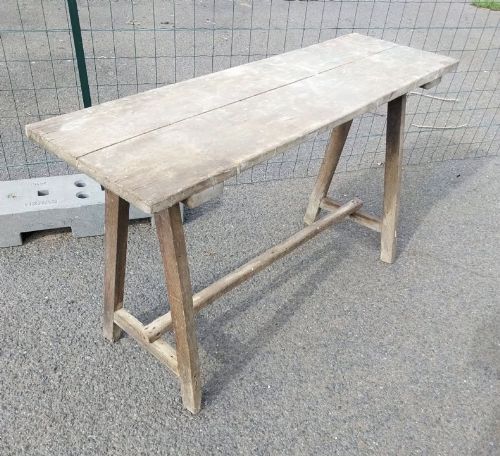
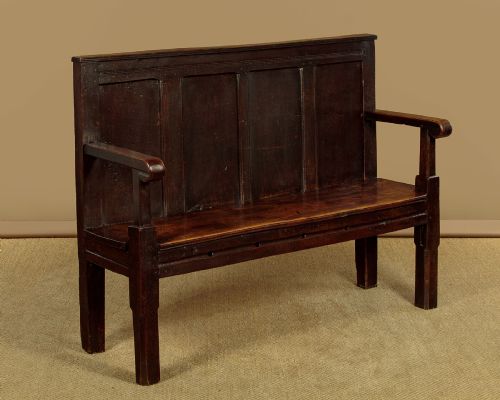
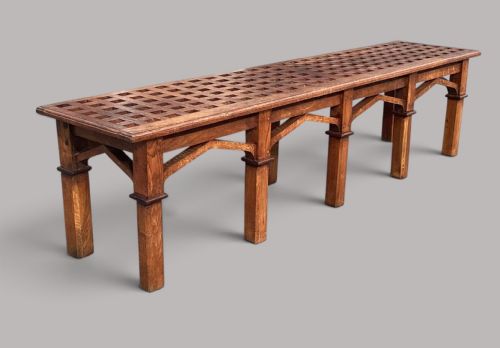
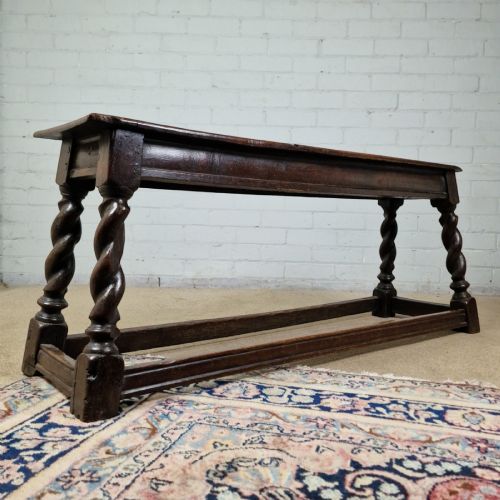
Antique oak benches encompass a diverse group of domestic seating, ranging from long tavern forms and refectory accompaniments to high-back settles and hall seats. Buyers searching for antique oak benches frequently encounter 18th-century box settles, 19th-century church or hall pews, and Edwardian trestle forms.
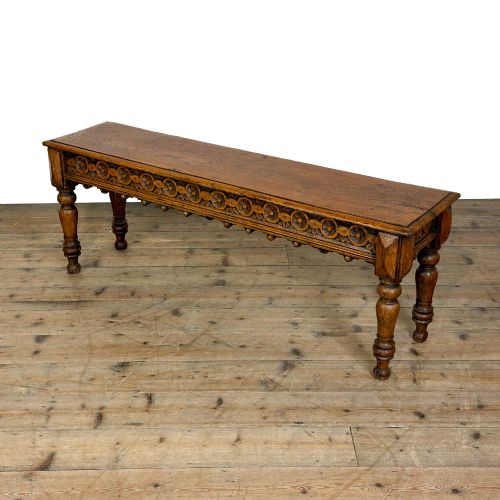
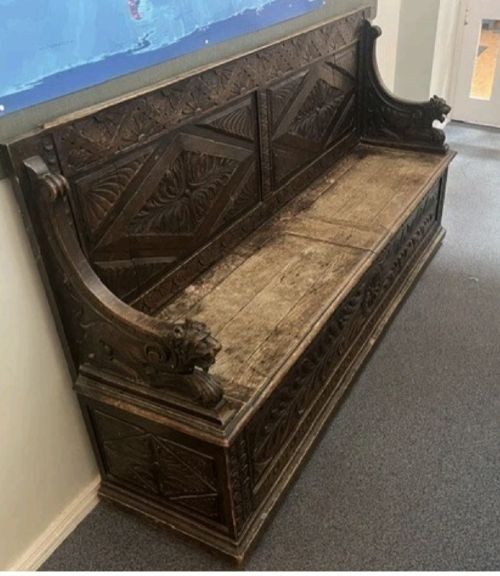
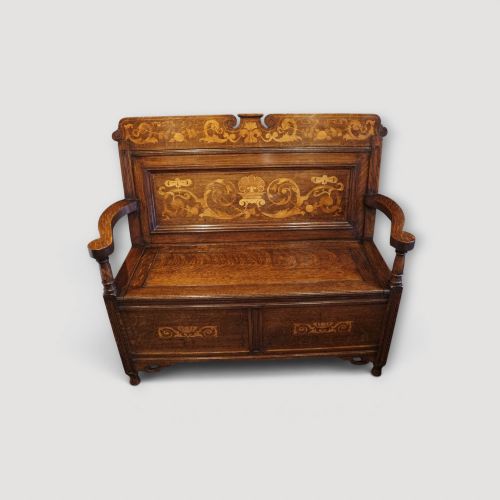
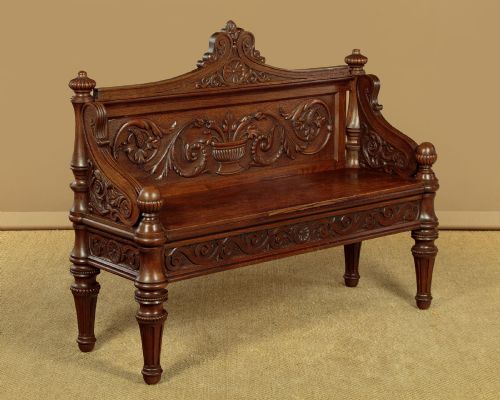
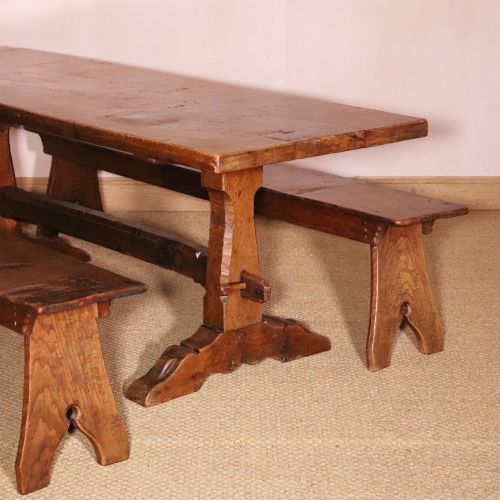
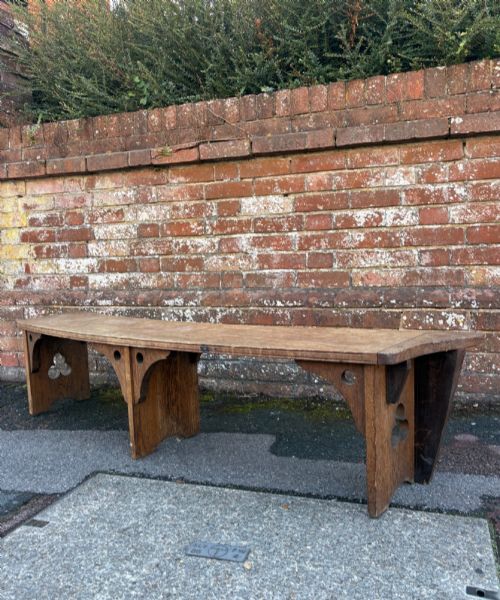
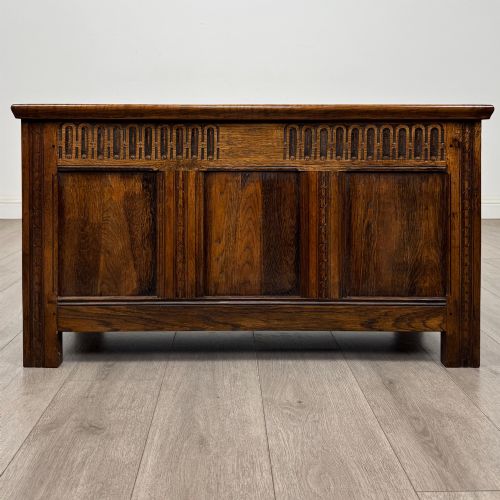
Many examples incorporate integrated storage, functioning as blanket boxes or monk's benches with fold-over table tops. Others present open bases with shaped trestles, carved panel backs, or gothic revival details derived from architectural precedents.
Origins stretch across English, Welsh, and French traditions, utilising regional timbers like ash alongside primary oak. Pieces span the 17th century through the Edwardian period, reflecting shifting domestic requirements from communal hall seating to specialised hallway furniture.
What varies in quality
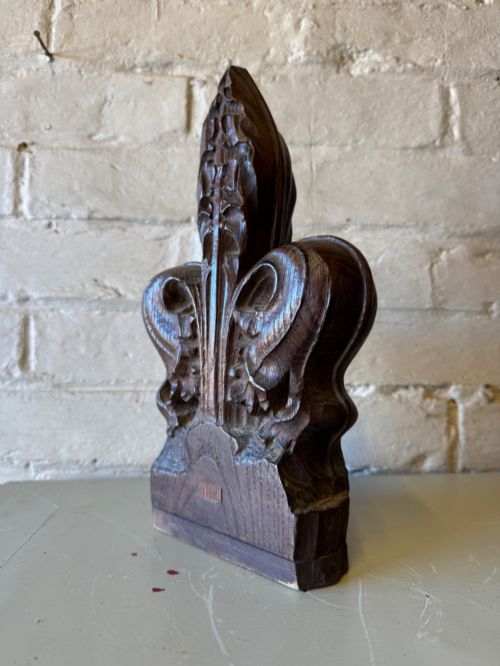
Depth of hand-carved detailing and the architectural ambition of the frame separate standard regional seating from exceptional pieces. Box settles with high panelled canopies or intricate trefoil supports reflect greater workshop skill.
The integrity of the timber and the preservation of original pegged joints determine the structural standard of older forms. Surface warmth, honest patination, and the retention of primary seat boards distinguish untouched examples from heavily restored variants.
Listings feature oak alongside ash, elm, brass, and iron across periods spanning from the 16th century to the Edwardian era.
GIllows
The Antique Oak Benches Glossary
- Settle
- A wooden bench with a high back, solid arms, and frequently a box base beneath the seat for storage. These pieces sheltered occupants from draughts in early domestic halls.
- Monk's bench
- A multi-functional form featuring a hinged back that folds down flat over the arms to convert the seat into a table. This design maximised utility in compact historical spaces.
- Joint stool
- A sturdy, low wooden stool constructed with pegged mortise and tenon joints rather than turned legs. They served as primary seating or portable surfaces before lighter chairs became common.
- Box settle
- A variation incorporating a lidded chest beneath the seat squab. It provided secure storage for household textiles and dry goods in country houses.
- Trestle
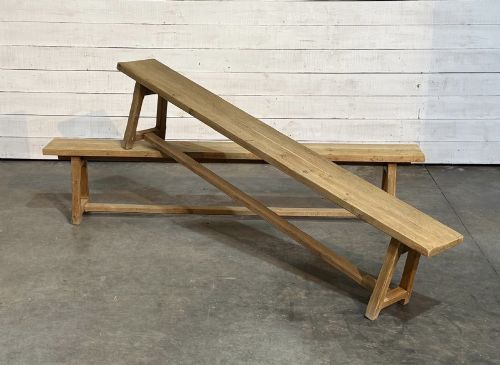
- A structural support consisting of a horizontal beam fixed to two splayed vertical feet. This format underpins refectory tables and long benches designed for communal dining.
Antique Oak Benches: Frequently Asked Questions
What is an antique oak settle?
A settle is an enclosed wooden bench featuring a high back, solid armrests, and often a storage box integrated beneath the seat. Historically positioned near hearths, they blocked cold draughts in large rooms.
Over the centuries, cabinetmakers carved these pieces with panelled backs, canopies, or gothic tracery. They served as primary communal seating before upholstered sofas became standard domestic furniture.
How do I date an antique oak bench?
Dating relies on examining construction methods, tool marks, and stylistic motifs visible across the frame. Early 18th-century and 17th-century examples typically feature hand-riven timber, peg joinery, and simpler joined box forms without mechanical screws.
Later Victorian and Edwardian revivals often display machine-sawn components, standardised hardware, and applied revival styles such as Gothic or Arts and Crafts. Comparing the patination and wear patterns to recorded period pieces helps confirm the era.
Where were hall benches used?
Hall benches occupied the entranceways of large country houses, civic buildings, and estate cottages. They provided a brief seat for visitors removing outdoor garments and boots.
Many incorporated lift-up lids for storing winter accessories, or attached umbrella stands and hat rails. Their architectural forms announced the status of the household to arriving guests.
Are oak benches suitable for daily dining?
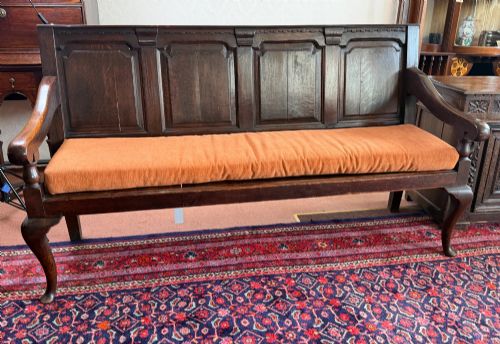
Solid oak benches function well around refectory or kitchen dining tables, offering robust construction and long seating capacity. Many historical forms were specifically built as pairs or matching sets for dining halls.
Buyers should check seat heights and lengths against existing tables to ensure comfortable clearance. Adding loose squabs or cushions provides comfort during extended meals while preserving the wooden surface.