




Antique Mirror Duchess Chest
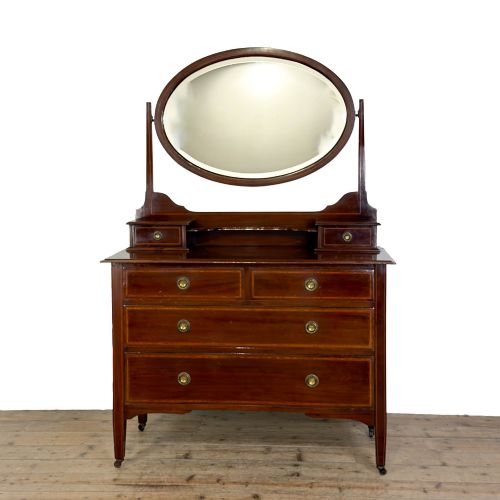
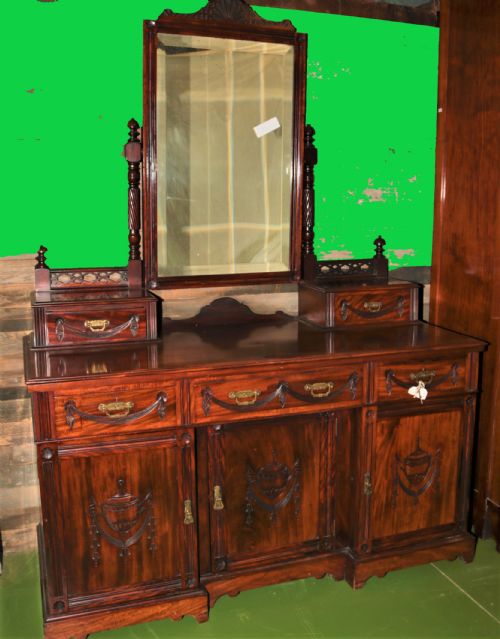
An antique mirror duchess chest brings a grand Victorian or Edwardian dressing piece into the bedroom, offering deep drawers and a tilting glass.
Antique Mirror Duchess Chest
When buyers search for an antique mirror duchess chest, they encounter substantial wooden dressing furniture that combines a chest of drawers with a mounted mirror, originating mainly from the Victorian and Edwardian eras. These pieces function as both a practical drawer unit and a dressing table, often featuring smaller accessory drawers flanking the central glass.
The versions most frequently met on this page span the mid-nineteenth century to around nineteen hundred, manifesting in forms ranging from polished hardwood to simpler painted or stencilled pine. Pedestal formats and combined dressing table chests appear regularly, reflecting the domestic needs of period bedrooms.
Materials and construction
Cabinet makers utilised a variety of timbers for these pieces, employing rich hardwoods such as mahogany, walnut, burr walnut, and satinwood alongside more utilitarian pine. These woods were often selected to show off natural grain patterns or embellished with delicate inlay work and stencilled decoration.
Structural integrity relied on traditional joinery methods within the drawers and carcass, paired with brass hardware and substantial mirror glass plates. Scumble glazing occasionally appears on pine surfaces to imitate more expensive woods, demonstrating the diverse techniques employed across different workshops.
Some nineteenth-century dressing chests include hidden compartments behind the small top drawers, designed for secret letters and private trinkets.
Assessing quality in dressing pieces
The distinction between standard examples and the finest pieces rests upon the choice of timber and the sophistication of the cabinet work. Richly figured veneers like burr walnut or detailed mahogany inlay elevate a piece far above simple pine constructions.
Proportion and the preservation of original mirror glass and brass fittings also dictate the standing of a piece. Finer examples maintain crisp detailing in their mouldings and integrated drawer arrangements, whereas simpler country pieces rely on utilitarian function.
John Taylor of Edinburgh
The Antique Mirror Duchess Chest Glossary
- Duchess dressing table
- A large nineteenth-century dressing table featuring a central swing mirror supported by small jewellery drawers above a main chest.
- Scumble glazing
- A decorative painting technique applied to cheaper woods like pine to simulate the appearance of more costly grain patterns.
- Cheval mirror
- A full-length mirror hung in a frame that allows it to tilt, occasionally incorporated into larger dressing chests.
- Inlay
- A method of ornamenting a wooden surface by inserting contrasting strips of wood or other materials into flush recesses.
Antique Mirror Duchess Chest: Frequently Asked Questions
What is a duchess chest?
A duchess chest is a traditional dressing table that incorporates a set of drawers with a raised mirror superstructure, designed for bedroom use during the Victorian and Edwardian periods.
These pieces typically provide ample storage alongside a pivoting glass, making them a central feature of nineteenth-century chamber furniture.
How do I date these chests?
Dating relies on observing the prevailing styles, timber choices, and construction methods visible in the piece. Victorian examples often show heavier mahogany or walnut builds, while Edwardian versions can appear lighter.
Specific design details like stencilling, brass handles, and the presence of pedestal configurations also help narrow down the decade of manufacture.
Are pine versions authentic?
Pine versions are entirely authentic examples of period furniture, representing the more domestic or regional output of nineteenth-century workshops rather than high-end urban cabinet makers.
Many of these utility pieces featured stencilling or scumble glaze finishes to emulate costly hardwoods for middle-class homes.
How do I care for the wood?
Caring for these surfaces involves keeping them away from direct sunlight and excessive moisture to protect the polished wood and delicate veneers. Regular dusting with a dry cloth maintains the finish.
Harsh chemical polishes should be avoided in favour of traditional beeswax applied sparingly to nourish older timber.