


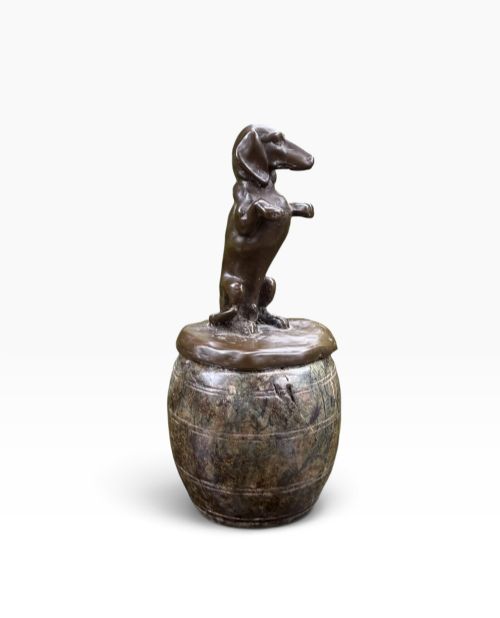

Antique Marble Desk
An antique marble desk unites solid timber framing with heavy stone slabs, offering a dedicated workspace grounded in nineteenth and early twentieth century craftsmanship.
Antique Marble Desk
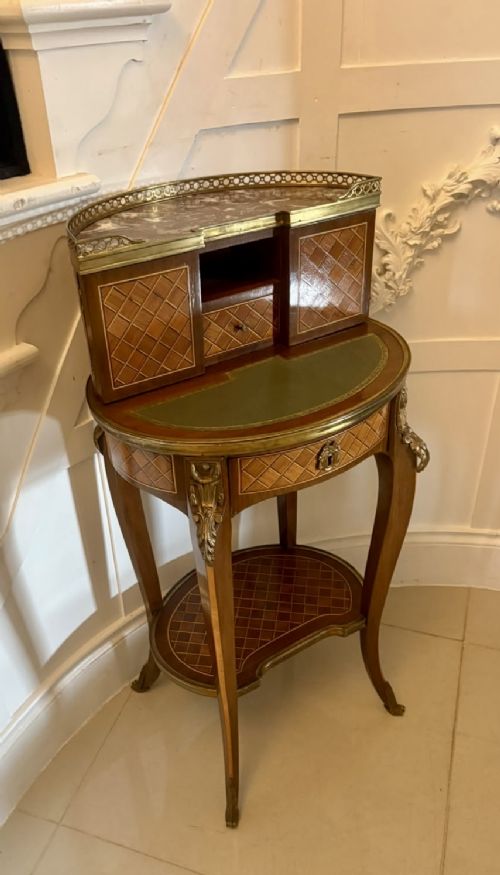
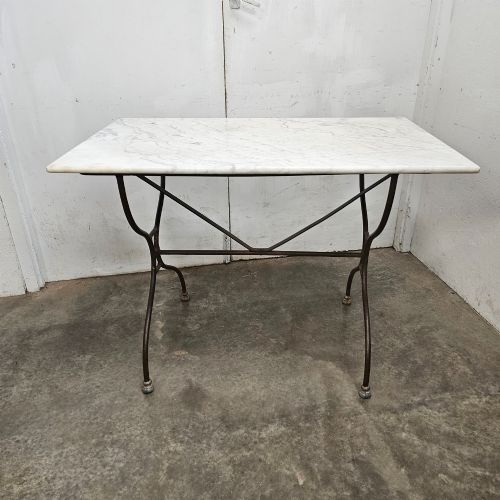
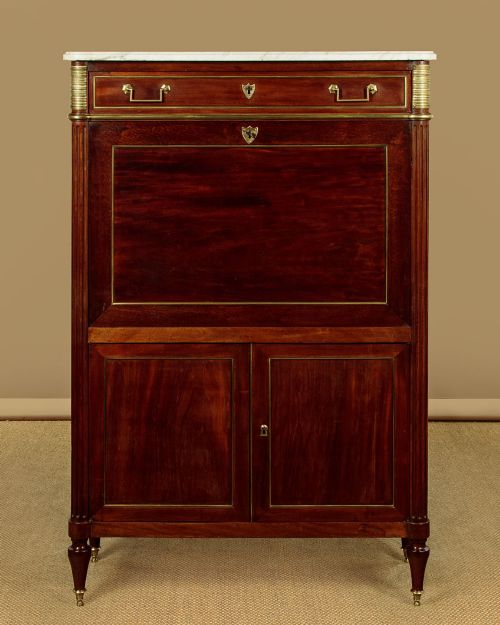
When buyers search for an antique marble desk, they encounter writing furniture featuring heavy stone surfaces set into timber or metal frames. The category encompasses everything from French secretaire abattants with inset stone tops to dedicated partners desks and compact writing tables.
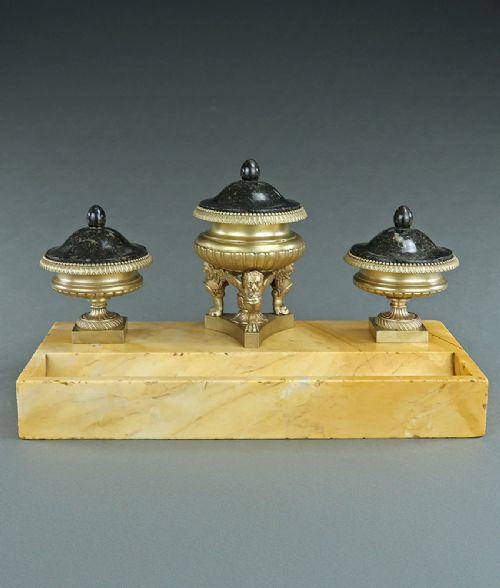
Most examples appearing in trade belong to the nineteenth and early twentieth centuries, spanning Victorian, Art Deco, and French Empire styles. These pieces range from grand mahogany writing cabinets to smaller Italian console desks and fitted desk stands with integrated inkwells.
The defining characteristic across these forms remains the marriage of polished stone and functional workspace. Whether utilising a full marble top or a fitted inset slab surrounded by mahogany and ormolu mounts, these pieces serve as enduring focal points for a study.
How they were made
Cabinetmakers constructed the primary framework using dense hardwoods like mahogany and burr walnut, often employing intricate marquetry or plain polished veneers. Heavy stone slabs were then precision-cut, polished, and fitted directly into the timber chassis to create smooth, durable writing surfaces.
Metal ornamentation played a crucial role in the assembly of these pieces, utilising bronze, brass, gilt bronze, and ormolu for mounts, handles, and gallery rails. Foundries cast these metal elements separately before chasing and fire-gilding them to complement the veined patterns of the marble tops.
A surprise discovery for desk historians is the micro-mosaic paperweight depicting tiny Italian doves.
What varies in quality
The caliber of an antique marble desk depends heavily on the integration of its materials and the precision of its cabinetry. Superior examples display seamless joins between timber and stone, alongside crisply cast ormolu mounts that sit flush against the primary structure.
Stone selection dictates much of the visual weight, with finely figured Carrara, rouge marble, or specimen varieties marking the higher tiers of production. Finer pieces maintain original hardware, undisturbed patination on the timber, and stone surfaces free from modern repairs.
Japy Freres·Maple and Co·Charles a Orleans·Bruno Zach
The Antique Marble Desk Glossary
- Ormolu
- Gilt bronze mounted onto furniture and clocks. This technique involves applying a mercury and gold amalgam to cast bronze before heating.
- Secretaire abattant
- A tall wall-mounted or freestanding cabinet with a drop-front writing flap. Opening the flap reveals a fitted interior containing small drawers and pigeonholes.
- Marquetry
- Decorative veneer work arranged in pictorial or geometric patterns. Craftsmen cut thin slices of contrasting wood to form intricate designs across the desk surface.
- Grand Tour
- Souvenirs and architectural models acquired by wealthy travellers in the nineteenth century. These items often incorporate specimen marbles and micromosaic panels.
Antique Marble Desk: Frequently Asked Questions
How do I clean an antique marble top?
Wipe the stone surface gently using a soft cloth dampened with warm water and mild, pH-neutral soap. Avoid acidic cleaners, vinegar, or harsh chemical detergents that can etch the polished finish.
Dry the marble thoroughly with a clean lint-free towel to prevent water spots. Periodic application of a specialised stone wax helps protect the surface from future stains.
Are these desks suitable for daily work?
Many historical writing tables and fall-front cabinets accommodate modern laptop use and paperwork. However, users should consider the fixed working height and knee clearance of nineteenth-century dimensions.
Placing protective felt pads beneath heavy desk accessories prevents scratching on both wood and stone surfaces. Regular conditioning of the surrounding timber helps maintain the structural integrity of the frame.
How do I identify the period of a desk?
Examine the construction methods, dovetails, and secondary woods visible inside the drawers. Hand-cut joints and specific hardware styles generally point toward nineteenth-century production.
Cross-reference decorative motifs like ormolu mounts and inlay patterns with known design movements such as French Empire or Art Deco. Maker stamps or retailer labels affixed to the interior woodwork provide definitive dating evidence.