
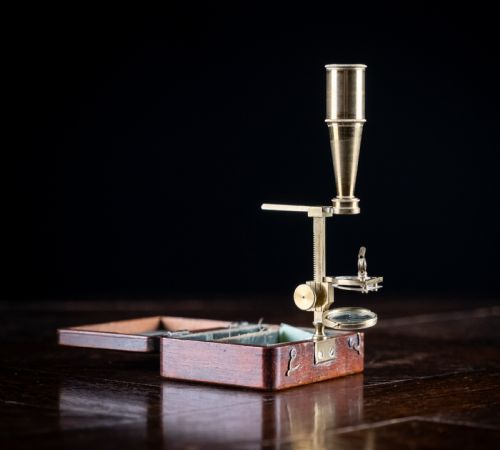


Antique Magnifier
An antique magnifier is a functional optical instrument and desk accessory that brings finer details into sharp focus.
Antique Magnifier
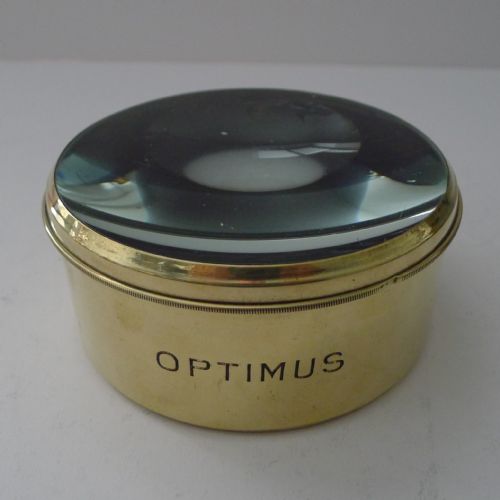
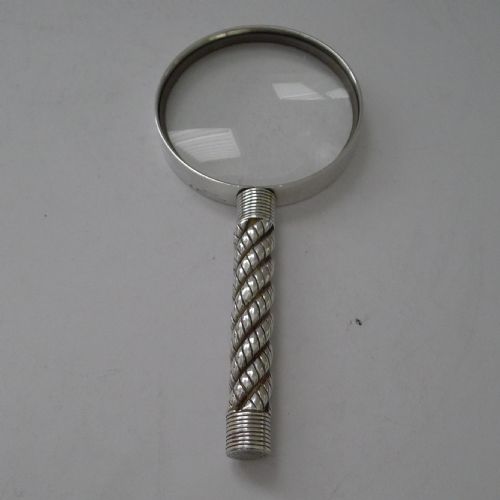
An antique magnifier serves as both a practical tool for close inspection and a handsome desk accessory. When searching for an antique magnifier, buyers encounter various forms ranging from handheld reading glasses to heavy brass desk lenses and specialised pocket instruments.
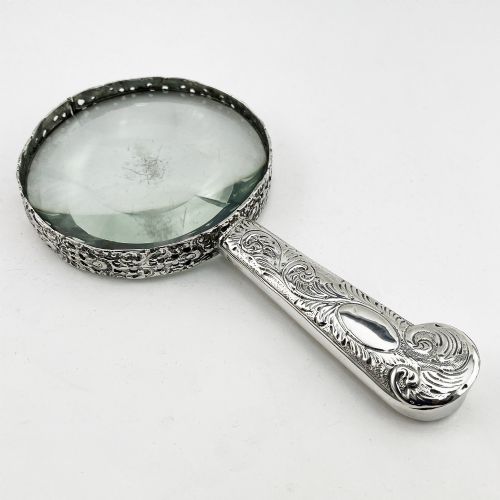
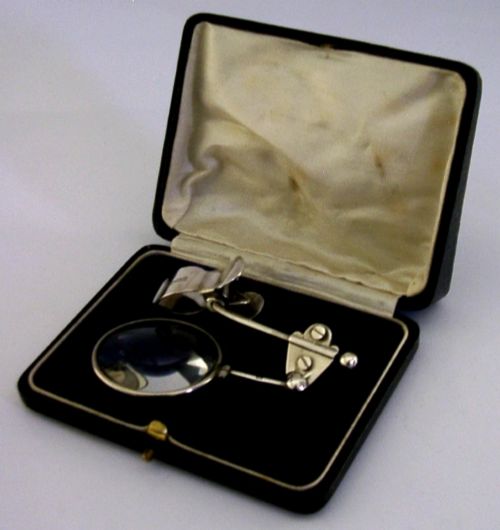
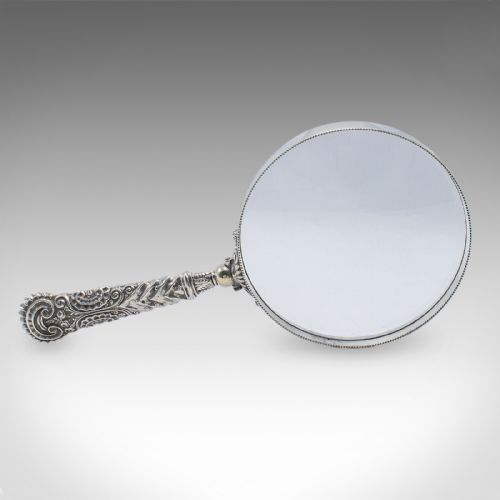
The pieces on this page span the Victorian era through the mid-twentieth century, with a strong representation of early twentieth-century designs. Common formats include folding linen testers, library aids with sterling silver handles, and pivoting bullseye lenses on stands.
Makers and retailers such as Hermes, Mappin & Webb, and Asprey contributed luxury versions finished in materials like shagreen and guilloche enamel. Simpler brass and glass desktop models were produced for utilitarian tasks in offices and studies.
How they were made
Materials utilised in these pieces reflect their dual purpose as optical tools and decorative objects, combining clear glass lenses with durable mounts of brass, sterling silver, and silver plate. Finer examples incorporate luxury coverings such as shagreen, leatherette, and guilloche enamel over metal foundations.
Construction techniques range from simple cast brass frames to complex folding mechanisms and adjustable joints. Scientific instruments feature precision-cut measuring scales and specialised folding mounts designed for linen analysis and pocket use.
Some magnifying glasses doubled as fly-fishing thumb aids, proving that Victorian anglers took their hobby down to the microscopic scale.
What varies in quality
Quality in these optical instruments depends upon the clarity of the glass lens and the integrity of its mounting. Superior examples maintain firm joints in folding arms and secure settings in desk stands.
The choice of handle materials distinguishes standard utility items from luxury desk accessories. Precious metals like sterling silver and exotic coverings such as shagreen elevate the standard of craftsmanship found in makers' workshops.
Hermes Paris·Broadway And Co·Mappin And Webb·CW Dixey London·Asprey
The Antique Magnifier Glossary
- Linen tester
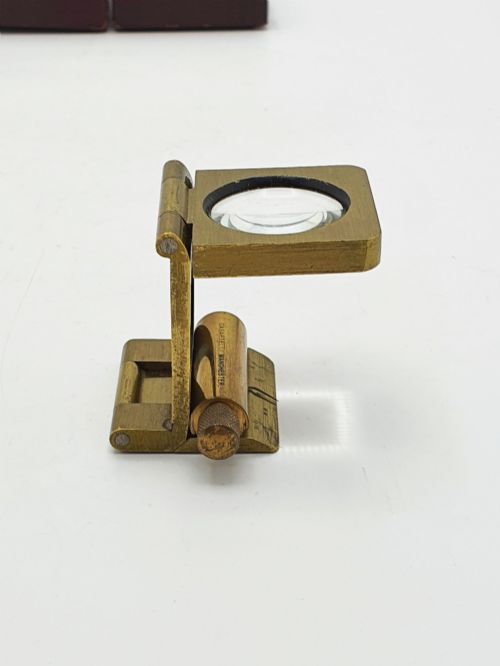
- A small folding magnifier originally used in the textile industry to count threads per inch within a measured square. These often feature integrated folding bases and measuring scales.
- Guilloche enamel
- A decorative technique involving precise mechanical engraving beneath translucent enamel layers. This finish appears frequently on twentieth-century vanity and desk accessories.
- Shagreen
- A textured leather prepared from the skin of sharks or rays, utilised to cover handles and small cases. It provides a tactile grip and a distinctive visual pattern.
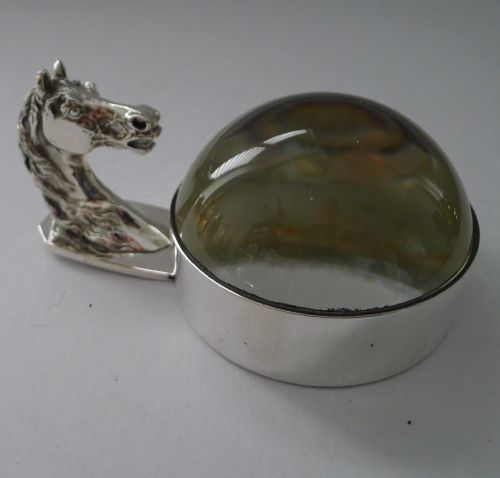
- Bullseye lens
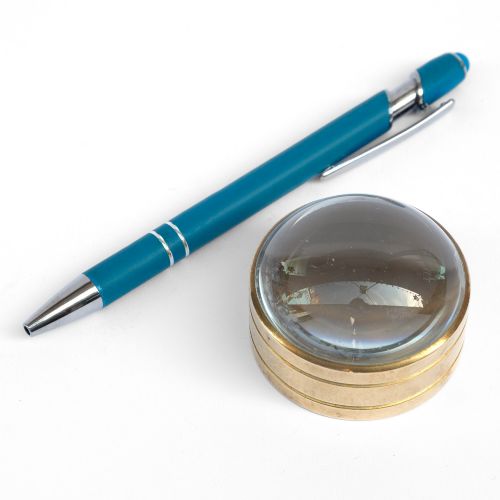
- A thick, convex magnifying lens often mounted on a pivoting brass stand for desk use. It allows hands-free adjustment over maps, books, or papers.
Antique Magnifier: Frequently Asked Questions
How do I use a folding linen tester?
A folding linen tester opens into a small triangular stand that rests directly on the fabric or paper. The fixed focal length positions the glass at the correct height to read the measuring scale below.
This design allows the user to examine fine details without holding the lens steady by hand.
What is a bullseye magnifying glass used for?
A bullseye magnifier sits on a pivoting stand designed for desktop use over maps, books, or documents. The heavy brass base keeps the thick convex lens stable while allowing the angle to be adjusted.
This style serves as both a practical reading aid and a heavy paperweight.
How do I date a silver magnifying glass?
British silver pieces typically feature hallmarks stamped into the metal, indicating the assay office, standard of silver, and date letter. Birmingham and London makers often included these marks near the edge of the handle or mount.
Comparing the stamp to standard assay tables reveals the exact year of manufacture.
Where were folding pocket magnifiers carried?
Pocket magnifiers and thread counters were sized to fit easily into a waistcoat pocket, desk drawer, or travelling case. Their compact folding brass frames protected the glass from scratches during transport.
Merchants, naturalists, and readers kept them close at hand for daily inspections.