


Antique Liquor Frame
An antique liquor frame holds your spirits in silver plate and cut crystal, built for Victorian hospitality and still ready to serve.
Antique Liquor Frame
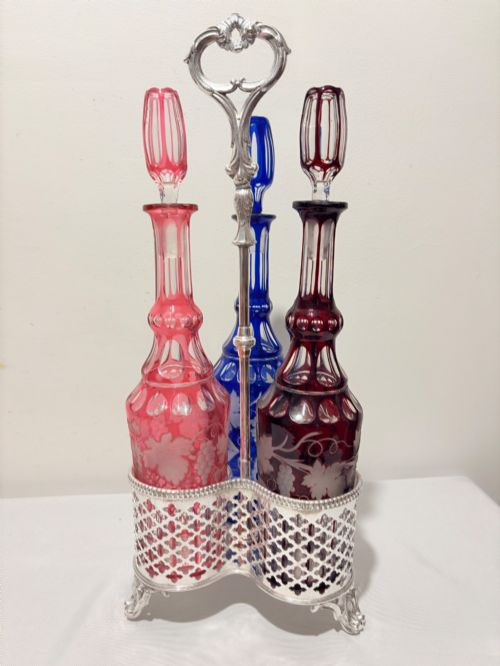
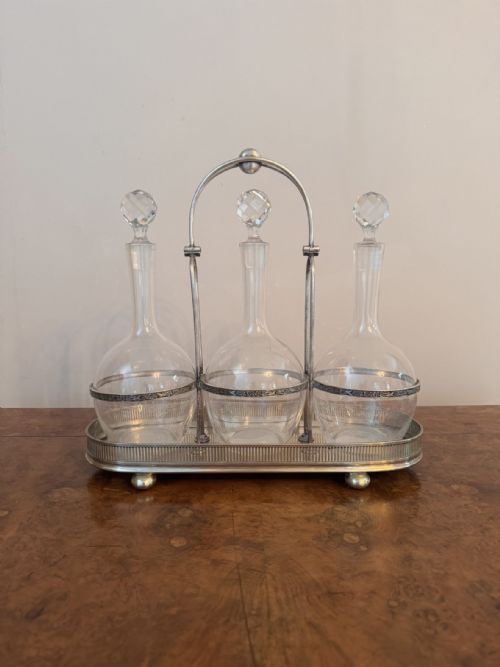
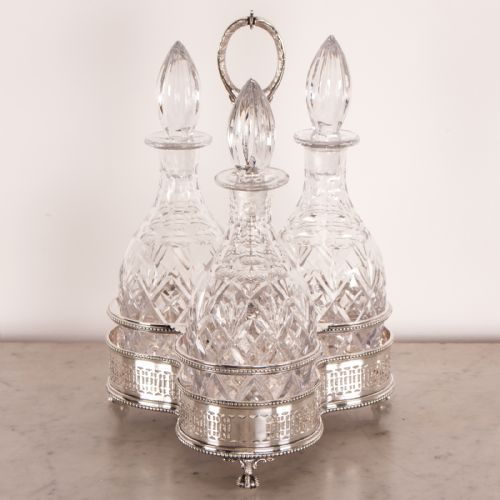
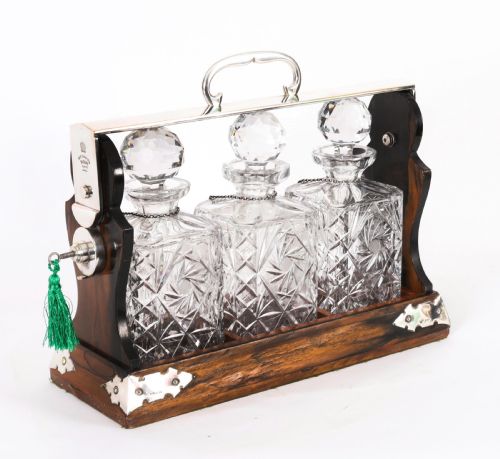
An antique liquor frame comprises a secure metal stand holding two or three glass bottles for spirits, often taking the form of a tantalus or a cruet. You will most frequently meet Victorian and Edwardian examples made from silver plate holding cut crystal or cut glass decanters.
The form spans diverse materials beyond silver plate, including oak, walnut, coromandel, and brass. Makers housed these vessels in stands, boxes, and locking frames designed for the sideboard.
Objects listed under this search include decanter sets, tantaluses, and barware dating from the mid-nineteenth century through to the early twentieth century. These pieces reflect the formal entertaining habits of the Victorian and Edwardian eras.
How they were made
Silversmiths plated base metals using early electroplating techniques or utilised Old Sheffield Plate, mounting the metalwork onto timber frames of oak, walnut, or coromandel. Joiners constructed the wooden boxes and stands to house the bottles securely.
Glassmakers blew and moulded heavy vessels, then finished the surfaces with deep cut crystal or cut glass patterns. Craftsmen fitted locking mechanisms to secure the spirits away from household staff.
The documented pieces span the Victorian and Edwardian periods, running from the mid-nineteenth century up to nineteen hundred.
What varies in quality
The calibre of the piece rests on the weight and clarity of the cut glass bottles and the thickness of the silver plate over the base metal. Finer examples display crisper hand-cut facets and robust, ornate framing.
Cabinetwork distinguishes the better frames, seen in the choice of timbers like coromandel or walnut and the precision of inlaid details. Maker attribution to firms such as Betjemann or Walker & Hall elevates the standing of an item.
Walker & Hall·Betjemann·Elkington·Hukin and Heath·Philip Ashberry
The Antique Liquor Frame Glossary
- Tantalus
- A locking drink container that holds decanters securely within a metal bar frame so guests can see the spirits but cannot pour them without a key. This ingenious Victorian device prevented unauthorised access by servants.
- Silver Plate
- A base metal coated with a thin layer of pure silver through electroplating or fused plating methods. This technique allowed manufacturers to produce ornate domestic wares at a lower cost than solid silver.
- Cut Crystal
- Glass containing lead oxide that is hand-cut with decorative facets to increase brilliance and weight. The deep cutting catches candlelight on the dining table.
- Old Sheffield Plate
- A method of fusing a thin sheet of silver to a thicker copper core before shaping the metal. This early technique precedes standard electroplating.
- Cruet
- A small stand fitted with bottles or cruets for holding condiments or spirits. These frames kept the table orderly during formal meals.
Antique Liquor Frame: Frequently Asked Questions
What is a tantalus?
A tantalus is a locking liquor frame that holds decanters beneath a metal bar, preventing access to the contents without a key.
Invented in the Victorian period, it allowed hosts to display expensive spirits while keeping them secure.
How do I date a liquor frame?
Dating relies on stylistic clues, timber choices, and manufacturer marks stamped into the silver plate or mounts. Victorian pieces often feature ornate cast frames, while Edwardian designs can be simpler or use specific oak and glass combinations.
Patents stamped on the locking bars, such as Betjemann designs, also provide precise manufacturing dates.
Are the decanters original?
Many surviving frames retain their original cut glass or cut crystal decanters, which fit the specific contours of the stand. Because bottles were easily broken, replacements occur frequently.
Checking that the stopper shapes and glass weights match the quality of the frame helps confirm originality.
How do I care for silver plate?
Silver plate requires gentle cleaning with a soft cloth and a specialised silver polish to preserve the thin metallic layer. Avoid abrasive cleaners that wear through the plating to the base metal beneath.
Store the frame in a stable environment away from damp air to prevent tarnish.