



Antique Industrial Workbench
These heavy timber and iron antique industrial workbench pieces bring genuine utilitarian grit to modern rooms.
Antique Industrial Workbench
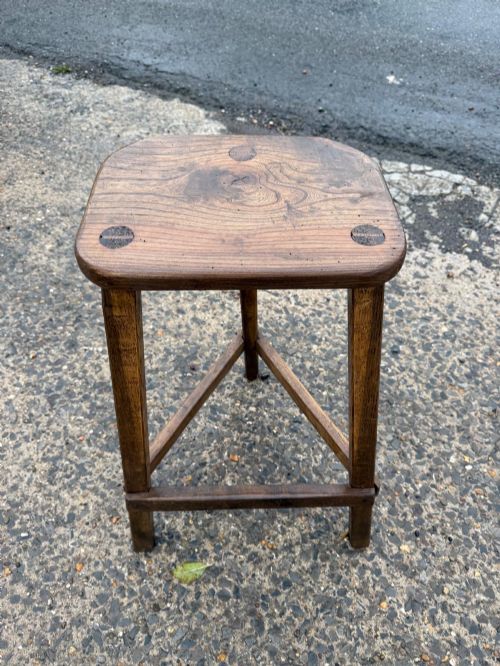
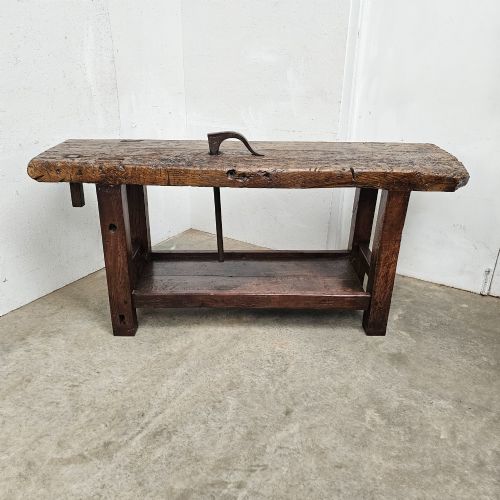
An antique industrial workbench represents the heavy-duty utilitarian furniture produced during the nineteenth and early twentieth centuries for trades such as carpentry, metalworking, and sorting mail. These pieces combine robust timber tops with sturdy iron or timber bases, designed entirely for endurance rather than decoration. Buyers searching for an antique industrial workbench frequently encounter French artisans' benches fitted with wooden vises and clamping bars, alongside simpler English and Scandinavian trestle tables.
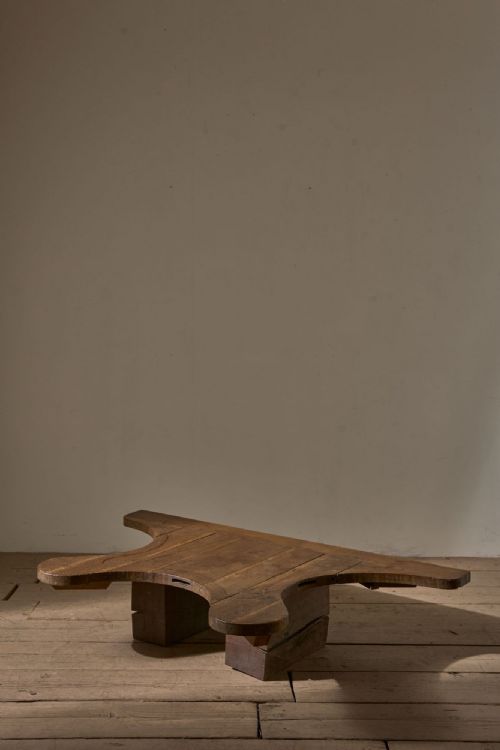
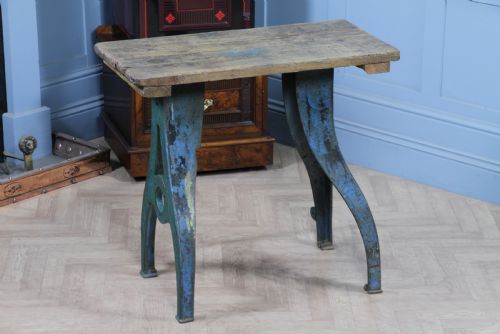
Beyond actual workshops, the category embraces related utilitarian forms like post office sorting tables, foundry tables, and heavy industrial steel tables. These multipurpose pieces cross easily into domestic settings as large dining tables, console tables, and coffee tables. The typical piece carries the authentic scars, marks, and patination of decades of heavy trade use.
How they were made
The construction relies on thick timber tops shaped from hard-wearing woods like oak, pine, beech, elm, and general hardwood. These substantial tops are supported by heavy cast iron, forged iron, metal bases, or sturdy timber trestles designed to withstand immense downward pressure and daily hammering.
Joinery focuses on pure strength, utilising heavy bolts, mortise and tenon joints, and integrated wooden vices or metal clamping bars. Many surviving examples retain their original painted finishes, raw scrubbed timber surfaces, or iron components left in their honest working state.
Antique Industrial Workbench Retail Price Guide 2026
Typical asking prices for industrial workbench among the pieces listed under this phrase on Sellingantiques today, from the lower quarter to the upper quarter. They describe what is for sale here now, not the wider market.
Listings feature 19th-century and early 20th-century pieces constructed from oak, pine, cast iron, and forged iron in industrial, rustic, and provincial styles.
What varies in quality
Quality rests upon the integrity of the original construction, the thickness and character of the timber top, and the retention of working mechanisms like integrated vises and wooden screws. Pieces featuring original painted surfaces or untouched patination from years of active use command greater interest than heavily restored or sanded alternatives.
The architectural balance between the top and the base dictates the overall success of the piece, particularly when adapted for modern domestic seating and dining. Substantial proportions, genuine period hardware, and uncompromised structural heavy metal elements separate exceptional workshop survivors from standard utility tables.
The Antique Industrial Workbench Glossary
- Clamping bar
- A wooden or metal bar fitted across the workbench to secure materials during fabrication. This mechanism is often integrated directly into the heavy timber top.
- Vice
- A mechanical screw device attached to the workbench to hold workpieces steady. Period vises on these benches are typically constructed from heavy wood or forged iron.
- Trestle base
- A structural support system consisting of horizontal beams and angled legs. This design provides exceptional weight-bearing capacity for long work tables.
- Patina
- The surface sheen and wear accumulated through decades of handling and trade work. Genuine patination forms the core visual appeal of industrial antiques.
Antique Industrial Workbench: Frequently Asked Questions
How do I clean a workbench top?
Maintain the dry timber surface using soft brushes and natural beeswax to preserve the historic patina. Avoid harsh chemical stripping that removes the authentic marks of trade use.
Keep the wood away from excessive direct heat sources to prevent timber splitting while retaining the honest character of the old surface.
Can I use these tables for dining?
These robust tables function exceptionally well as kitchen and dining room surfaces thanks to their generous proportions and stable construction. Pairing them with stools or chairs creates a practical central gathering space.
Verify the leg clearance and overall height to ensure comfortable seating before placing heavy benches into daily domestic use.
What woods were used for benches?
Workshop makers utilised dense domestic timbers capable of absorbing heavy impact without splintering. Common varieties include oak, pine, beech, elm, and mixed hardwoods.
French and English examples frequently feature thick beech or oak working surfaces paired with sturdy pine frames or cast iron legs.
How do I identify a postal table?
Post office sorting tables and related utilitarian forms display specific functional layouts designed for efficient mail handling and paper distribution. They typically feature wide timber surfaces supported by trestle or metal frames.
These commercial tables lack the heavy wooden vises found on traditional craft benches, focusing instead on expansive flat workspace.