



Antique Imari Lamp
An antique imari lamp brings vibrant hand-painted iron-red and cobalt-blue porcelain into a room, offering centuries of ceramic history electrified for modern interiors.
Antique Imari Lamp
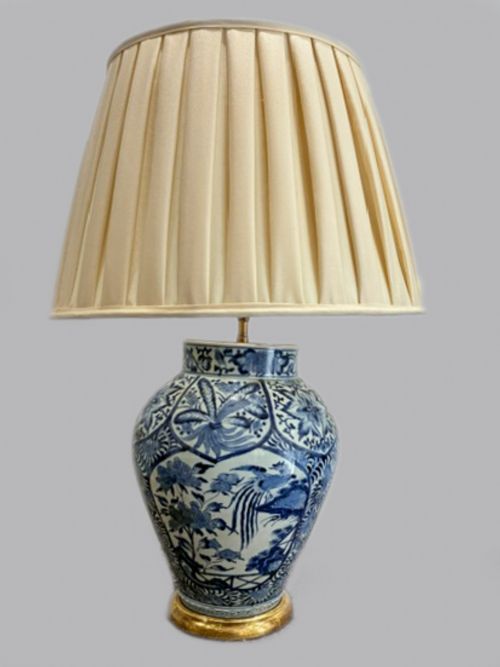
When searching for an antique imari lamp, buyers encounter pieces formed from Japanese porcelain vases dating from the seventeenth, eighteenth, and nineteenth centuries. These vessels originate primarily from the Edo and Meiji periods, reflecting traditional Japanese ceramic artistry adapted for Western lighting.
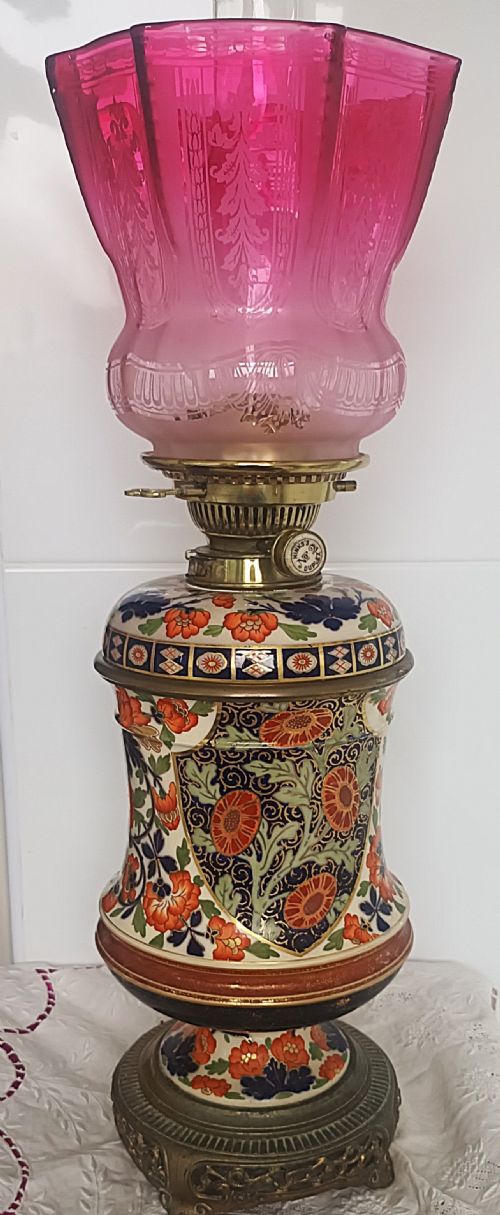
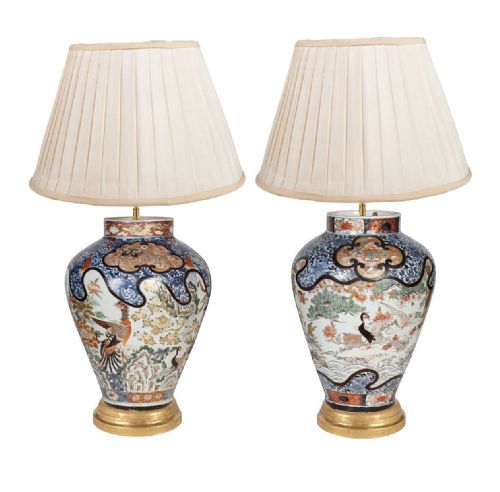
Most examples found here combine centuries-old Arita porcelain bodies with later brass, wood, or giltwood mounts fitted for electricity. Table lamps and converted oil lamps dominate the selection, appearing either as single statement pieces or matched pairs.
The aesthetic bridges Eastern manufacture with European domestic utility, utilising centuries-old porcelain initially imported via trade routes. Buyers frequently choose these lamps to anchor a room with rich palettes and complex floral or geometric motifs.
How they were made
These lamps rely upon hard-paste porcelain bodies thrown and fired in Japanese kilns, decorated underglaze in cobalt blue and overglaze in iron red, often supplemented with gilt details. The traditional Imari palette relies on high-temperature firing for the blue underglaze and subsequent lower-temperature firings for the iron-red and gold enamels.
Conversion into lighting involves mounting the historic porcelain onto bases made of brass, wood, giltwood, or ceramic, frequently accompanied by fabric or silk shades. Metal components and wiring are typically added during later Victorian or twentieth-century adaptations to render the antique vases functional as table lamps or oil lamps.
Antique Imari Lamp Retail Price Guide 2026
Typical asking prices for imari lamp among the pieces listed under this phrase on Sellingantiques today, from the lower quarter to the upper quarter. They describe what is for sale here now, not the wider market.
The listings span three centuries of Japanese porcelain production, encompassing both Edo and Meiji period ceramics mounted as functional lighting.
What varies in quality
Quality in an antique imari lamp rests upon the crispness of the hand-painted cobalt and iron-red pigments and the clarity of the underlying porcelain body. Earlier seventeenth and eighteenth-century examples often display finer potting and more complex hand-drawn reserve panels than later production.
The success of the conversion also dictates the overall standard, distinguishing between sensitive mounts that respect the original vessel and intrusive drilling that compromises the antique ceramic. Matched pairs and large formats command particular attention for their decorative presence.
The Antique Imari Lamp Glossary
- Imari
- A style of Japanese porcelain named after the port of shipment, traditionally characterised by a palette of underglaze blue, iron-red, and gilt highlights. This decorative scheme became immensely popular in European export markets.
- Arita
- The Japanese town and surrounding region in Hizen province where the production of Japanese porcelain began. Arita kilns produced the vast majority of export wares destined for European houses.
- Edo Period
- The period in Japanese history spanning from sixteen hundred and three to eighteen hundred and sixty-eight. This era encompasses the flourishing of domestic arts and early export porcelain trade.
- Meiji Period
- The era of Japanese history lasting from eighteen hundred and sixty-eight to nineteen hundred and twelve. Pieces from this time often exhibit elaborate detailing and catered to expanding international demand.
- Giltwood
- Wood that has been coated with a thin layer of gold leaf or gesso. This material frequently appears in the decorative bases and mounts supporting antique ceramic lamps.
Antique Imari Lamp: Frequently Asked Questions
Are these lamps converted from old vases?
Many examples begin life as Japanese porcelain vases dating from the seventeenth to nineteenth centuries. These vessels are subsequently fitted with electrical components and bases to function as lamps.
Some pieces retain evidence of earlier oil lamp mechanisms or Victorian conversion work. This method of adaptation preserves historical ceramics for contemporary use.
How do I date an imari lamp?
Dating relies primarily on the characteristics of the porcelain body, the depth of the underglaze blue, and the style of the iron-red enamel painting. Earlier pieces often feature finer potting and distinct palette choices compared to later nineteenth-century production.
Associated mounts, such as brass fittings or wooden bases, provide secondary clues regarding when the piece was converted into a lamp. Stylistic markers from the Edo and Meiji periods further help establish the age of the ceramic body.
Do they come in pairs?
Matched pairs appear frequently among the selection, having survived together from historic interiors. These symmetrical sets are particularly sought after for placement on mantelpieces or matching side tables.
Single lamps also feature prominently in the collection, offering strong vertical accents as individual table lamps. Both formats showcase the characteristic iron-red and blue Imari coloration.
What materials make up the base?
The structural body consists of Japanese porcelain, while the mounting hardware commonly incorporates brass, wood, or giltwood. Additional elements such as ceramic components or glass may also form part of the assembly.
Shades added to the lamps frequently utilise fabric or silk materials to complement the rich tones of the porcelain. Each material contributes to the overall weight and stability of the assembled lamp.