



Antique Imari Cup
An antique imari cup brings rich palette and hand-painted detail to the table, uniting Japanese export artistry and English porcelain traditions in one vessel.
Antique Imari Cup
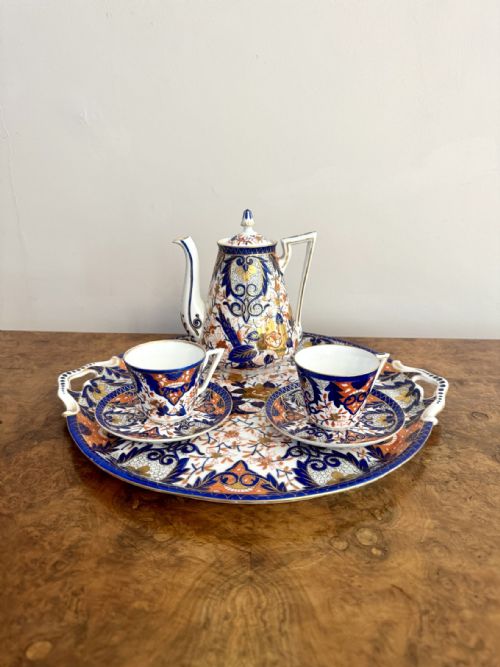
When you search for an antique imari cup, you encounter a range of drinking vessels spanning the Georgian and Victorian eras, alongside Japanese examples. Most pieces appearing here take the form of individual tea cups, coffee cans, chocolate cups with covers, or components of larger afternoon tea services and coffee sets.
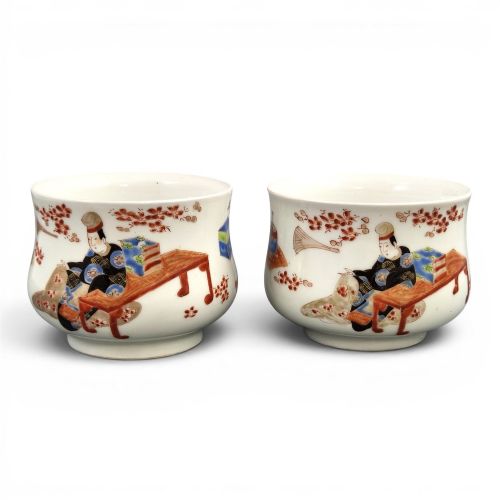
The aesthetic bridges Eastern and Western production, featuring Japanese Imari wares alongside English interpretations from makers who adopted the distinctive palette. You will find bone china and hard-paste porcelain forms, often accompanied by matching saucers or forming part of a trio.
Origins vary across English factories, Italian porcelain houses, and Japanese workshops, with dates stretching from the Georgian period through the nineteenth century and into the twentieth. The surviving pieces demonstrate how domestic tea and coffee rituals evolved alongside international trade.
How they were made
Potters shaped these vessels using porcelain and bone china bodies, firing them to create a durable base for subsequent decoration. Surface ornament relies on hand-painted enamel and enamel glaze, often integrating gold leaf and gilding to highlight intricate motifs.
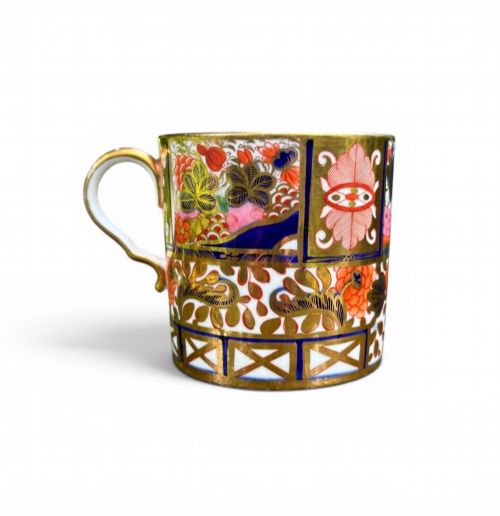
The characteristic palette brings together iron red, cobalt blue, and gilt highlights, applied directly over or under the glaze depending on the workshop tradition. Kiln firing fixed these mineral colours to the porcelain surface, producing the vibrant finish seen on surviving chocolate cups and coffee cans.
Antique Imari Cup Retail Price Guide 2026
Typical asking prices for imari cup among the pieces listed under this phrase on Sellingantiques today, from the lower quarter to the upper quarter. They describe what is for sale here now, not the wider market.
Some nineteenth-century drinkers enjoyed rich chocolate from specialised lidded vessels built to trap steam and keep the decadent beverage hot.
What varies in quality
Quality rests upon the precision of the brushwork and the crispness of the porcelain body, where hand-painted details display the painter's control over fine lines and complex floral or geometric patterns. Superior examples maintain intact gilding and brilliant enamel saturation without fading or smudging.
The distinction between standard production and finer wares also lies in the harmony of the palette and the delicacy of the porcelain wall. Weight, translucency, and the integration of gold leaf distinguish standard domestic teaware from exhibition-grade pieces.
Spode·Davenport·Richard Ginori·Minton·Royal Crown Derby
The Antique Imari Cup Glossary
- Imari
- A style of decorative ceramic originating in Japan and widely copied by European porcelain factories. It is characterised by a distinct palette of cobalt blue, iron red, and gold.
- Coffee can
- A straight-sided cylindrical porcelain cup used for drinking strong coffee in the eighteenth and nineteenth centuries. These vessels typically lack handles.
- Trio
- A matching set consisting of a tea cup, a saucer, and a matching plate for cake or bread. This configuration became popular during the Victorian era for formal afternoon tea.
- Broth cup
- A two-handled ceramic vessel designed for serving thin soups or broths to invalids or guests. They frequently include fitted lids to retain heat.
Antique Imari Cup: Frequently Asked Questions
How do I use an antique cup?
These delicate porcelain vessels are generally unsuited to daily heavy use or modern dishwashers. Hand washing in lukewarm water with mild soap protects the fragile glazes and gold leaf from wear.
Displaying them in cabinets or using them gently for special afternoon tea occasions preserves their hand-painted surfaces. Avoid exposing antique ceramics to sudden temperature changes to prevent thermal shock.
Were imari cups made in England?
English factories enthusiastically adopted the Japanese aesthetic during the Georgian and Victorian eras. Makers such as Spode and Royal Crown Derby produced bone china and porcelain pieces decorated in the characteristic red, blue, and gold palette.
These domestic interpretations combined European clay bodies with traditional Japanese motifs, creating a distinct hybrid style that remains highly collectible today.
What is a coffee can?
A coffee can is a small, straight-sided cylindrical cup designed for serving strong black coffee. Unlike tea cups, they traditionally feature vertical walls and a simple loop handle or no handle at all.
They appear frequently in nineteenth-century porcelain sets alongside matching saucers and teacups. Their shape was intended to keep concentrated coffee warm during polite gatherings.
How do I date an antique cup?
Dating relies on factory marks printed or painted on the base, as well as the composition of the ceramic body and the style of decoration. Georgian pieces often display different paste characteristics and handle shapes compared to Victorian or Meiji period wares.
Comparing pattern numbers and glaze textures against known factory production records helps narrow down the decade of manufacture.