





Antique Horseshoe Chairs
Antique horseshoe chairs bring distinctive curved crest rails and sweeping arms into your interior, spanning English country house seats and traditional Chinese designs.
Antique Horseshoe Chairs
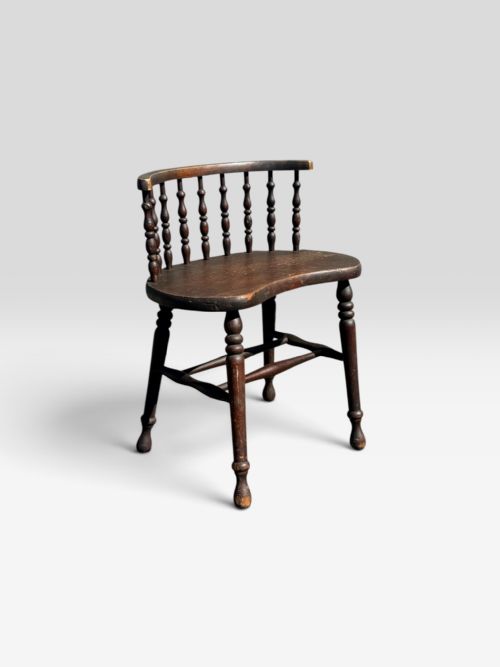
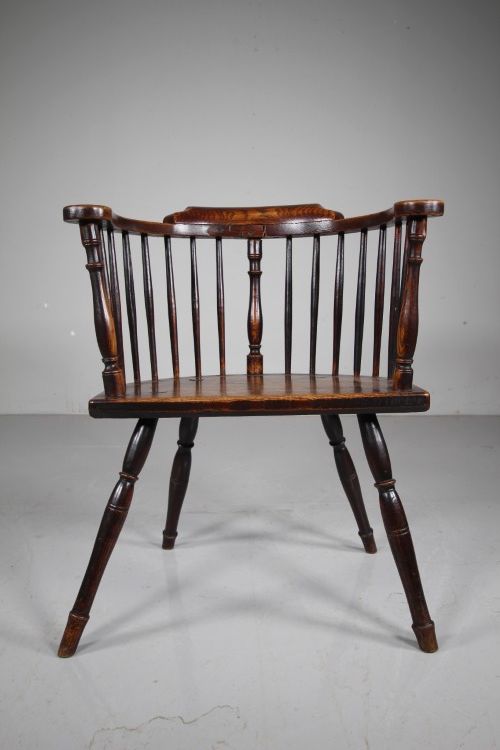
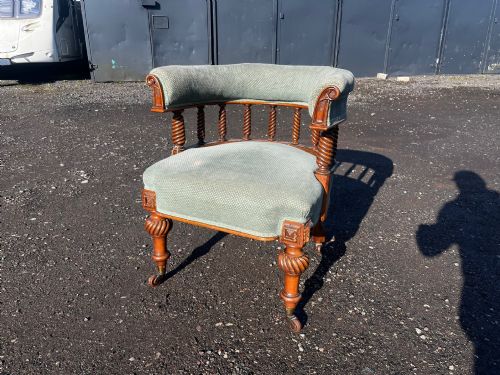
When you search for antique horseshoe chairs, you encounter a fascinating split between English country seating and traditional Chinese forms. The English examples tend to be compact desk chairs, library chairs, or corner seats framed in oak, elm, walnut, and mahogany. These British pieces often feature leather upholstery or straightforward turned supports designed for studies and parlours.
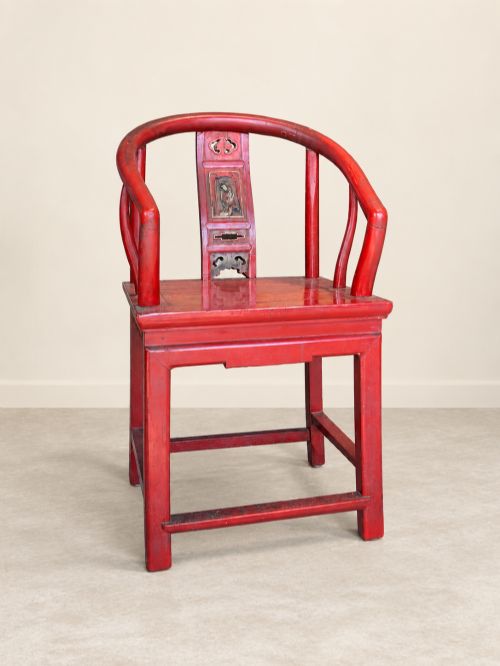
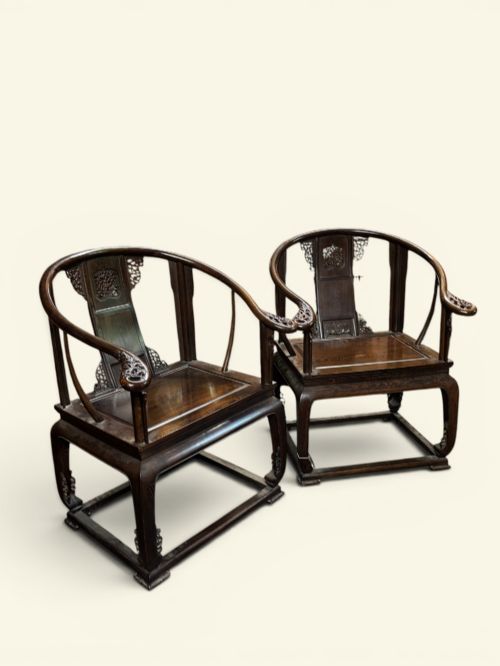
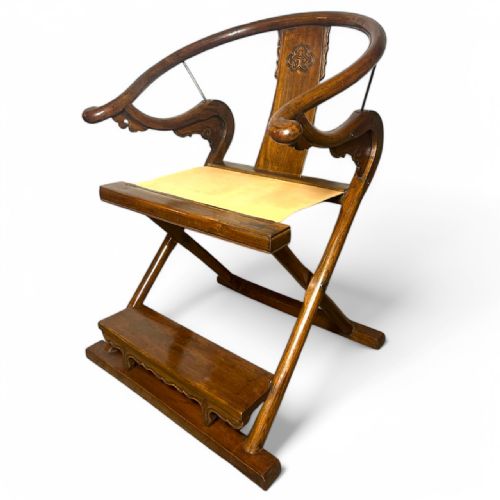
By contrast, the Chinese versions on this page present the iconic rounded horseshoe-shaped back rail curving seamlessly into the armrests. You will find hardwood folding armchairs, lacquered seating, brass-inlaid examples, and occasional benches dating from the eighteenth century through the early twentieth century. These embrace both Qing Dynasty craftsmanship and later vernacular interpretations.
The common thread across all these pieces is the continuous circular or semi-circular crest rail that supports the arms. Whether you select a Victorian oak desk chair or a pair of hardwood Chinese armchairs, the silhouette remains immediately recognisable and functional. They bridge multiple periods, from Georgian country pieces to Edwardian lacquered finishes.
Materials and construction
Makers utilised timber selection to achieve the demanding curved forms characteristic of these seats. Elm and oak appear frequently in English country examples, prized for their strength in steam-bent or constructed frames, while mahogany and walnut serve finer library and desk chairs. Chinese pieces rely heavily on dense hardwoods, lacquer work, and occasional brass inlay.
Joinery methods vary between the traditions, with English makers employing traditional dowels, mortise and tenon joints, and leather upholstery secured with tacks. Chinese horseshoe chairs often utilise sophisticated interlocking joinery that allows certain folding variants to collapse while maintaining structural integrity. Canework and fabric inserts additionally appear on selected regional pieces.
Some nineteenth-century Chinese examples fold completely flat, proving that ancient artisans understood portable furniture long before modern camping gear existed.
Evaluating quality and construction
Quality rests primarily in the integrity of the continuous curved crest rail and the tightness of its joints. Because the arms and back form a single sweeping line, the strength of the construction dictates the longevity of the piece. Fine grain definition in the walnut, mahogany, or dense Chinese hardwoods also separates superior examples from simpler utilitarian seating.
Proportion and decorative restraint further distinguish the range. Subtle brass inlay, well-executed lacquer work, or clean leather upholstery panels elevate a chair above standard production. Original surfaces and patination on the timber carry significant weight among discerning buyers.
The Antique Horseshoe Chairs Glossary
- Horseshoe-back
- A chair back shaped in a continuous sweeping curve resembling a horseshoe, forming both the crest rail and the armrests. This ergonomic design supports the arms comfortably from multiple angles.
- Crest rail
- The top horizontal or curved member of a chair back. On these chairs, it defines the outermost boundary of the horseshoe shape.
- Hardwood
- Dense timber derived from broad-leaved trees such as mahogany, walnut, and traditional Chinese species. It provides the necessary strength for intricate joinery and thin curved sections.
- Cockfighting chair
- An alternative name for a low library or reading chair featuring a padded rest on the upper back. Users typically straddled these seats facing backward.
- Canework
- Woven rattan or cane material used for seat panels or back inserts. It offers flexibility and airflow within a sturdy wooden frame.
Antique Horseshoe Chairs: Frequently Asked Questions
What is a horseshoe chair?
A horseshoe chair is a seating form defined by a continuous curved rail that serves as both the backrest and the arms. The design wraps around the sitter to provide enclosed support.
Versions range from English library and desk chairs in oak and mahogany to traditional Chinese hardwood and lacquered folding armchairs.
Where did horseshoe chairs originate?
The form developed independently across different cultures, most notably in traditional Chinese furniture where horseshoe-back armchairs date back centuries. English cabinet makers also adopted curved wooden rails for specific desk and corner chair formats during the eighteenth and nineteenth centuries.
This creates a diverse selection of pieces spanning various geographic origins and decorative styles.
How do I style a horseshoe chair at home?
These chairs function well as accent seating in studies, living rooms, or hallways where their distinctive silhouettes can be appreciated from all angles. Desk-height variants pair naturally with writing tables or libraries.
Their compact footprints allow them to fit into corners or act as standalone statement pieces without dominating a room.
Are Chinese horseshoe chairs comfortable?
Traditional Chinese horseshoe chairs were designed for upright posture, featuring slanted back splats and curved rails that support the arms. While many lack upholstered cushions, their ergonomic shapes provide surprisingly balanced seating.
Upholstered English variants offer softer padding suited for prolonged desk or library use.