



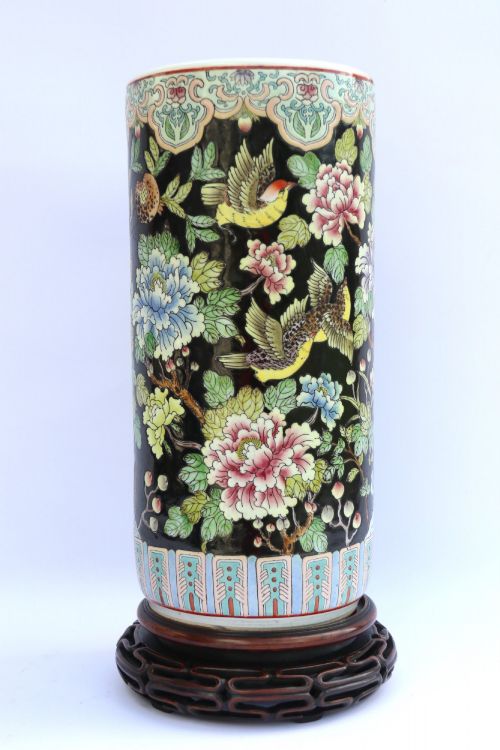





Antique Hardwood Vase
An antique hardwood vase often takes the form of a carved stand or pedestal designed to elevate decorative vessels.
Antique Hardwood Vase
When searching for an antique hardwood vase, buyers encounter items described as plant stands, jardiniere stands, and display tables alongside actual spill vases and chalices. These objects serve to support and display other decorative items within a room.
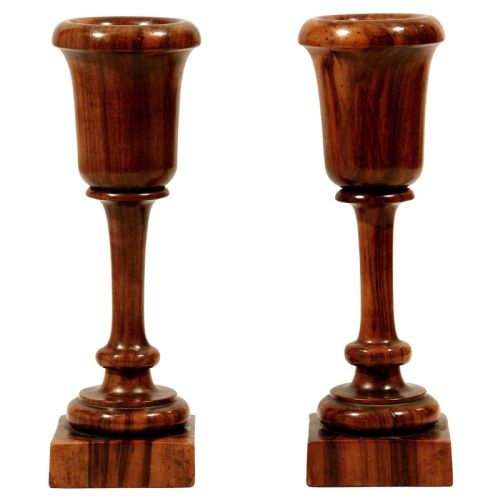
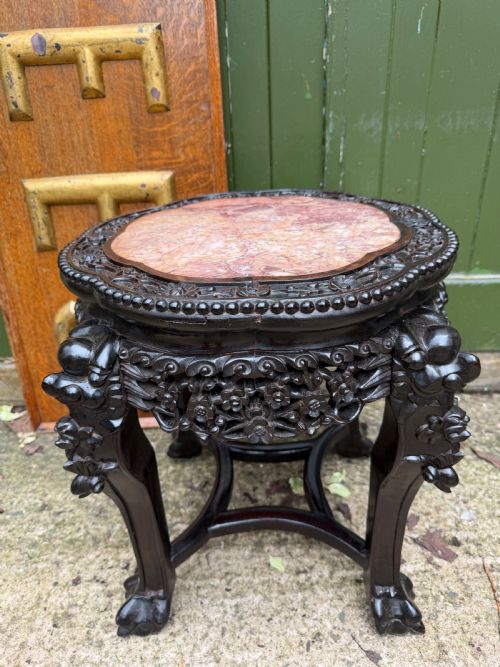
The pieces originating from Chinese export and Qing Dynasty workshops dominate the selection, frequently featuring carved frames paired with inset marble panels. British examples also appear, notably in turned lignum vitae and mahogany forms dating to the nineteenth century.
Materials and construction methods
Craftsmen utilised dense timbers such as rosewood, huali wood, hongmu, and lignum vitae, which allowed for deep, intricate carving without compromising the structural integrity of the small table or stand.
Many Chinese export pieces incorporate inset variegated rouge marble tops fitted directly into the hardwood frames, while British examples rely on precision turning on a lathe to shape solid timber urns and spill stems.
Antique Hardwood Vase Retail Price Guide 2026
Typical asking prices for hardwood vase among the pieces listed under this phrase on Sellingantiques today, from the lower quarter to the upper quarter. They describe what is for sale here now, not the wider market.
Pitcairn Island sailors carved unique wooden loving chalices from local timber during the nineteenth century, creating unexpected companions to traditional Chinese plant stands.
Factors determining quality and craftsmanship
The depth and crispness of the hand carving distinguish finer stands from simpler production pieces, particularly where floral motifs and pierced aprons meet the legs. Superior examples maintain tight joinery and stable marble inserts without movement or excessive filler.
The choice of timber affects the overall presence of the object, with dense, highly figured huali and hongmu woods commanding greater attention than plain ebonised timbers or standard mahogany.
The Antique Hardwood Vase Glossary
- Hongmu
- A dense, dark tropical hardwood traditionally used in Chinese furniture and vase stands. It translates simply to red wood.
- Jardiniere stand
- A tall or low table specifically built to support a heavy ceramic plant pot or decorative bowl. These often feature inset stone tops to resist moisture.
- Lignum vitae
- An extremely heavy and hard British timber derived from guaiacum trees, frequently used for turned nineteenth-century spill vases. Its natural oils give it a distinct dense weight.
- Huali wood
- A prized Chinese hardwood noted for its rich grain patterns and durability in carved display pieces.
- Spill vase
- A small receptacle designed to hold thin wooden spills used for lighting fires before the invention of safety matches.
Antique Hardwood Vase: Frequently Asked Questions
What is a jardiniere stand?
A jardiniere stand is a sturdy small table or pedestal designed to support heavy ceramic plant pots, bowls, or large vases.
These pieces lift greenery or decorative vessels off the floor, often utilising inset marble tops to prevent water damage to the underlying hardwood frame.
How do I care for antique hardwood?
Antique hardwood requires minimal intervention, relying primarily on dusting with a dry, soft cloth to maintain the natural sheen of the timber.
Keep these stands away from direct heat sources and sudden humidity changes to prevent the wood or inset marble panels from cracking.
Are these stands only for plants?
While originally built to hold heavy planters and jardiniere bowls, these stands adapt readily to modern interiors as lamp tables or display surfaces.
Collectors frequently place decorative ceramics, sculptures, or small lighting fixtures on top of the carved hardwood surfaces.
How do I identify Qing Dynasty stands?
Qing Dynasty stands typically feature characteristic Chinese export carving styles, often employing dense timbers like hongmu or huali wood alongside inset marble tops.
Details such as pierced aprons, cabriole legs, and traditional floral or scroll motifs help distinguish these pieces from later European reproductions.