
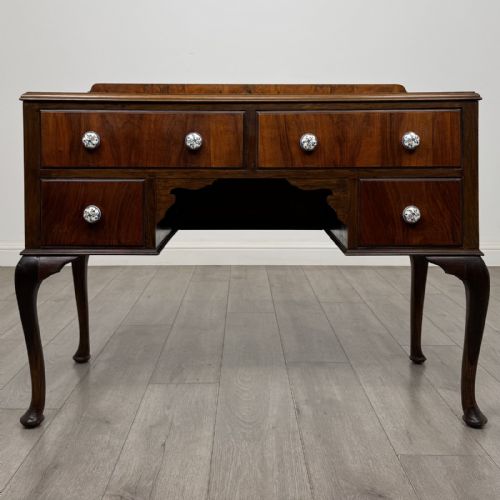
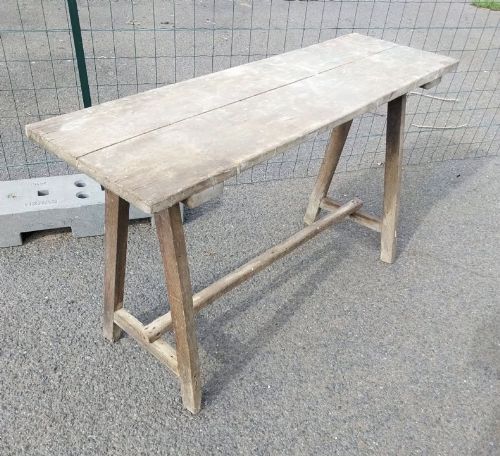
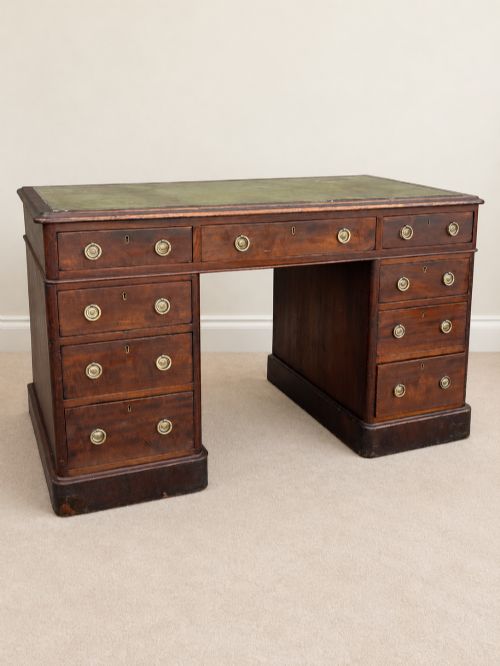
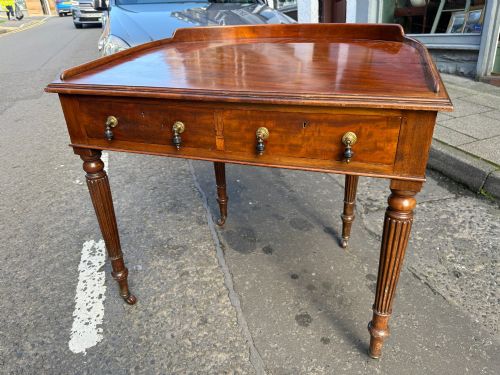
Antique Furniture Desk
These antique furniture desk examples span centuries of master woodworking, bringing rich mahogany, walnut and oak into modern working spaces.
Antique Furniture Desk
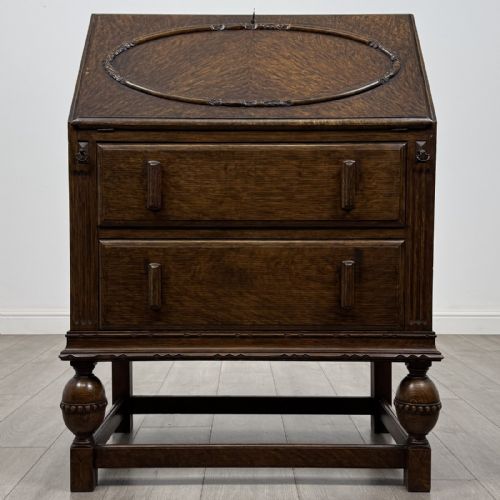
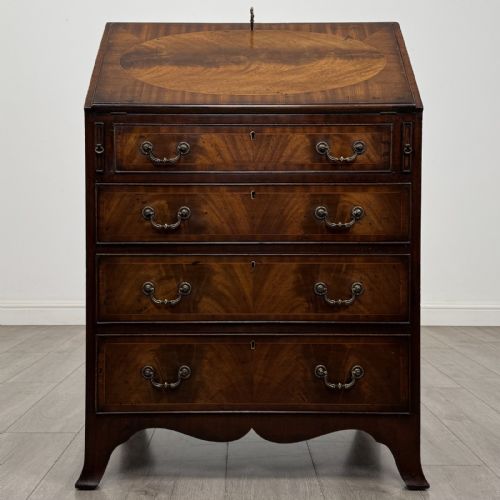
When searching for antique furniture desk options, buyers encounter a diverse range of forms spanning the seventeenth, eighteenth, nineteenth and early twentieth centuries. The selection encompasses writing tables, twin pedestal desks, Davenport desks, secretaries and fitted bureaus originating from British, French and Anglo-Indian makers.
Bureau bookcases, campaign writing boxes and freestanding partners desks appear alongside smaller writing tables suited for modern home offices. Earlier examples often utilise oak, yew wood or walnut, while later nineteenth-century pieces frequently showcase figured mahogany and burr walnut veneers.
Materials and Construction Methods
Cabinetmakers constructed these pieces using dense hardwoods such as mahogany, oak, walnut and padouk, often embellishing surfaces with decorative burr walnut veneers, herringbone inlays and parquetry. Structural integrity relied on traditional joinery methods, supplemented by turned supports, baluster legs and parcel gilding.
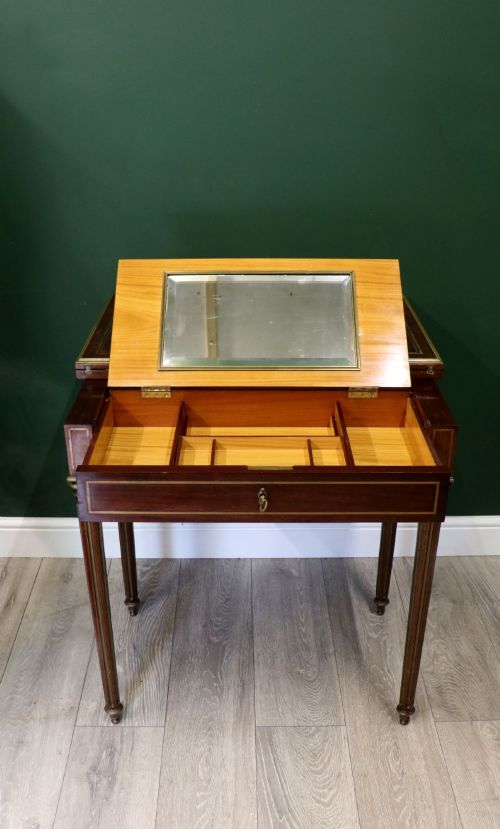
Fitted interiors incorporate small drawers, pigeonholes and secret compartments, sometimes featuring leather writing inserts bordered by gilt tooling. Brass handles, escutcheons and campaign mounts complete the hardware, while secondary timbers like pine remain concealed within carcases and drawer linings.
Current listings feature nineteenth-century, eighteenth-century, and Edwardian pieces constructed from mahogany, oak, walnut, and camphor.
Distinctions in Execution
The distinction between ordinary workshop production and master cabinetmaking lies in the precision of the timber selection and the complexity of the internal configuration. Superior examples display continuous grain matching across drawer fronts, finely executed marquetry and robust secondary framing that ensures stability over centuries of use.
Proportion and architectural harmony dictate the upper tier of the market, where balanced drawer arrangements and original brass hardware remain intact. Lesser pieces often exhibit replacement handles, compromised veneer work or utilitarian secondary woods that lack the refined finishing of bespoke commissions.
W. Walker and Sons London
The Antique Furniture Desk Glossary
- Bureau
- A sloping desk with a hinged flap that opens to reveal a fitted interior of small drawers and pigeonholes. These pieces often stand on bracket feet or ball feet.
- Partners Desk
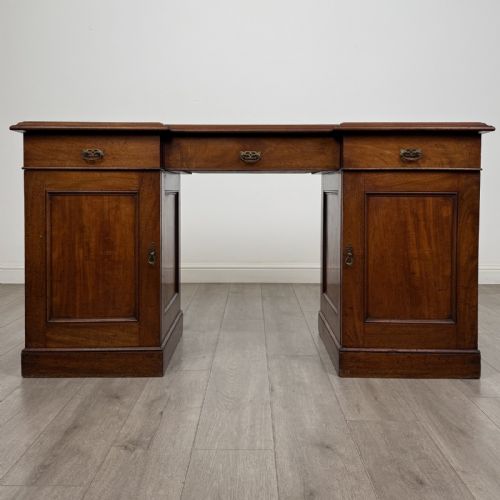
- A large freestanding double-sided pedestal desk designed to accommodate two people sitting opposite each other. Cupboards and drawers typically fill both sides of the base.
- Davenport
- A compact small writing desk with a sloping top, side drawers and a lifting lid enclosing a stationery compartment. The form gained immense popularity during the Victorian period.
- Campaign Box
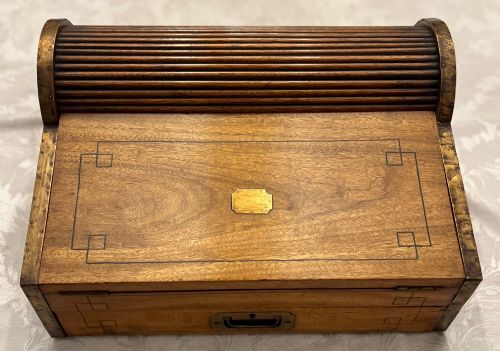
- A portable writing desk constructed for military officers on active service. These boxes feature brass corner mounts, flush-fitting handles and internal secret compartments.
- Parquetry
- Geometric wood inlay work forming mosaic patterns across tabletops and drawer fronts. Cabinetmakers utilise contrasting timbers like kingwood, walnut and mahogany to achieve visual depth.
Antique Furniture Desk: Frequently Asked Questions
How do I identify a Davenport desk?
A Davenport is easily recognised by its compact footprint, sloping hinged writing surface and bank of drawers accessed from the side. Many incorporate a small stationery compartment on top and rest on casters for mobility.
Introduced in the late eighteenth century, this form became a staple of Victorian drawing rooms and boudoirs for correspondence and personal administration.
Are campaign desks still durable?
Campaign writing boxes and desks were built to withstand military transportation across rough terrain. Their robust construction utilises solid hardwoods reinforced with brass corners and recessed carrying handles.
Because they were engineered for resilience in harsh environments, these pieces remain exceptionally sturdy and well-suited for regular modern usage.
How do I date an antique bureau?
Dating a bureau involves examining the construction of the drawer linings, the dovetailing technique, and the style of the bracket feet or supports. Earlier seventeenth-century pieces display walnut veneers on oak carcases with geometric mouldings, while eighteenth-century examples favour figured mahogany.
Internal configurations also shift over time, evolving from simple pigeonholes in early oak models to elaborate serpentine drawers in later Georgian and Regency iterations.