




Antique French Textile Hanging
An antique french textile hanging brings centuries of woven artistry into a room, offering grand verdure scenes and delicate needlework panels.
Antique French Textile Hanging
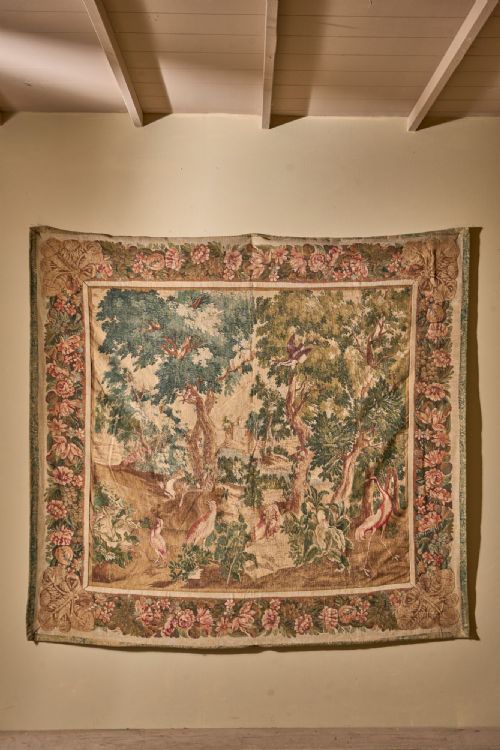
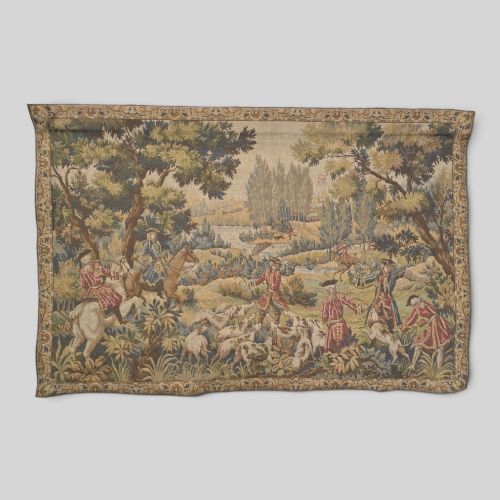
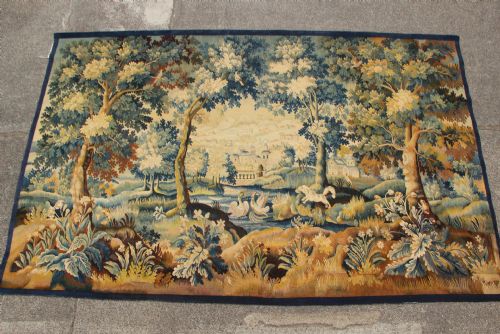
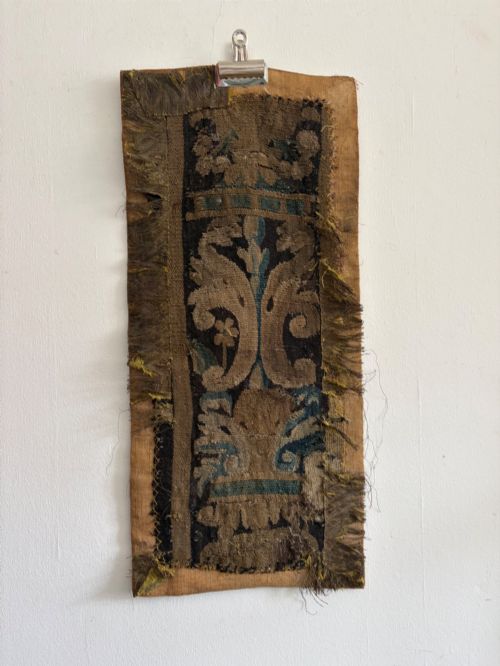
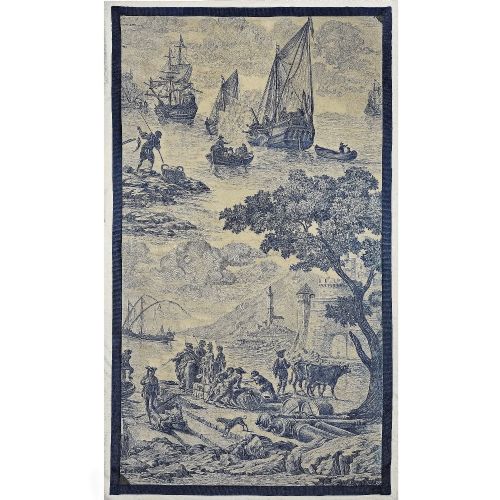
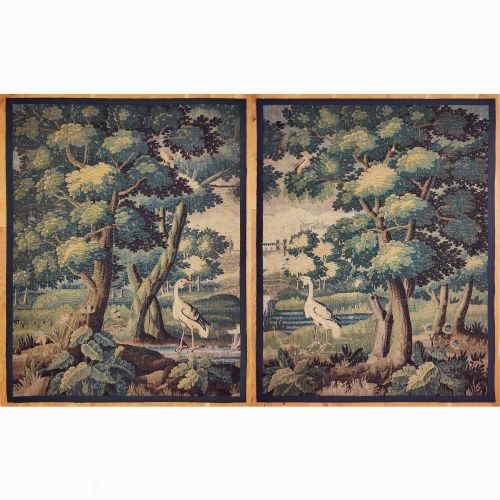
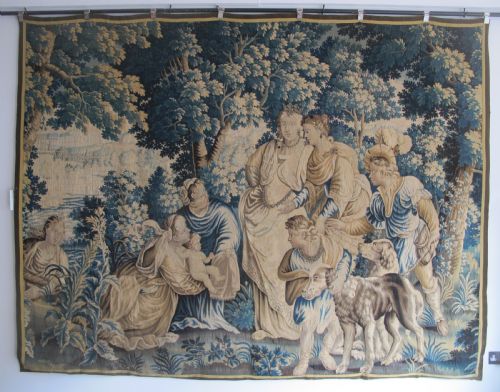
An antique french textile hanging encompasses woven wall tapestries, needlework panels, and silk velvet hangings originating from France across several centuries. The selection encountered here ranges from large pastoral and verdure wall coverings to smaller framed panels and border fragments mounted to linen.
Buyers look for these textiles to anchor a room with historical depth, often choosing between robust verdure landscapes and intricate floral or figural compositions. Pieces span from seventeenth-century works to later nineteenth-century interpretations and revivals.
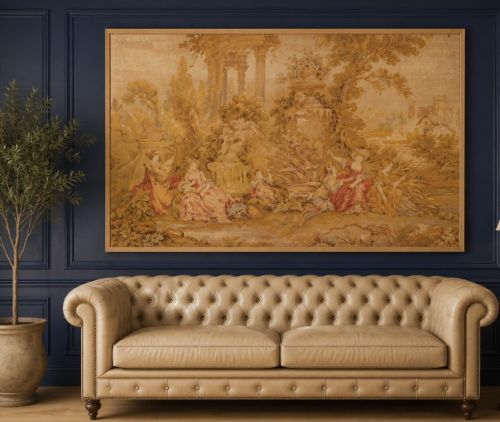
Woven forms include dedicated entre-fenêtre panels designed for narrow wall spaces between windows, alongside expansive pastoral scenes and biblical narratives. Many retain their original scale, whilst others survive as fragments or mounted cushion covers.
Materials and Construction
These textiles rely primarily on wool, silk, cotton, and linen, woven or hand-stitched into complex pictorial surfaces. Silk velvet and needlepoint techniques also appear, sometimes mounted onto secondary linen supports for structural stability.
Master weavers utilised dyed wool and silk threads to build dense pictorial depth, particularly in verdure scenes depicting foliage and woodland. Wooden frames and glass occasionally protect framed needlework panels and smaller textile art.
Needlework panels demonstrate meticulous hand-stitching with wool and silk yarns, creating textured surfaces that differ from the flat weave of traditional tapestry panels. Ciselé silk velvet hangings employ cut and uncut pile techniques to form intricate patterned surfaces.
Napoleon managed to find time for textile art amidst military campaigns, inspiring woven portraits that still surface today.
Markers of Distinction
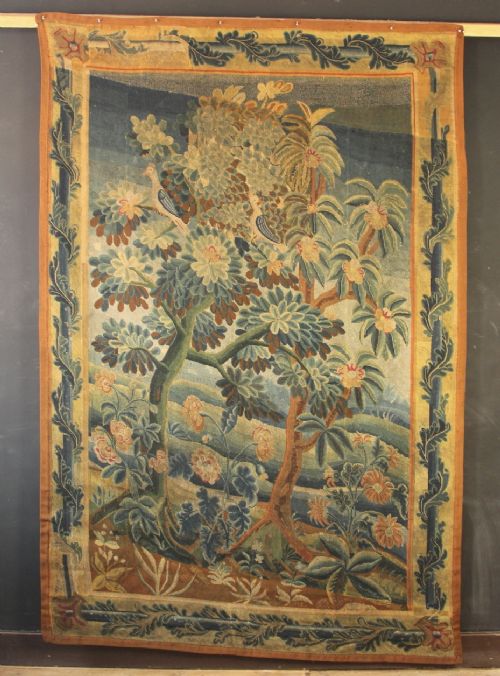
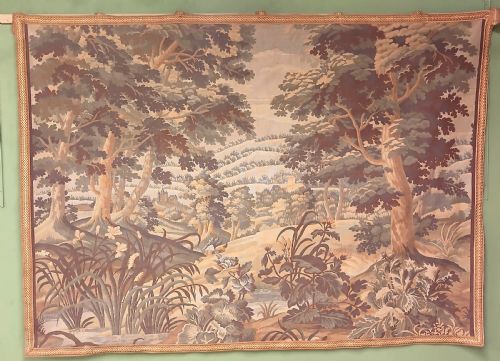
The distinction between standard works and exceptional pieces rests upon the fineness of the weave and the complexity of the pictorial design. Verdure tapestries with rich, layered foliage and clear botanical detail command greater attention than simpler, repetitive patterns.
Preservation of colour and structural integrity significantly influences the standing of a textile hanging. Early examples that retain their original dyestuffs and balanced proportions demonstrate superior survival through the centuries.
The pedigree of the weaving centre also shapes the character of the piece, with traditional workshops such as Aubusson producing recognised standards of pictorial composition and handling of wool and silk materials.
Aubusson
The Antique French Textile Hanging Glossary
- Verdure
- A tapestry woven with a predominant theme of green foliage, trees, and woodland landscapes, often including small birds or animals. These scenes formed a staple output of French weaving workshops.
- Aubusson
- A town in central France famous for its tapestry production, lent its name to distinctive woven wall panels and tapestries produced in the region. These works often depict pastoral or architectural vistas.
- Entre-fenêtre
- A tall, narrow tapestry panel specifically designed to hang on the wall space between two windows. Their elongated proportions dictate a vertical arrangement of motifs.
- Ciselé velvet
- A velvet fabric featuring a pattern created by combining cut and uncut pile loops, often executed in rich silk. This technique produces a textured, shimmering surface used in formal hanging panels.
- Mille-fleurs
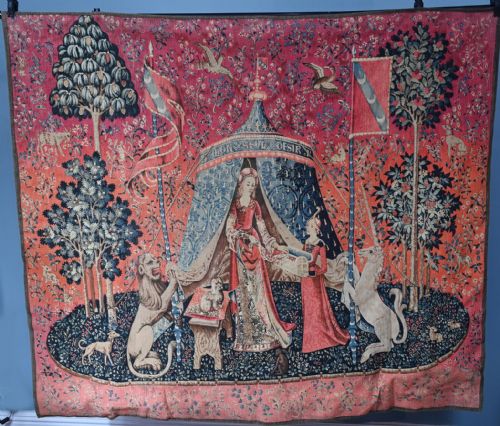
- A background style composed of a dense field of small, scattered flowers and plants. Popular in medieval and renaissance textile traditions, it creates a rich tapestry ground.
Antique French Textile Hanging: Frequently Asked Questions
How were textile panels displayed historically?
Historically, large textile panels and tapestries hung directly on stone or wood-panelled walls to provide insulation and decoration in grand rooms. Narrower entre-fenêtre pieces filled specific wall spaces between windows.
Smaller needlework panels and fragments were often framed or mounted on linen to preserve fragile edges and facilitate wall mounting.
How do I care for an antique textile hanging?
Protect antique textiles by keeping them away from direct sunlight, which can fade delicate wool and silk fibres over time. Gentle, indirect lighting and stable indoor humidity help preserve the integrity of old weaves.
Vacuuming should be avoided unless done professionally through a mesh screen, as fragile threads easily catch and pull.
How can I tell an 18th-century tapestry from a 19th-century copy?
Distinguishing between periods involves examining the subtlety of the dye colours, the spin of the underlying threads, and the stylistic conventions of the figures and foliage. Earlier pieces often display natural dye variations and more organic composition.
Nineteenth-century works frequently adopted historical styles like Aubusson or Renaissance revival designs, using brighter synthetic or chemically modified mordants.