


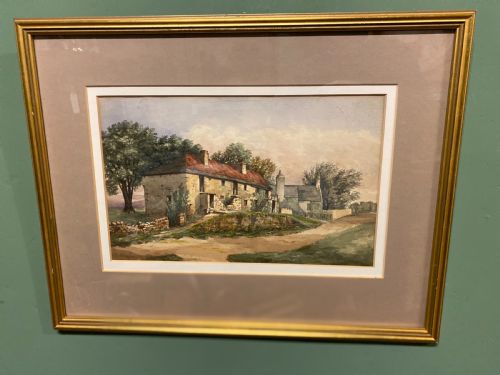


Antique Farm Watercolour
An antique farm watercolour brings the quiet labour of the countryside directly to your wall through delicate washes of pigment on paper.
Antique Farm Watercolour
An antique farm watercolour captures rural life, agricultural scenes, and pastoral landscapes produced primarily across the nineteenth and early twentieth centuries. These paintings depict hay carts, plough teams, shepherds, milking cows, and farm workers against traditional British backdrops.
Most examples you encounter on this page date from the Edwardian era through to the nineteen-thirties, reflecting British Impressionism, Realism, and pastoral styles. Artists utilised paper as their primary support, frequently mounting the finished works behind glass within wooden frames.
How they were made
Painters applied finely ground watercolour pigment mixed with water onto absorbent paper surfaces, occasionally employing ink lines for structural definition. Selected works incorporate subtle touches of gold leaf to catch the light within the composition.
The finished sheets were protected beneath glass and housed in bespoke wood frames to shield the delicate water-soluble pigments from moisture and environmental degradation.
Antique Farm Watercolour Retail Price Guide 2026
Typical asking prices for farm watercolour among the pieces listed under this phrase on Sellingantiques today, from the lower quarter to the upper quarter. They describe what is for sale here now, not the wider market.
The listings span periods from the nineteenth century through the nineteen-thirties, utilising materials such as paper, watercolour pigment, ink, and wood.
What varies in quality
The sophistication of the brushwork and the artist's command of light distinguish finer agricultural scenes from simpler sketches. Masters of the medium achieve remarkable atmospheric depth in skies and rural landscapes through controlled washes.
Provenance and documentation also elevate certain pieces, particularly when signed by established figures from periods such as Edwardian realism or British Impressionism. The integrity of the original paper support and the vibrancy of surviving pigments further influence the standing of each painting.
James William Booth·Ernest Pile Bucknall·John Atkinson·George Soper·Adrian Jones·Rowland Henry Hill·John R. K. Duff·Henry Birtles·Samuel Towers·George Hamilton Constantine·Thomas Mackay·Fred Lawson·Charles James Adams
The Antique Farm Watercolour Glossary
- Watercolour pigment
- Finely ground colour particles suspended in a water-soluble binder, forming the primary medium for these rural scenes. The transparency of the medium allows light to reflect off the white paper beneath.
- British Impressionism
- A painting style focusing on light and everyday subjects, visible in several agricultural watercolours from the early twentieth century. Artists captured transient outdoor effects rather than rigid academic detail.
- Edwardian period
- The historical era spanning from nineteen hundred to nineteen ten, representing a significant source for framed rural landscape paintings on paper. Works from this time often celebrate traditional farming communities.
- Pastoral realism
- An artistic approach depicting rural workers and farm animals with honest observation rather than romantic exaggeration. This style grounds the agricultural scenes in genuine country labour.
Antique Farm Watercolour: Frequently Asked Questions
How do I care for an antique watercolour?
Keep your painting away from direct sunlight to prevent the delicate pigments from fading over time. Maintain a stable room temperature to protect both the paper support and the wooden frame.
Ensure the glazing remains intact and sealed to prevent moisture from damaging the watercolour paint beneath.
Are these paintings original?
The pieces featured here are original works on paper executed by hand rather than mass-produced prints. Artists applied pigment directly to the surface, making each farm scene a singular creation.
Signatures, artist inscriptions, and distinct brushwork help verify the authenticity of individual nineteenth and twentieth-century paintings.
How do I date an agricultural watercolour?
Examine the clothing of the farm workers, the agricultural machinery depicted, and the overall artistic style for clues. Edwardian works often display lighter palettes and looser brushwork than earlier Victorian pieces.
Framing materials and backing papers can also provide helpful indicators of when the artwork was mounted.
What subjects appear most often?
Common subjects include plough teams with horses, hay carts during harvest time, shepherds with their flocks, and farmyard scenes with cattle. These depictions reflect the rhythms of traditional agricultural life in Britain.
Artists also frequently portrayed farmworkers' cottages and pastoral landscapes during specific seasonal moments like harvest.