




Antique Crystal Pendant Shade
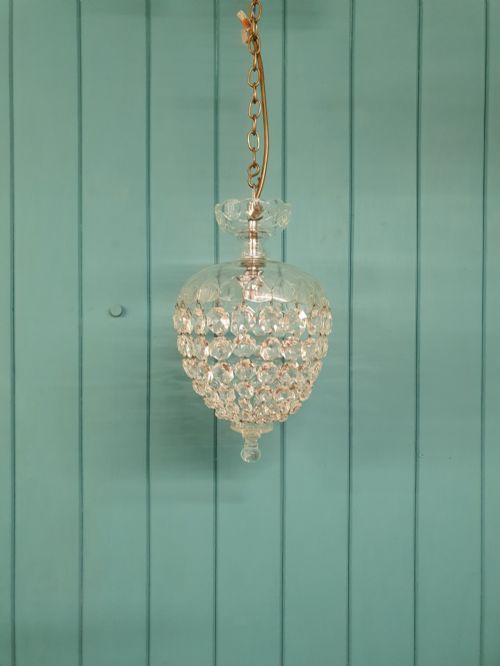
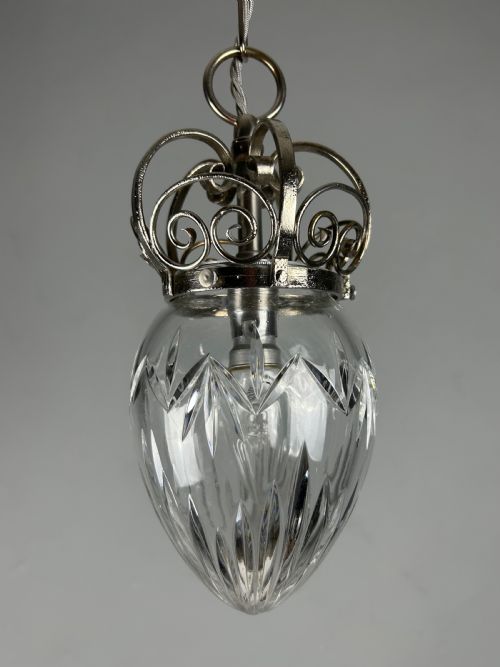
These antique crystal pendant shades illuminate interiors with faceted brilliance, combining period glasswork and metal frames to create striking focal points.
Antique Crystal Pendant Shade
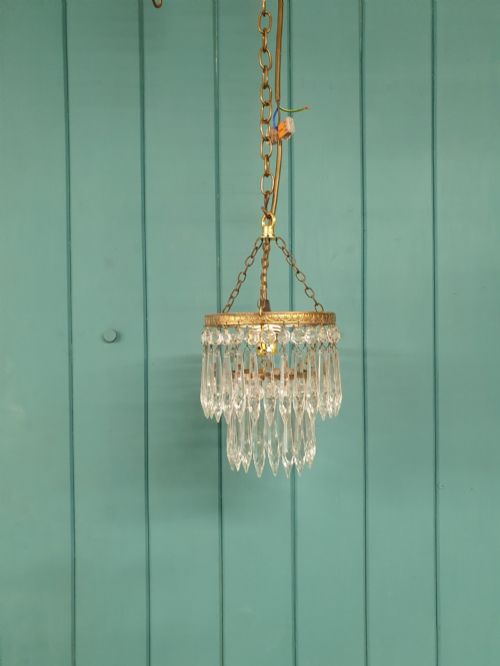
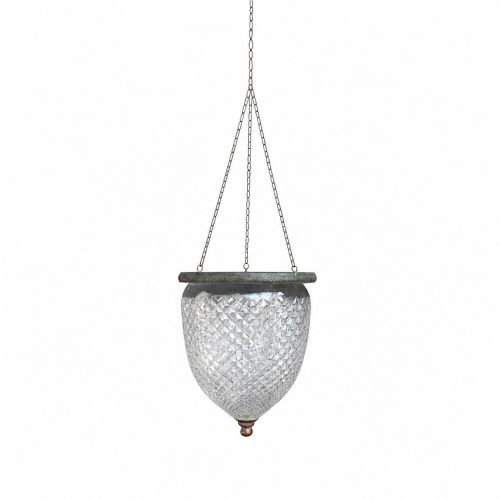
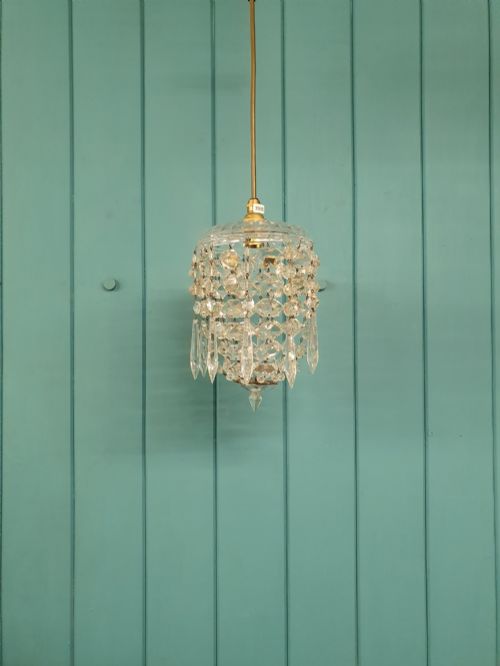
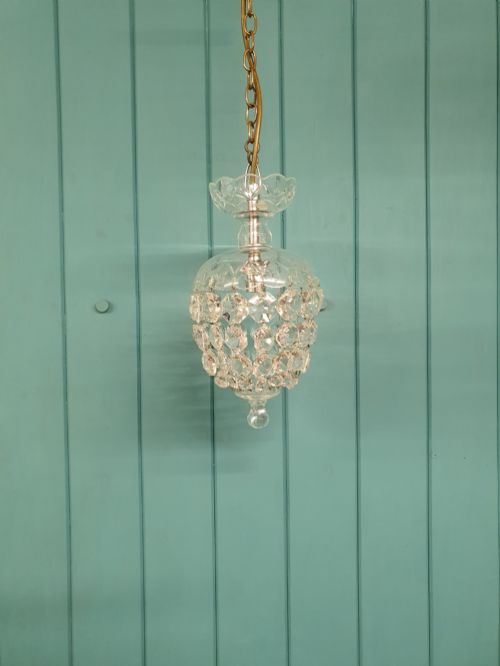
An antique crystal pendant shade brings overhead illumination and refractive sparkle to a room, drawing on forms from the Victorian era through the 1930s. Buyers searching for an antique crystal pendant shade encounter a diverse selection of ceiling lights, from compact domes and acorn plafonniers to multi-tiered chandeliers.
The pieces appearing here span Edwardian, Victorian, and early twentieth-century periods, showing influences ranging from French Chateau and Art Deco to Arts and Crafts. Smaller options like spike and dome chandeliers sit alongside elaborate tent and waterfall arrangements and brass-framed bowl lights.
Origin details and specific styles reveal how these fixtures served both domestic and decorative functions in earlier interiors. The selection leans heavily towards early twentieth-century British and French workshops, utilising hanging prisms, beads, and cut glass bowls.
Materials and construction methods
Makers constructed these hanging fixtures using combinations of brass, bronze, chrome, and silver plating for the metal mounts and frames. Glass components involve hand-blown techniques, diamond cutting, and etching to produce frosted or clear surfaces on shades and domes.
Individual crystal elements, including prisms, beads, and drops, are linked to the metal structures by wire or pins, allowing movement and maximum light dispersion. Certain items incorporate coloured glass elements like red drips or blue prisms to add contrast within the cut glass assembly.
Distinctions in craftsmanship and design
Quality in these ceiling fixtures rests upon the depth and crispness of the cut glass facets and the robustness of the supporting metal frame. Superior examples display intricate hand-cutting on heavy crystal bodies that catch and scatter light evenly across a space.
The integrity of the original hanging system, including matching prisms, finials, and well-cast brass or bronze mountings, separates standard production items from more ambitious architectural pieces. The complexity of the tier structure, such as multi-layered waterfalls or detailed bag chandelier designs, also marks the upper tier of execution.
The Antique Crystal Pendant Shade Glossary
- Plafonnier
- A ceiling-mounted light fixture that sits close to the surface, often featuring a bowl or dome of glass held in a metal mount.
- Bag chandelier
- A lighting form where glass drops are arranged in a bag or basket shape beneath the frame, common in twentieth-century designs.
- Prism
- A cut glass pendant suspended from the main body to refract light around the room in spectrum colours.
- Tent and waterfall
- A configuration where upper strings of beads form a tent shape above a cascading waterfall of lower crystal drops.
- Acorn plafonniers
- A specific shade shape resembling an acorn, frequently encountered in early twentieth-century cut glass lighting.
Antique Crystal Pendant Shade: Frequently Asked Questions
How do I hang a crystal pendant shade?
These fixtures suspend from the ceiling by chains or cords attached to the original metal framing. Professional installation ensures the weight of the brass and glass components is safely supported.
Electrical wiring must be adapted to modern standards while retaining the antique canopy and hanging mechanism where possible.
What periods do these pendant shades come from?
The available pieces date primarily from the Edwardian era, the 1920s, and the 1930s, with occasional Victorian and nineteenth-century examples. Styles shift from simple cut glass domes to elaborate Art Deco and French-influenced designs.
Earlier items often feature heavy brass and hand-blown diamond-cut crystal.
How should I clean crystal light fixtures?
Maintenance involves gentle cleaning of individual glass prisms and shades using a mild solution and soft cloths. Removing components individually prevents damage to the delicate wire links.
Harsh chemicals should be avoided to protect silver-plated or bronze metalwork from tarnishing.
Are all parts on these lights original?
Many fixtures retain their period brass frames, cut glass shades, and matching crystal drops. Over decades of use, individual prisms or wiring may have been replaced or restored.
Examining the uniformity of the glass cut and metal wear helps identify mismatched elements.