




Antique Country Dairy Bowl
An antique country dairy bowl brings tactile warmth to a modern kitchen, offering generous utility rooted in nineteenth-century working farmyards.
Antique Country Dairy Bowl
An antique country dairy bowl represents the utilitarian vessels once used across British and continental farmhouses for setting milk and skimming cream. Buyers searching this phrase will find a mix of turned treen timber and robust earthenware forms designed for heavy daily graft. Most examples on this page date from the nineteenth century, reflecting the peak era of traditional agricultural production.
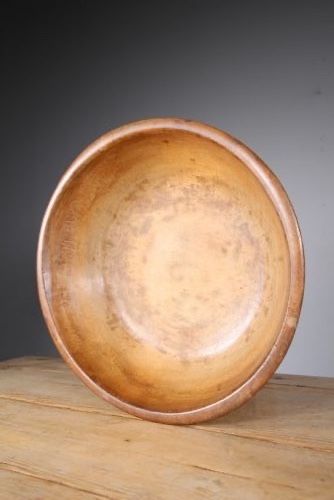
The wooden iterations typically arrive in native sycamore, shaped by hand to create wide, shallow basins that withstood constant washing and scouring. Earthenware versions appear in substantial terracotta with glazed interiors designed to hold liquids securely without seeping. Regional variations span English, Welsh, Scottish, and French origins, each bearing the distinct functional hallmarks of local vernacular trade.
Materials and construction methods
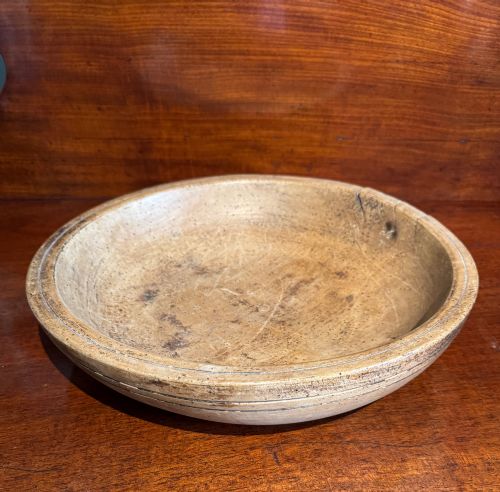
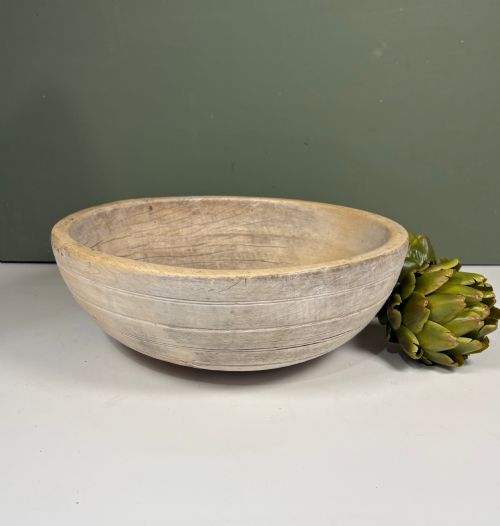
Makers turned wooden bowls from green sycamore timber on pole lathes, utilising the tight grain and natural resilience of the wood to prevent splitting under damp conditions. Turners left tool marks visible across the exterior surfaces, recording the physical process of shaping the block on the lathe. These wooden vessels relied entirely on the quality of the timber selection rather than applied decoration.
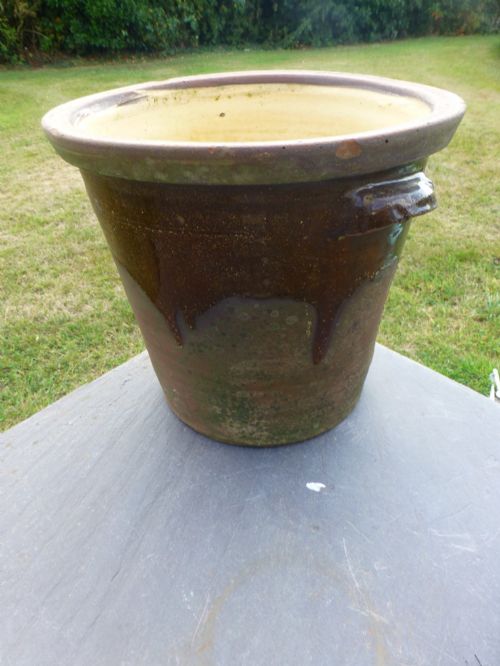
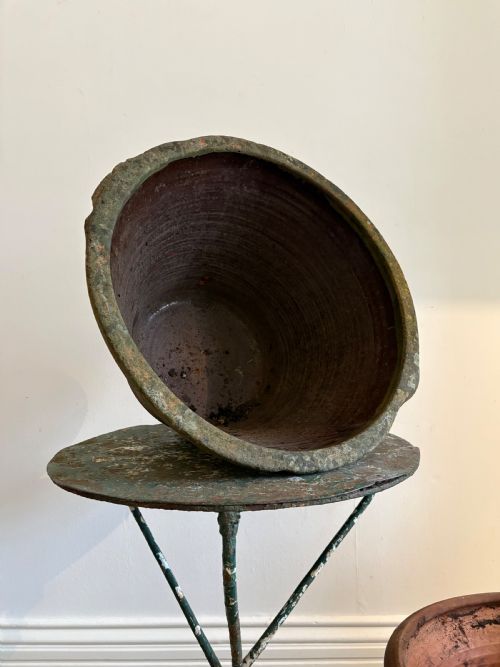
Clay versions combined heavy terracotta bodies with functional slip glazes poured over the interior surfaces to create a smooth, non-porous barrier for milk. Potters fired these utilitarian crocks in regional kilns, resulting in earthy tones and natural surface variations inherent to nineteenth-century earthenware production. Glaze coverage prioritized practical sealing over aesthetic perfection, often stopping short of the unglazed exterior base.
Generations of kitchen maids washed these sycamore bowls so thoroughly that the soft wood wore away around the harder grain lines.
Assessing quality and authenticity
Quality in these domestic objects rests upon the integrity of the surviving form and the natural wear accumulated through generations of agricultural service. A finer sycamore bowl retains its original timber thickness and balanced proportions without excessive warping along the rim. Terracotta examples show superiority through robust walls and stable interior glazing that resisted heavy farm acids and constant scrubbing.
Surface character defines the upper tier of these pieces, distinguishing genuine working treen from decorative reproductions produced later. The best sycamore specimens display a deep, warm patina developed through decades of handling and washing by dairy workers. Conversely, excessive alteration or aggressive cleaning diminishes the authentic tactile presence that collectors prize in vernacular treen.
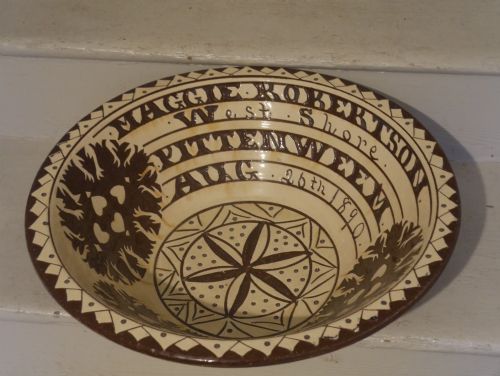
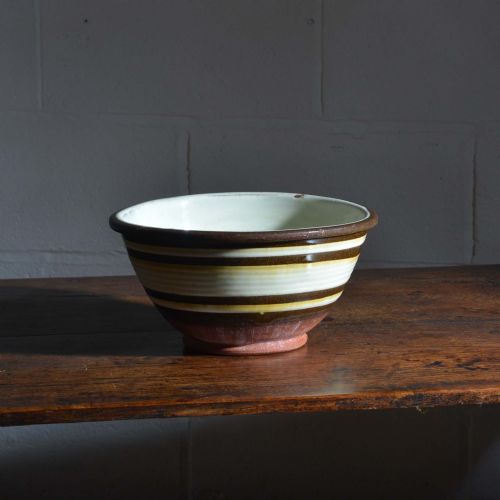
Scottish Seaton Pottery
The Antique Country Dairy Bowl Glossary
- Sycamore wood
- A native British hardwood favoured by turners for dairy vessels due to its clean grain and resistance to splitting when exposed to moisture.
- Treen
- Small, functional wooden household objects made by turners and coopers, encompassing dairy bowls, scoops, and kitchen utensils.
- Slip glaze
- A liquid clay mixture applied to the interior of earthenware vessels before firing to provide a smooth, waterproof surface for holding liquids.
- Terracotta
- Fired unglazed or partially glazed red clay forming the robust body of nineteenth-century agricultural crocks and planters.
- Vernacular
- Objects designed and built by regional makers to serve practical local needs rather than following academic design styles.
Antique Country Dairy Bowl: Frequently Asked Questions
What were antique dairy bowls used for?
Farmworkers used these wide vessels to set fresh milk so the cream would rise naturally to the top for skimming. Once separated, the cream went into churning butter while the skimmed milk served other agricultural purposes.
Beyond dairy tasks, these sturdy basins suited general kitchen prep, mixing, and holding provisions in the pantry before modern refrigeration took over.
How do I care for wooden dairy bowls?
Keep wooden treen away from direct heat sources, radiators, and strong sunlight to prevent the timber from drying out and splitting. Clean surfaces gently with a damp cloth and mild soap rather than submerging the piece in water.
Feed the dry sycamore periodically with food-safe mineral oil or beeswax to nourish the wood and maintain its warm patina. Avoid putting antique treen into modern dishwashers.
Are terracotta dairy bowls waterproof?
The interior surfaces feature a functional slip glaze designed to hold liquids securely during dairy processing without seeping through the clay body. However, the unglazed exterior terracotta remains porous and can absorb moisture from damp surfaces over time.
Utilise these glazed terracotta vessels for dry storage, as planters with liners, or for display rather than prolonged liquid containment today.
How can I tell sycamore from other woods?
Sycamore timber presents a pale, creamy colour with a fine, close grain that lacks the prominent growth rings found in oak or ash. Over centuries of handling and light exposure, this pale wood develops a distinct warm honey or amber patina.
Look for the faint concentric tool marks left by the woodturner's chisel across the outer walls of the bowl.