


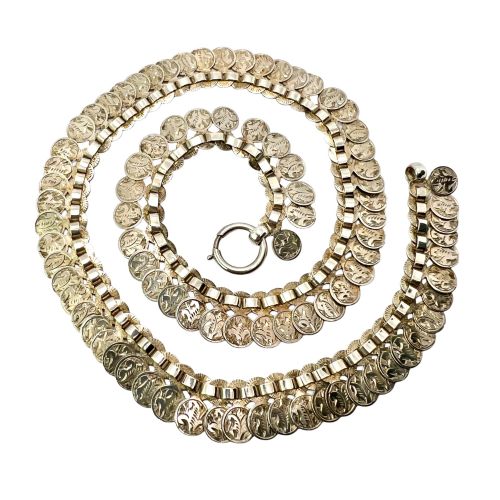


Antique Collar Necklace
An antique collar necklace sits low and wide on the neck, drawing the eye with structured metalwork or gems.
Antique Collar Necklace
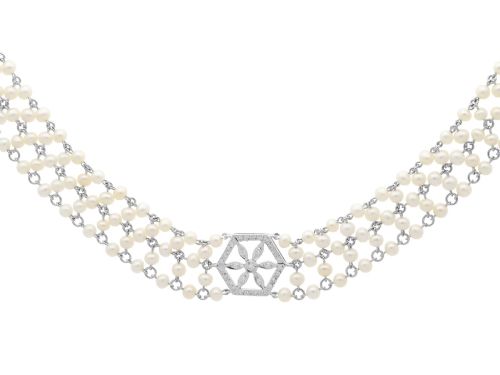
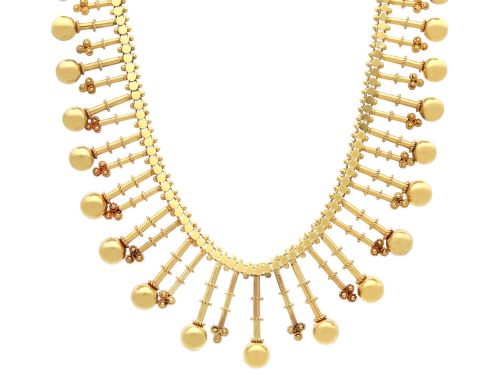
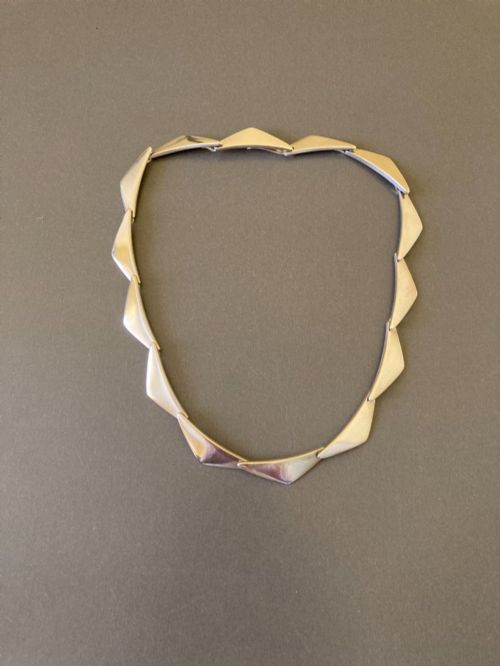
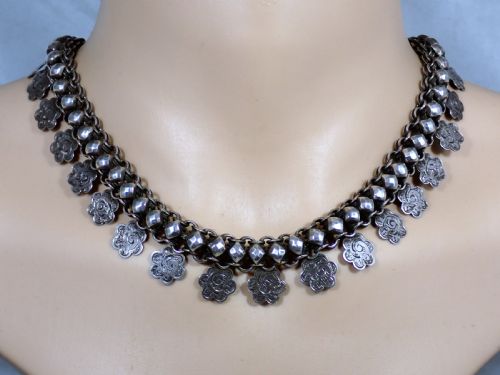
An antique collar necklace sits high and close to the throat, often spanning styles from the Victorian era through the mid-century period. Pieces on this page take the form of stiff chokers, fringe drops, and articulated silver chains.
Makers fashioned these neck ornaments in gold, platinum, and sterling silver, frequently setting them with diamonds, pearls, coral, and coloured paste. Designs range from heavily engraved Victorian coin pieces to clean geometric Art Deco layouts.
How they were made
Goldsmiths worked in 18ct yellow gold, 18ct white gold, and platinum, piercing and engraving metal by hand to create flexible fringe drops and rigid bands. Stones such as diamonds and emeralds were securely bezel or prong set into the precious metals.
Silversmiths utilised solid silver for heavy engraved chains and linked coin necklaces, applying traditional hand-tooling methods. Pearl and coral elements were drilled and strung or wired directly into the structured gold frames.
Antique Collar Necklace Retail Price Guide 2026
Typical asking prices for collar necklace among the pieces listed under this phrase on Sellingantiques today, from the lower quarter to the upper quarter. They describe what is for sale here now, not the wider market.
Listings feature pieces spanning from the Victorian era and Edwardian period through to Art Deco and mid-century modern design.
What varies in quality
The refinement of the hand-engraving and the crispness of the pierced metalwork distinguish the finer examples from standard production. Superior articulation in fringe and choker designs ensures the piece drapes fluidly without binding.
The choice and matching of gemstones, particularly in diamond and pearl combinations, dictate the overall calibre of the jewellery. Weight and gauge of the underlying gold, platinum, or silver further separate workshop standards.
Georg Jensen
The Antique Collar Necklace Glossary
- Choker
- A short necklace designed to fit closely around the neck. These pieces often measure sixteen inches or less to sit directly above the collarbone.
- Fringe necklace
- A necklace featuring vertical drops suspended from a central band or chain. These dangling elements swing with movement.
- Riviere necklace
- A strand of gemstones of similar cut and size graduated along the length. Edwardian versions frequently utilise foiled paste or genuine stones in closed-back settings.
- Art Deco
- A design style spanning the 1920s and 1930s characterised by symmetry and geometric precision. Platinum and diamonds dominate pieces from this period.
- Sterling silver
- An alloy consisting of silver and other metals to increase durability. This material appears frequently in Victorian and mid-century chains.
Antique Collar Necklace: Frequently Asked Questions
How do I style a collar necklace?
Wear an antique collar necklace against bare skin with low necklines to let the structured metalwork take focus. They pair naturally with strapless or V-neck evening wear.
Keep other jewellery minimal to avoid competing with the width and detail of the neckpiece.
Are these necklaces comfortable for daily wear?
Most antique collar necklaces sit flat against the skin and use articulated joints for flexibility. Stiff choker versions require careful fitting around the throat.
Heavier platinum and diamond fringe pieces suit special occasions rather than rough everyday tasks.
How do I date an antique necklace?
Examine the metal types, stone cuts, and fastening mechanisms used in the construction. Platinum and geometric motifs point toward the 1920s Art Deco era.
Heavier yellow gold, coin motifs, and Etruscan revival elements typically indicate Victorian or Edwardian origins.
Can antique silver collars be polished?
Light cleaning with a soft cloth removes everyday tarnish without removing the original patina. Avoid harsh chemical dips that strip away dark antiquing in engraved recesses.
Store silver pieces in dry conditions to slow down natural oxidation processes.