
Antique Carved Chest
An antique carved chest brings heavy timber and centuries of hand-chiselled detail directly into a room, offering both storage and deep historical presence.
Antique Carved Chest
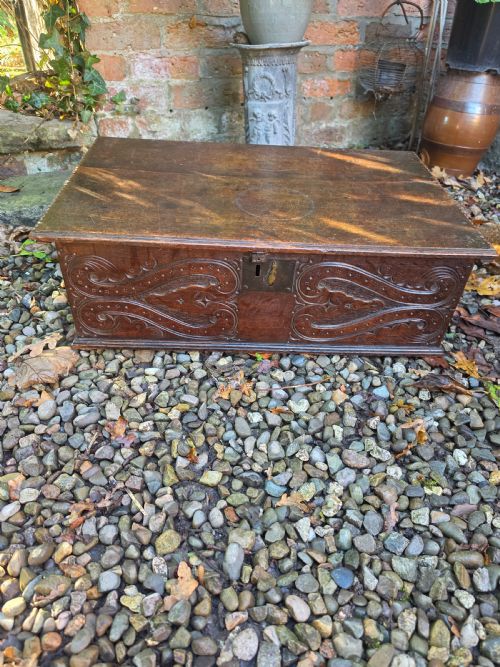
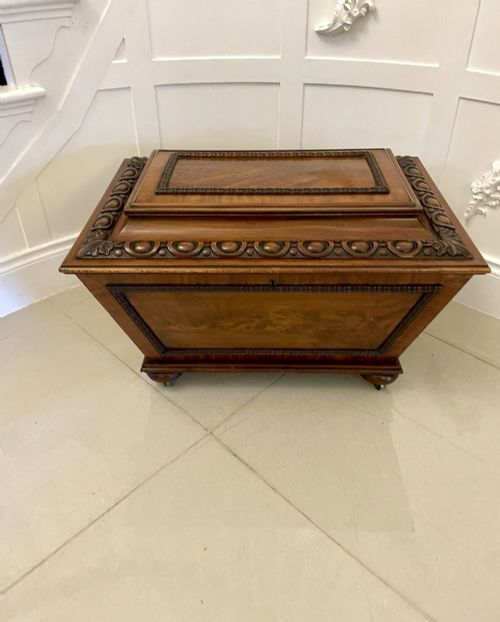
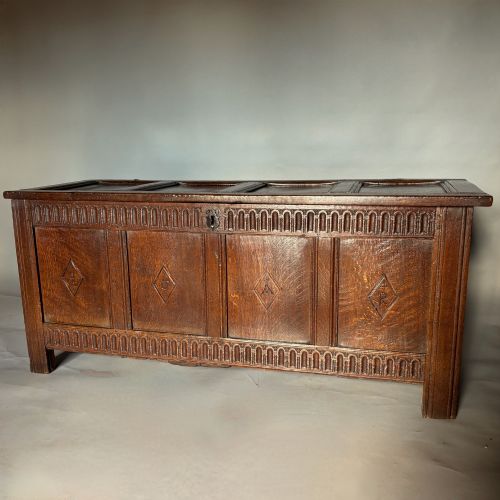
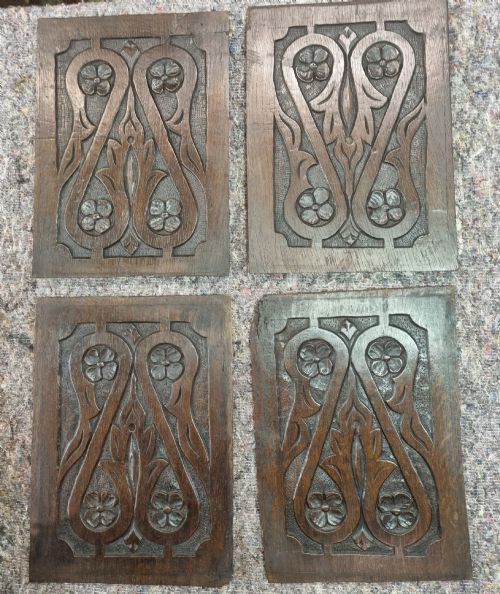
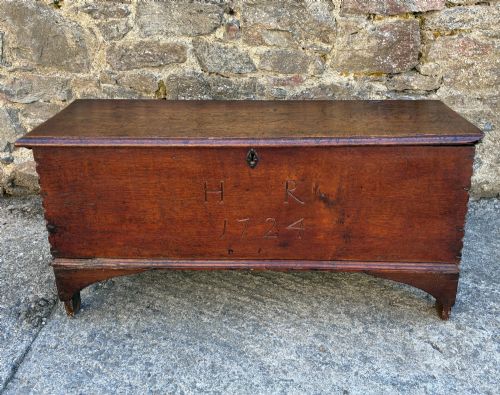
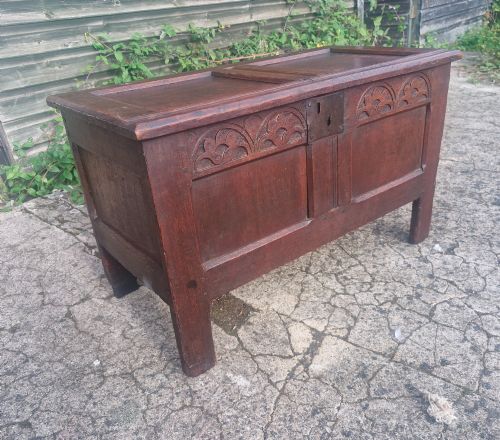
An antique carved chest encompasses sturdy storage forms like seventeenth-century oak coffers, mule chests with lower drawers, document boxes, and later revival blanket chests. The most common version met on this page is the solid oak coffer, often bearing panelled fronts and rich geometric or floral carving from the seventeenth and eighteenth centuries.
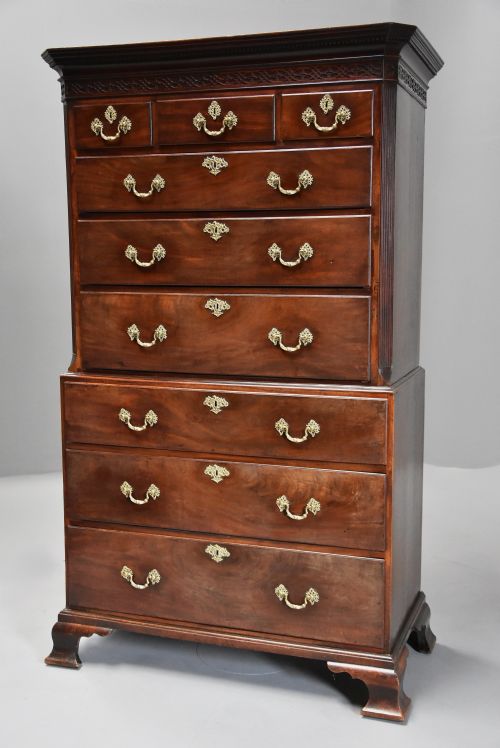
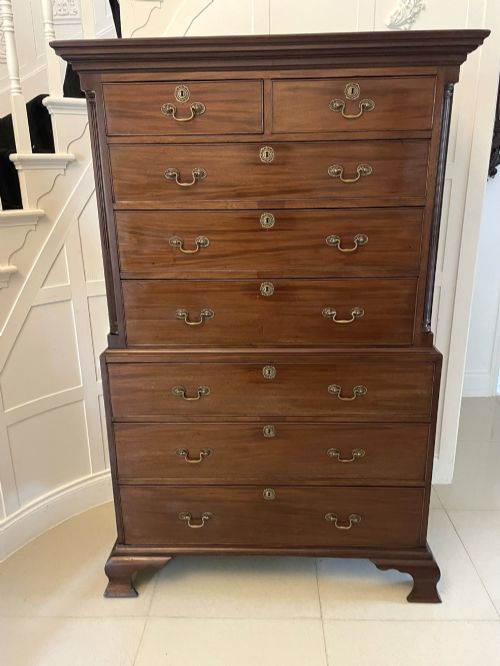
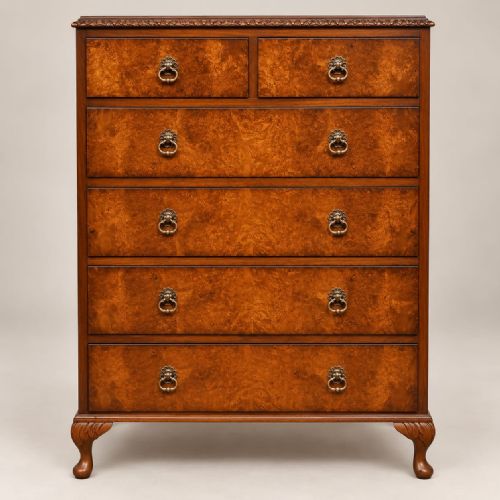
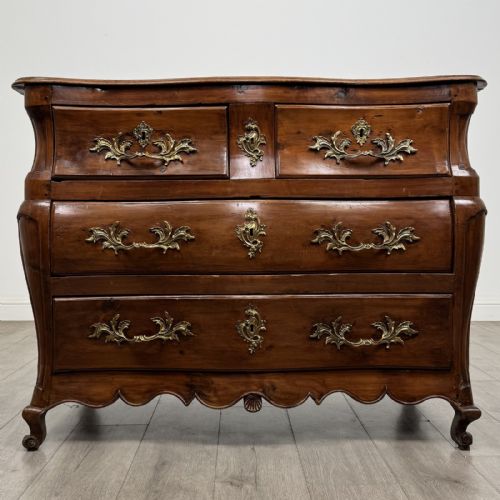
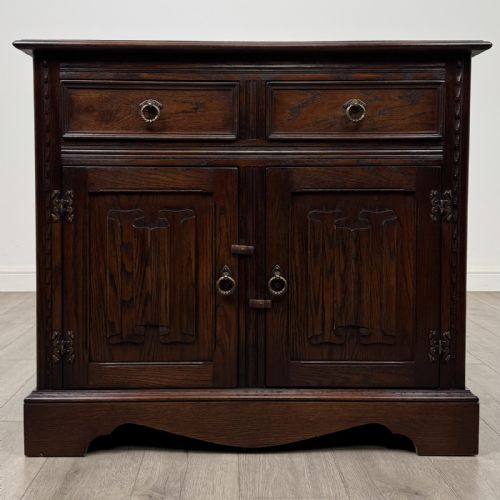
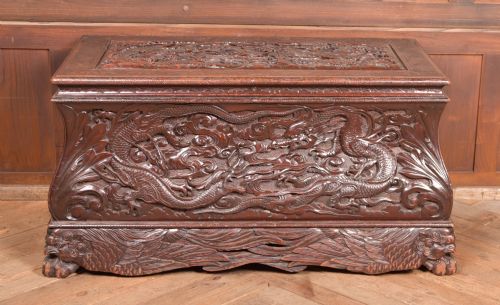
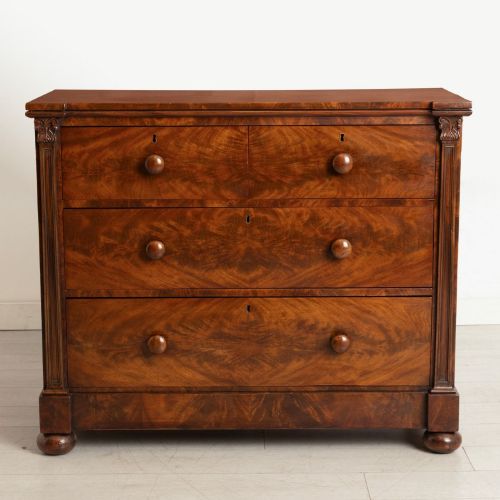
Beyond simple coffers, buyers encounter drawer-based forms including carved mahogany chests of drawers, serpentine commodes, and walnut cabinets on stands spanning the Georgian, Victorian, and Edwardian eras. Regional variations also appear, such as Welsh Gower pieces, French provincial commodes, and camphor wood trunks.
These pieces served practical domestic functions for storing textiles, valuables, and personal documents before fitted wardrobes became standard. Today, they function as focal storage furniture in hallways, living rooms, and bedrooms.
How they were made
Makers relied primarily on solid English and Welsh oak for early coffers, joining panels with traditional mortise and tenon frames secured by wooden pegs. Surface decoration was worked directly into the timber using gouges, chisels, and hand-punching tools to create relief patterns.
Later pieces incorporate fine cabinet timbers like mahogany, walnut, and burr walnut, frequently enhanced by crossbanding, floral marquetry inlay, and brass hardware. Regional trunks utilise camphor wood or elm, while specialised finishes include lacquer, Chinoiserie, and wax polishing.
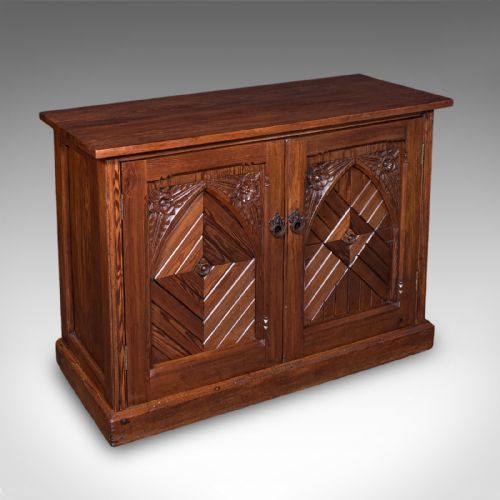
Listings span seventeenth-century oak coffers to Edwardian oak cupboards, utilising materials such as brass, iron, mahogany, walnut, and lacquer.
What varies in quality
Quality rests heavily on the depth and crispness of the hand-carved ornamentation, where sharp, confident chisel work distinguishes master-carved panels from shallow, mechanical later imitations. The choice of timber also dictates grade, with figured burr walnut, dense quarter-sawn oak, and richly grained mahogany marking the upper tiers.
Construction integrity separates fine examples from utilitarian ones, seen in the survival of original brasses, uncompromised secondary woods, well-fitted dovetailed drawer linings, and structural harmony between stands and upper cabinets.
The Antique Carved Chest Glossary
- Coffer
- A large wooden chest used historically for storing valuables, textiles, and household goods. These sturdy lidded boxes form the foundational ancestor of modern storage furniture.
- Mule chest
- A storage chest featuring one or more functional drawers built beneath the main lidded compartment. This hybrid form bridges the gap between the traditional coffer and the chest of drawers.
- Marquetry
- Decorative veneer work created by fitting together thin slices of different coloured woods to form pictorial or geometric patterns. It appears frequently on high-status walnut and oak pieces.
- Serpentine
- A furniture front characterised by a wavy contour featuring a convex centre flanked by concave curves. This fluid shaping demands advanced cabinetmaking skill.
- Linenfold
- A style of wood carving that mimics the appearance of folded linen fabric, popular on Tudor and Jacobean panels. It provides a distinct textile-like texture to rigid timber.
Antique Carved Chest: Frequently Asked Questions
What is the difference between a coffer and a mule chest?
A coffer is a traditional lidded box opening from the top, designed primarily for bulk storage of blankets and garments.
A mule chest adds one or more drawers beneath the main compartment, allowing access to stored items without lifting the heavy lid.
How do I date an antique oak chest?
Dating relies on construction methods, timber selection, and the style of the hand-carved panels. Early seventeenth-century pieces exhibit pegged frame-and-panel joints, while later revival pieces show more uniform machine sawing and softer secondary woods.
Hardware styles, tool marks, and historical wear patterns further help narrow down the decade of manufacture.
Can I use an antique carved chest as a coffee table?
Many solid chests, particularly camphor wood trunks and low oak blanket boxes, adapt well to functioning as coffee tables in modern living spaces. Their flat lids provide ample surface area while concealing generous interior storage.
Care should be taken to protect antique polished or waxed wooden surfaces from moisture and heat using appropriate coasters and trays.
What is a chest on stand?
A chest on stand is an elevated cabinet format where a primary set of drawers or a cupboard sits upon a separate supporting frame with legs. This tall design lifts storage off the floor, reducing dampness and easing access.
Originating in high-status seventeenth and eighteenth-century interiors, these pieces often feature veneered walnut or fine mahogany.