


Antique Butterfly Lapel Pin
These antique butterfly lapel pin examples are delicate wearable ornaments from the Victorian, Edwardian, and Art Deco eras designed to fasten garments.
Antique Butterfly Lapel Pin
An antique butterfly lapel pin takes the form of a small winged insect rendered in precious metal and decorative stones or enamel. When searching for an antique butterfly lapel pin, collectors encounter diminutive brooches and pins spanning from the Victorian period through the Art Deco and Art Nouveau movements.
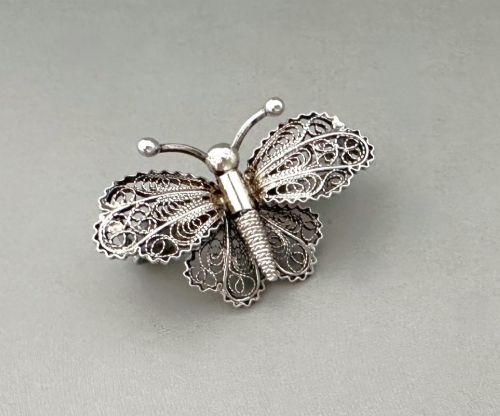
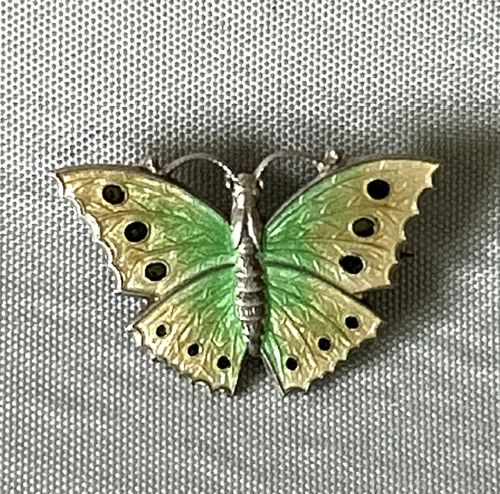
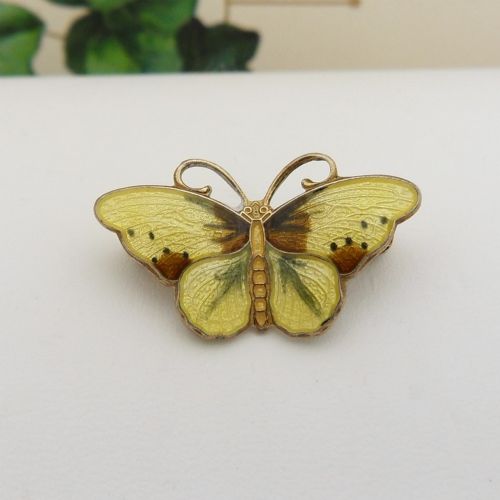
The pieces appearing on this page range from Victorian interpretations to 1930s Chinese export silver filigree work and Scandinavian guilloche enamel designs. Formats include traditional brooches and hatpins featuring butterfly motifs created across several decades.
How they were made
Workshops utilised sterling silver, silver gilt, and occasional nine-carat gold as the structural base for these insect motifs. Skilled artisans shaped metal wire into intricate filigree patterns to form the delicate outlines of wings and bodies.
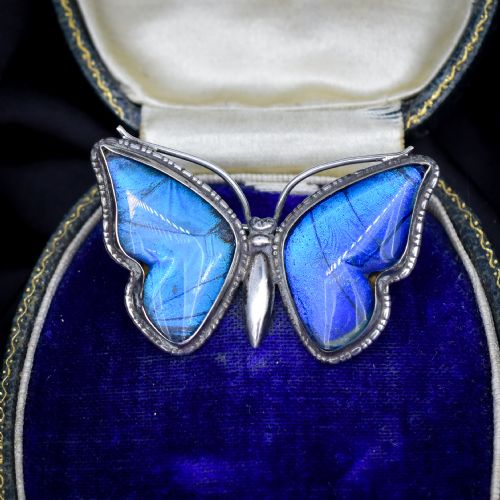
Vitreous enamel, butterfly wing segments, and glass provided vibrant coloration to mimic natural insect hues. Selected examples incorporate diamonds or moonstones set directly into the precious metal framework.
Periods represented on this page include Victorian, Edwardian, Art Nouveau, Art Deco, and the 1930s.
What varies in quality
The refinement of the metalwork distinguishes standard items from superior examples, particularly in the precision of silver filigree and the application of guilloche enamel. Finer pieces demonstrate meticulous hand-craftsmanship in the formation of wing veins and body segments.
The preservation of fragile materials such as glass, enamel, and natural butterfly wing significantly affects the overall integrity of the piece. Superior items retain their original coloration and surface texture without extensive restoration.
The Antique Butterfly Lapel Pin Glossary
- Guilloche enamel
- A decorative technique involving precise, intricate mechanical patterns engraved beneath a translucent layer of coloured enamel. This method creates depth and shimmering light reflection across the metal surface.
- Silver filigree
- Delicate metalwork formed from fine twisted silver threads soldered together in openwork patterns. Artisans arrange these tiny wires to create lightweight, lace-like motifs.
- Sterling silver
- An alloy consisting of silver and other metals, typically copper, standardising at a high purity level for durability. This material forms the primary structure for many period brooches.
- Silver gilt
- Silver objects coated with a thin layer of gold on the outer surface. This treatment provides the appearance of solid gold while utilising silver as the structural base.
Antique Butterfly Lapel Pin: Frequently Asked Questions
What periods do these pins come from?
The pieces span several decades, including Victorian, Edwardian, Art Nouveau, and Art Deco eras up to the 1930s.
Craftsmanship and materials often reflect the distinct design characteristics of these specific historical periods.
How were butterfly wing pins constructed?
Artisans placed real iridescent butterfly wing fragments beneath protective bevelled glass panels set within sterling silver frames.
This technique produced vibrant, shifting blue and green tones resembling actual insect wings.
Can I wear an antique pin daily?
These delicate items require gentle handling due to their age and fragile components like enamel or thin silver filigree.
Storing them securely away from heavy garments prevents accidental bending or surface scratching.
How do I identify Art Nouveau examples?
Art Nouveau pieces emphasise flowing, asymmetrical lines inspired by natural organic forms rather than rigid symmetry.
They frequently incorporate cabochon stones like moonstones alongside whiptail curves.