


Antique Boudoir Seating
Antique boudoir seating brings intimate charm to private rooms, offering low-slung comfort and ornate French or Victorian styling.
Antique Boudoir Seating
Antique boudoir seating encompasses low chairs, slipper chairs, small settees, and stools designed for private dressing rooms and bedrooms. These pieces emerge predominantly from the nineteenth century, including Victorian and Edwardian periods.
French influences dominate the selection, with numerous Napoleon III, Louis XV style, and French Chateau examples appearing alongside British bedroom chairs. Forms range from compact side chairs and footstools to intimate loveseats.
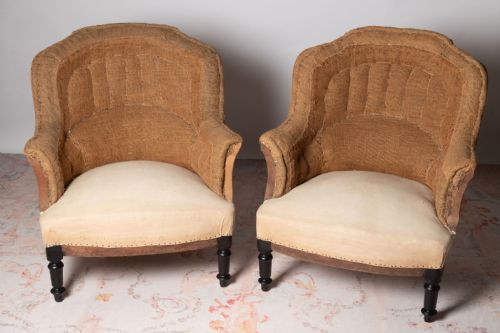
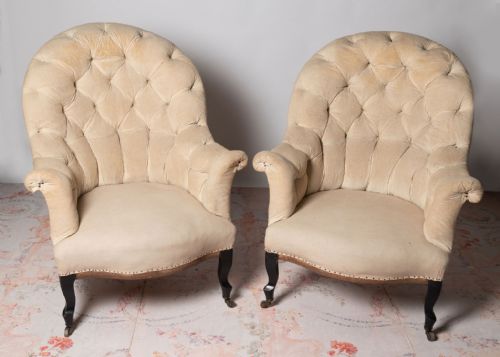
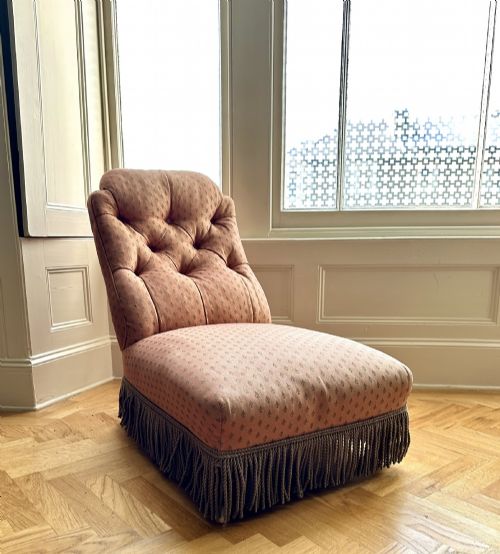
Many examples survive in need of re-upholstery, allowing buyers to select their own fabrics. Others arrive finished in velvet, silk, calico, or hessian over sprung and padded frames.
Materials and construction
Frames rely on sturdy timbers including mahogany, beech, and ebonised wood, sometimes accented with gilt or painted surfaces. Brass details and inlaid mahogany appear on specific Edwardian and Victorian iterations.
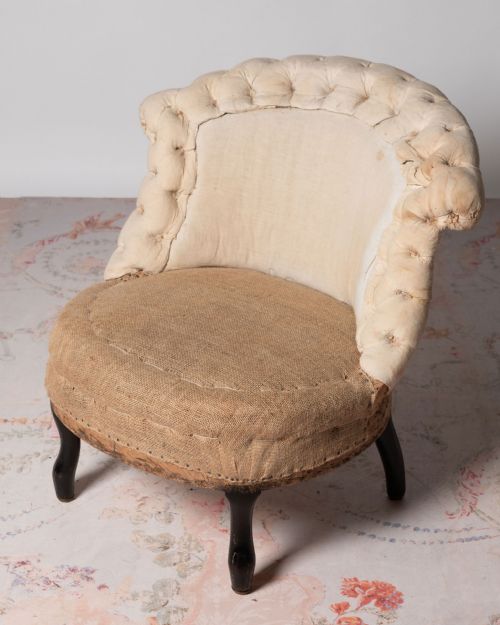
Traditional upholstery techniques utilise hessian, calico, and stuffing to build up comfortable contours on slipper chairs and settees. Silk and velvet provide the visible top layers on finished decorative pieces.
A porcelain boudoir clock from eighteen-eighty occasionally keeps company with the seating, ticking softly among the velvet and silk.
Judging quality in boudoir seating
Quality rests in the original joinery of the wooden frame and the integrity of the carved or painted details. Finer frames show crisp carving and solid timber construction rather than loose joints.
The sophistication of the silhouette defines better pieces, from curvaceous slipper chair profiles to well-proportioned French settee arms. Original decorative elements like gilding and brass work elevate the piece.
Hindley & Sons·Howard and Sons
The Antique Boudoir Seating Glossary
- Slipper chair
- A low-seated upholstered chair originally designed for a lady's dressing room to ease the process of putting on shoes. They typically feature no arms and short legs.
- Napoleon III
- A French design style spanning the mid to late nineteenth century, known for eclectic revivals of rococo and baroque forms with rich upholstery. It often incorporates ebonised wood and gilt highlights.
- Ebonised wood
- Timber treated with a dark finish to imitate expensive ebony. This technique was popular in nineteenth-century furniture for creating sharp contrast against bright fabrics.
- Boudoir settee
- A small, intimate sofa intended for private chambers rather than large reception rooms. These pieces often feature silk or velvet upholstery and ornate painted frames.
Antique Boudoir Seating: Frequently Asked Questions
Where were boudoir chairs used?
These chairs were traditionally kept in private dressing rooms and bedrooms rather than formal entertaining spaces. Ladies utilised them for personal grooming, reading, and dressing.
Their compact size allowed them to fit comfortably into smaller private chambers without cluttering the room.
Why buy chairs needing re-upholstery?
Many nineteenth-century frames survive naked in calico or hessian, which gives buyers a blank canvas for interior coordination. Selecting your own fabric ensures the piece matches your exact colour scheme.
Stripped frames also let restorers inspect the underlying wooden joinery and spring construction directly.
How do I identify French styles?
French nineteenth-century pieces often display curved cabriole legs, gilt woodwork, and painted finishes reminiscent of chateau interiors. Napoleon III examples frequently utilise dark ebonised frames paired with lavish textiles.
Maker attribution is less common on French pieces, relying instead on stylistic markers and proportions.