

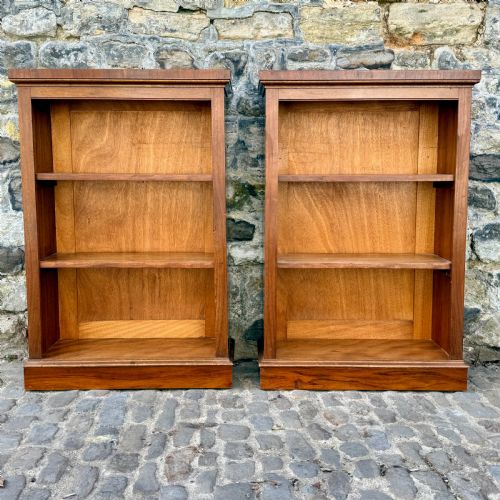
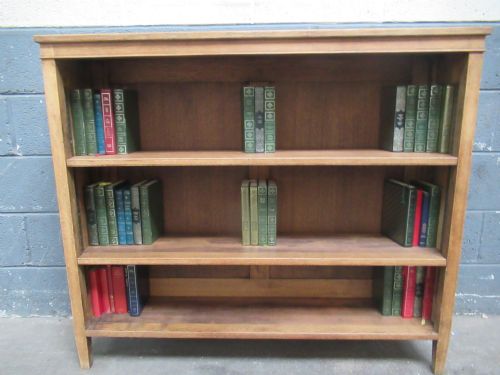
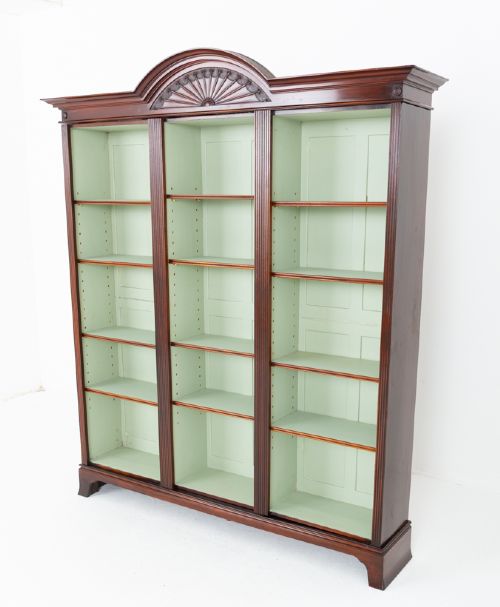
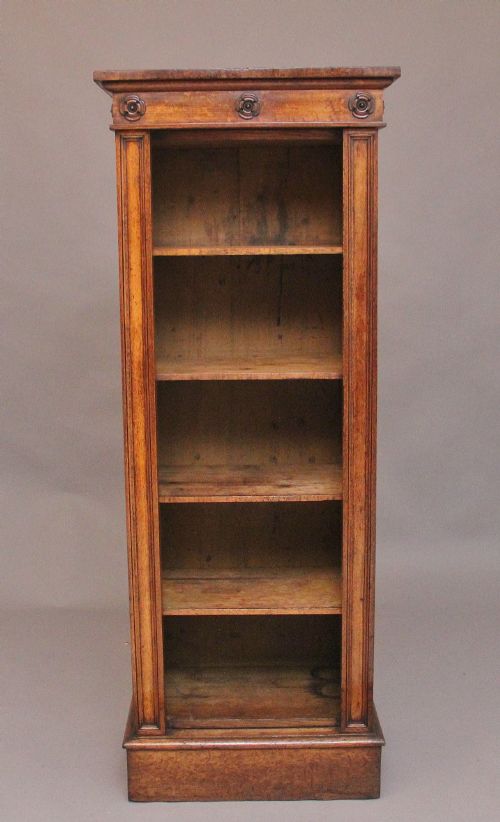
Antique Bookcase Shelf
These antique bookcase shelf pieces span George III to the twentieth century, bringing timber warmth and open storage to a room.
Antique Bookcase Shelf
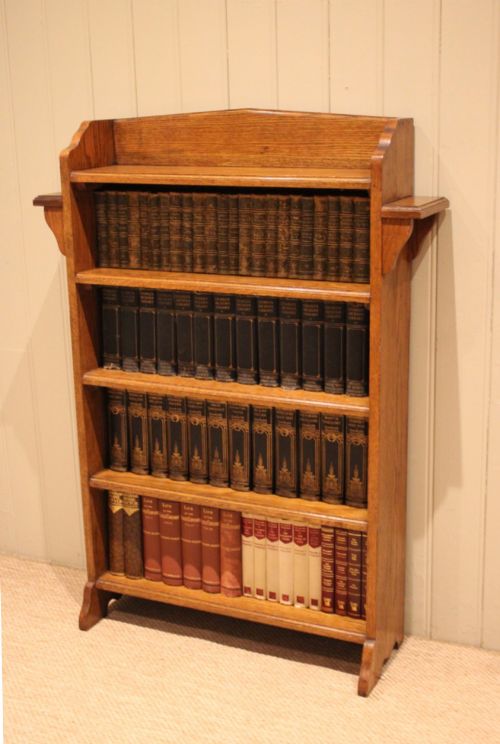
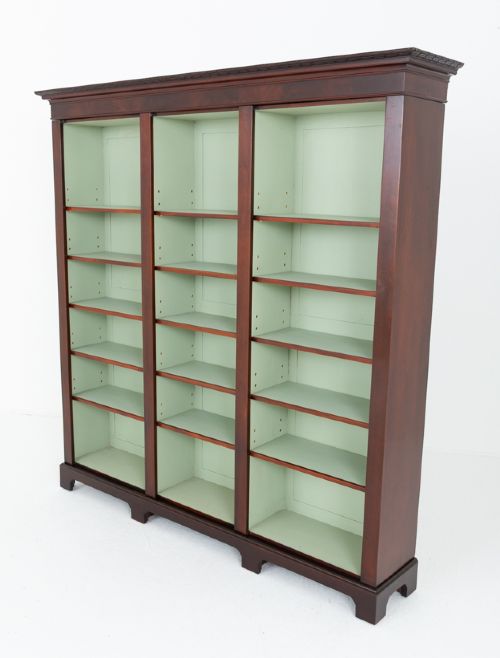
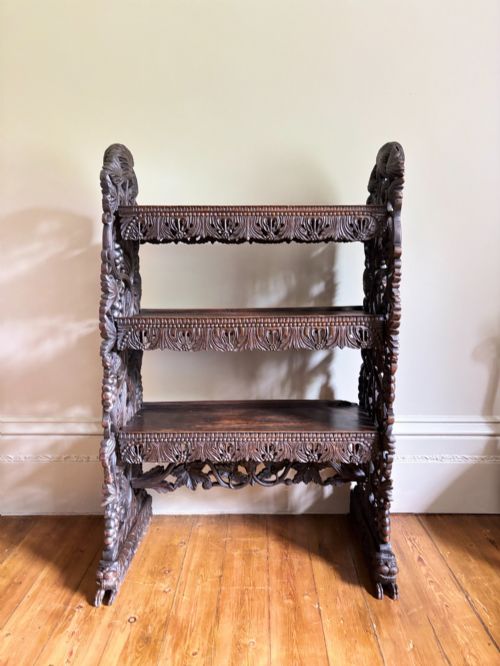
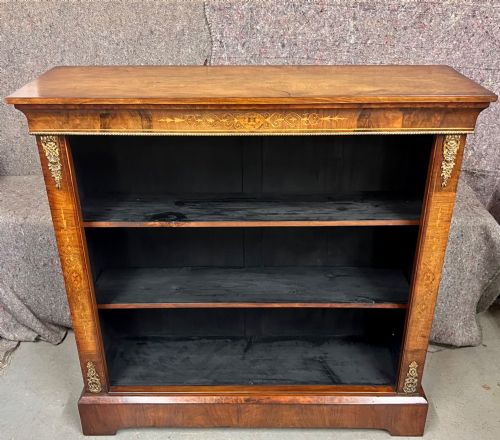
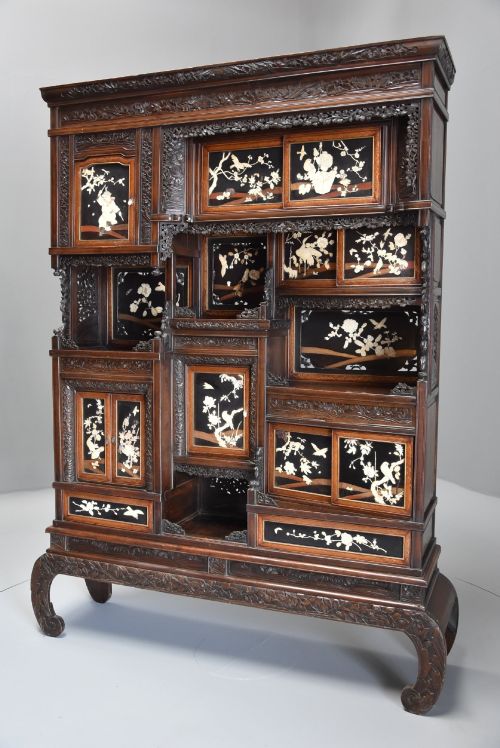
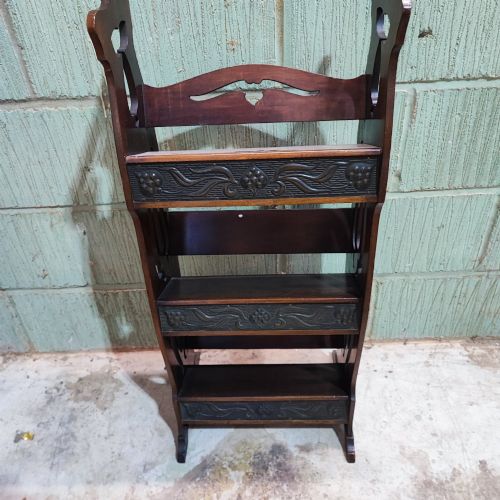
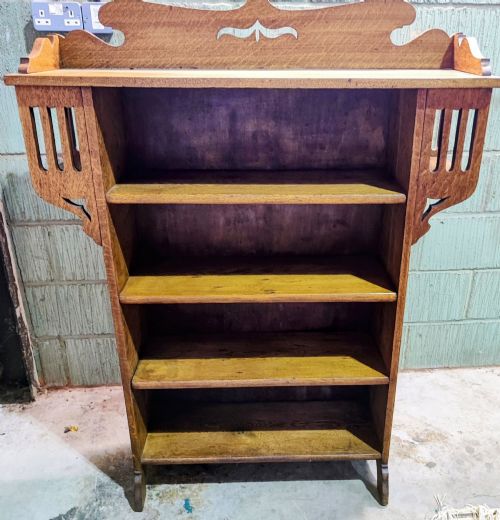
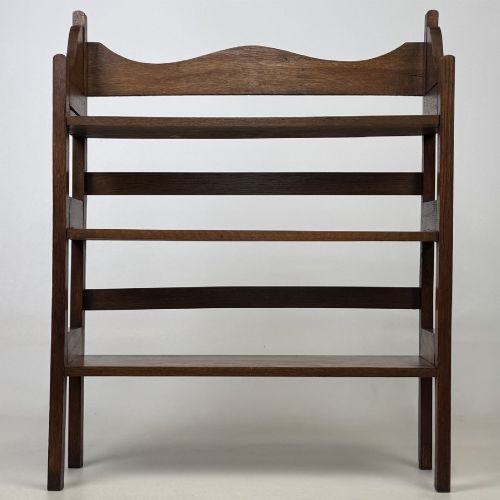
When you search for an antique bookcase shelf, you encounter open bookcases, whatnots, wall shelves, and display cabinets designed to hold books and display objects. The selection draws heavily on Edwardian and Victorian pieces alongside Regency, Georgian, and Arts and Crafts examples.
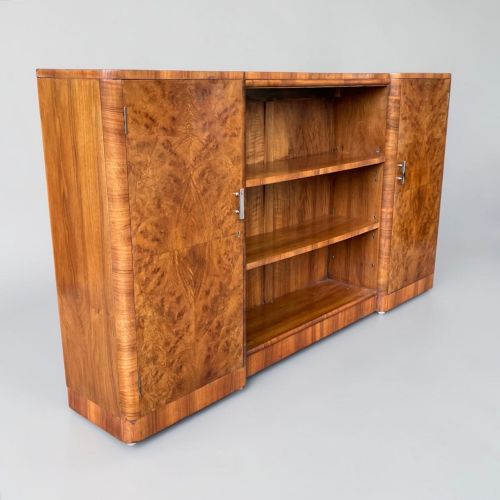
Mahogany and oak dominate the offerings, frequently accompanied by walnut, burr walnut, rosewood, and satinwood inlay. You will regularly find forms featuring raised galleries, brass mounts, dentil cornices, and adjustable shelves.
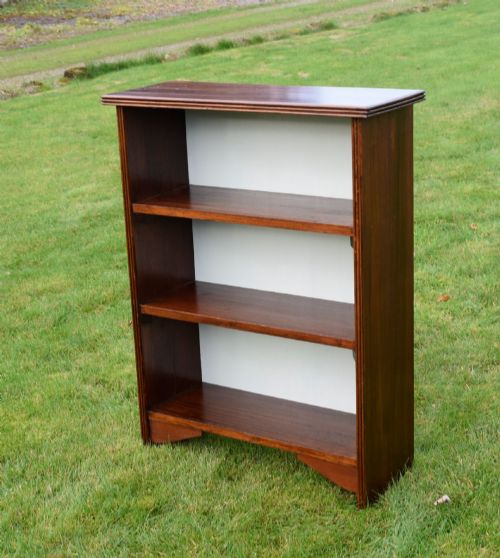
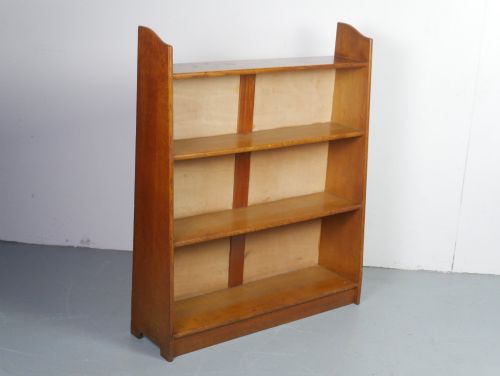
The practical function remains straightforward, providing accessible tiered storage that adapts easily to modern rooms. Pieces range from tall slim formats and small oak units to breakfront designs and revolving shelves.
How they were made
Cabinet makers utilised dense hardwoods like mahogany, oak, rosewood, and walnut, often selecting figured timbers such as burr walnut and satinwood for visual depth. Construction methods include pegged joints in Arts and Crafts pieces, along with fitted plinth bases and shaped sides.
Metalwork played a key structural and decorative role, featuring brass galleries, brass mounts, and glazed doors. Inlaid details and carved cornices added architectural definition to standard open forms.
Antique Bookcase Shelf Retail Price Guide 2026
Typical asking prices for bookcase shelf among the pieces listed under this phrase on Sellingantiques today, from the lower quarter to the upper quarter. They describe what is for sale here now, not the wider market.
Listings span Edwardian, Victorian, Regency, and Georgian periods, constructed from mahogany, oak, walnut, rosewood, and satinwood.
What varies in quality
The refinement of timber selection dictates much of the distinction, separating plain utility pieces from those utilising highly figured burr walnut, rosewood, or finely grained mahogany. Master craftsmanship shows in the crisp execution of carved architectural details, dentil cornices, and precise satinwood inlay.
Hardware and secondary materials elevate certain items, such as integrated brass galleries, robust brass mounts, and cleanly fitted adjustable shelving systems. The integrity of the original construction, whether through pegged oak framing or balanced breakfront proportions, defines the upper tier.
Gillows·John Moyr Smith·Macey
The Antique Bookcase Shelf Glossary
- Gallery
- A raised railing or rim along the top edge of a shelf or cabinet, often made of brass or pierced wood to prevent items from sliding off.
- Breakfront
- A large cabinet design where the central section projects forward from the recessed wings on either side.
- Dentil
- A series of small, rectangular tooth-like blocks forming an ornamental moulding beneath a cornice.
- Whatnot
- A set of open tiered shelves used for displaying ornaments, books, or small objects, popular in the nineteenth century.
- Plinth
- The heavy flat base upon which a heavy bookcase or cabinet rests, providing structural stability.
Antique Bookcase Shelf: Frequently Asked Questions
What is an open bookcase?
An open bookcase is a storage unit without doors, allowing direct access to the books and items placed on the shelves. These pieces often feature adjustable wooden shelving and decorative galleries.
They serve as prominent furniture items in libraries, studies, and living spaces for everyday book storage and display.
How do I use a whatnot?
A whatnot is utilised primarily for displaying decorative objects, small collections, and books across its multiple open tiers. Nineteenth-century examples often incorporate brass galleries on top.
Place them in corners or against walls where vertical display space is needed without heavy enclosed cabinetry.
What distinguishes Arts and Crafts pieces?
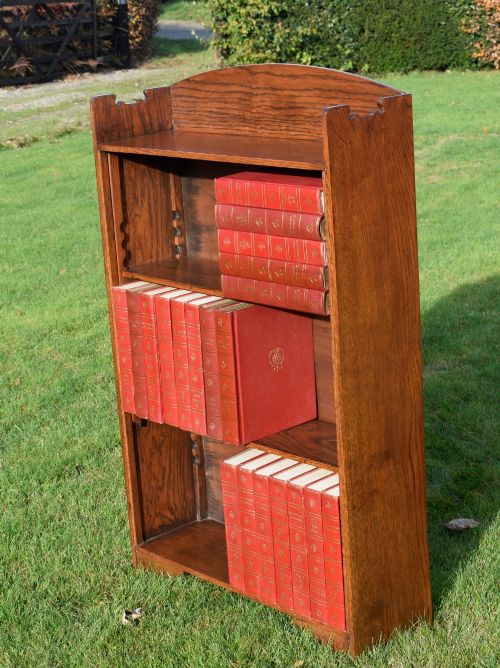
Arts and Crafts pieces emphasise honest construction methods, visible joinery, and solid golden oak timber. Pegged joints and minimal ornamentation define the aesthetic of this movement.
They reflect a return to handcraftsmanship in contrast to heavily mass-produced Victorian furniture.
Are shelves usually adjustable?
Many nineteenth and twentieth-century bookcases feature adjustable shelves supported by wooden ratchets or metal pins. This allows the internal height to accommodate varying book sizes.
Check the interior uprights for the slot mechanisms that indicate this capability.