

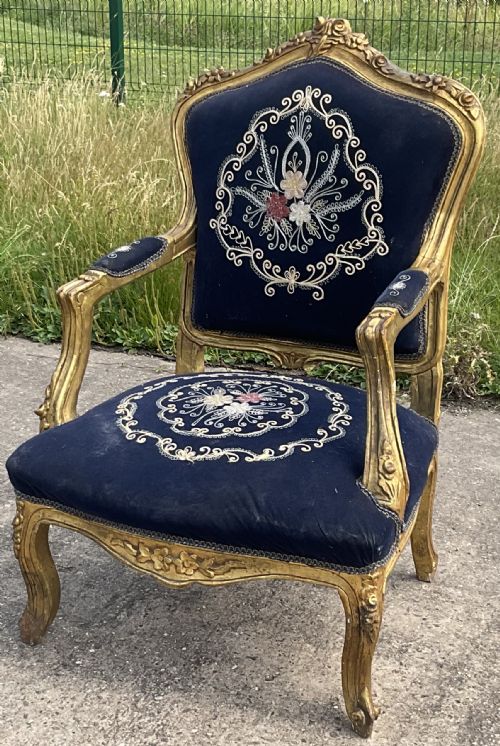
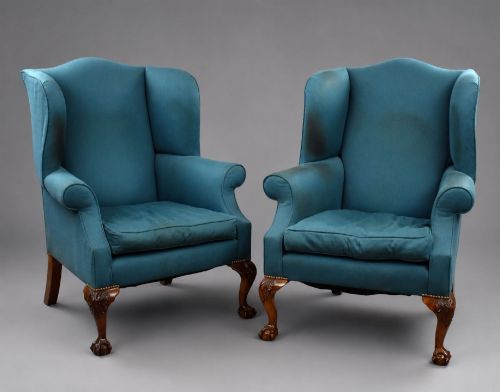
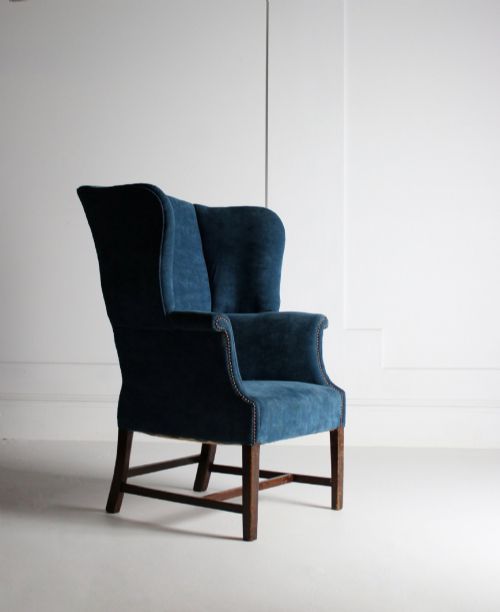
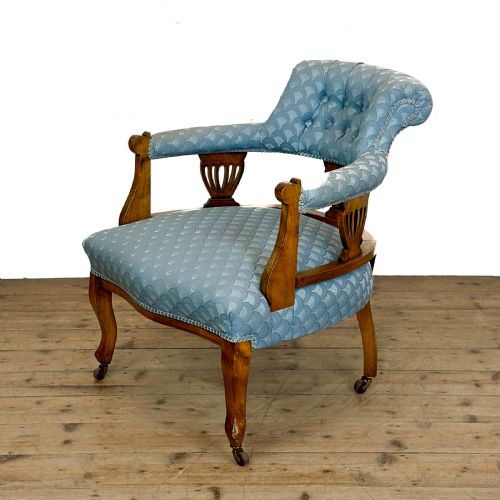
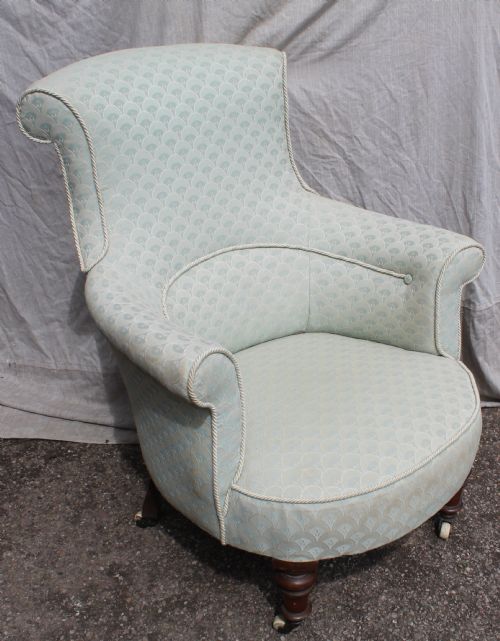


Antique Blue Fireside Chair
An antique blue fireside chair brings deep upholstery, generous proportions and period character to a room, offering a comfortable seat beside the hearth.
Antique Blue Fireside Chair
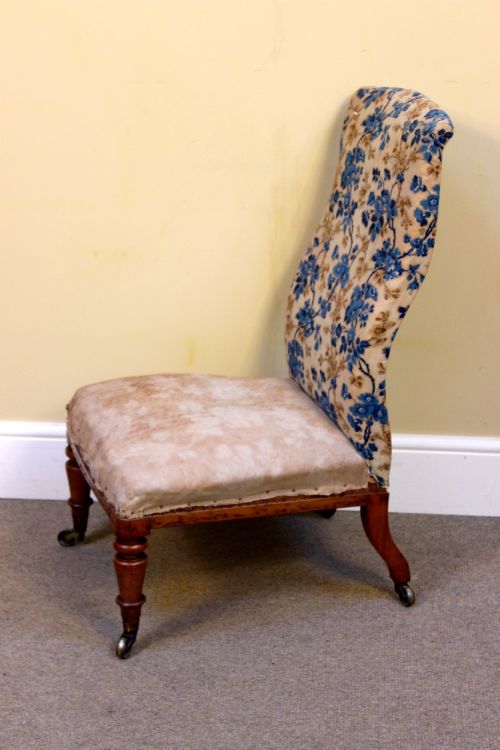
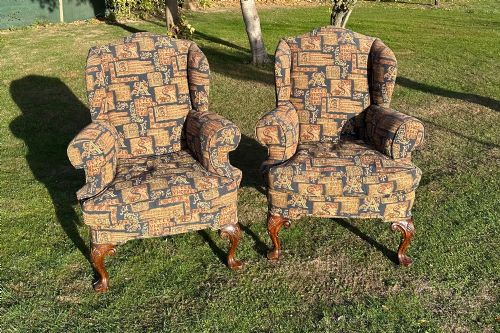
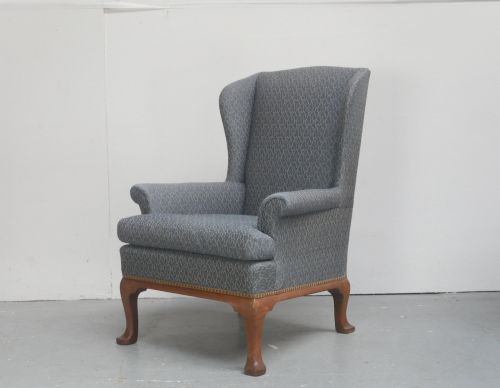
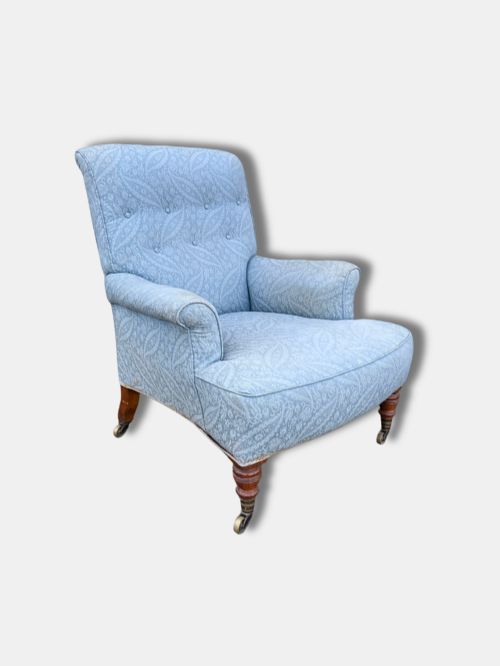
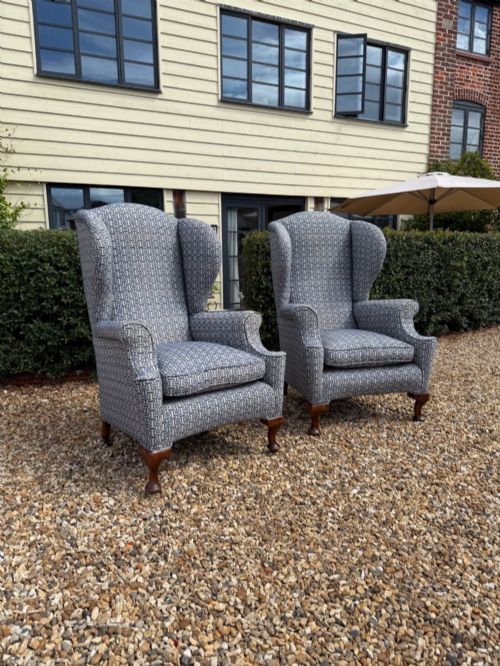
An antique blue fireside chair encompasses a range of seating from the nineteenth century into the early twentieth century, including wingbacks, nursing chairs and library armchairs. These pieces emerge primarily from the Victorian and Edwardian periods, often styled with deep seats designed for warmth and comfort near a fireplace.
The versions most commonly met on this page feature mahogany or walnut frames upholstered in fabrics such as cotton, velvet, textile and wool. Makers like Howard and Sons feature prominently, alongside country house and Georgian revival interpretations that span armchairs and slipper chairs.
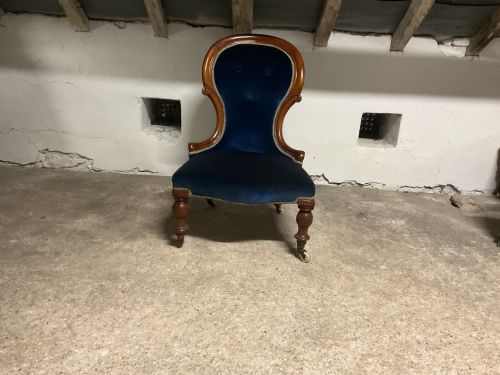
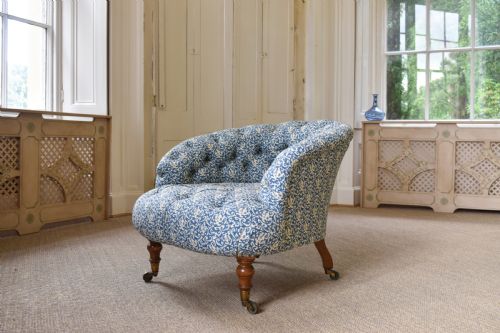
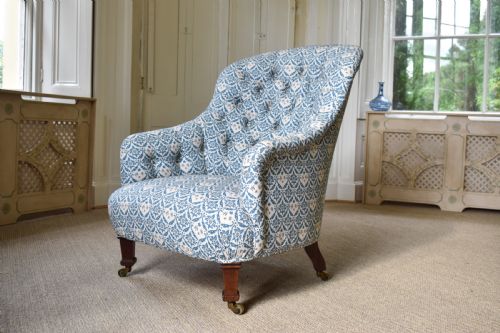
Buyers select these chairs to anchor a room with period presence, combining functional seating with traditional wood and upholstery craftsmanship. The forms vary from button-backed lounge chairs to low-slung club and barrel-back designs.
Materials and construction methods
Frames rely on sturdy timbers including mahogany, walnut and general hardwoods, providing a robust structural skeleton for heavy upholstery. Brass components occasionally appear in castors or decorative detailing on the wooden legs.
Upholstery relies on traditional textiles such as cotton, velvet, wool and ticking, secured over sprung and stuffed interiors. Buttoning and pleated fabric treatments define many of the Victorian and Edwardian examples recorded in the listings.
Antique Blue Fireside Chair Retail Price Guide 2026
Typical asking prices for blue fireside chair among the pieces listed under this phrase on Sellingantiques today, from the lower quarter to the upper quarter. They describe what is for sale here now, not the wider market.
Several armchairs retain their original nineteenth-century iron mechanisms, proving that past generations took fireside relaxation very seriously indeed.
Markers of distinction and build
The refinement of the wooden frame separates standard seating from exceptional examples, seen in the carving of mahogany or walnut legs and the integrity of the underlying woodwork. Superior pieces maintain rigid joinery and well-balanced proportions that support the heavy sprung upholstery without sagging.
The quality of the upholstery execution and the choice of textile dictate the overall finish. Fine maker attribution, particularly pieces bearing the stamp or legacy of workshops such as Howard and Sons, elevates the standing of an armchair within the historical record.
Howard and Sons
The Antique Blue Fireside Chair Glossary
- Wingback
- An armchair with high sides attached to the arms, designed to shield the sitter from draughts by the fireside. These high panels define many traditional Georgian and Victorian forms.
- Button back
- An upholstery technique where buttons are pulled deep into the padding to create a quilted, patterned diamond effect. This method is frequently found on Victorian lounge chairs.
- Ticking
- A heavy, tightly woven cotton or linen fabric historically used as a durable foundation or outer covering for mattress and furniture stuffing.
Antique Blue Fireside Chair: Frequently Asked Questions
How do I identify a Victorian fireside chair?
Victorian chairs often feature dark woods like mahogany, deep button-backed upholstery and elaborate springing designed for heavy comfort. They typically display heavier proportions than their Edwardian successors.
Look closely at the turned wooden legs and any exposed brass castors, which offer clues to the mid-to-late nineteenth-century manufacturing date.
What is a Howard and Sons armchair?
Howard and Sons was a prominent nineteenth-century upholstery firm known for producing exceptionally comfortable, sprung club and wing armchairs. Their pieces are frequently marked by stamped wooden legs or specific caster designs.
Collectors prize these armchairs for their superior build quality and signature nineteenth-century aesthetic.
Where should I place an antique wing chair?
These chairs suit living rooms, libraries and studies, traditionally positioned near a fireplace to make use of the protective side wings. Their generous scale also allows them to act as standalone reading seats.
Ensure adequate surrounding space so the wooden frame and upholstered wings remain visible and unobstructed.
How do Edwardian chairs differ from Victorian ones?
Edwardian chairs generally present a lighter scale and simpler lines than heavy Victorian upholstery. The wood tones can be brighter, and the overall aesthetic reflects a shift towards country house informality.
Upholstery choices in this later period often embraced simpler cottons and ticking alongside traditional velvet.