



Antique Blue Bracelet
An antique blue bracelet brings together deep sapphires, vitreous enamel and polished silver to sit close to the wrist.
Antique Blue Bracelet
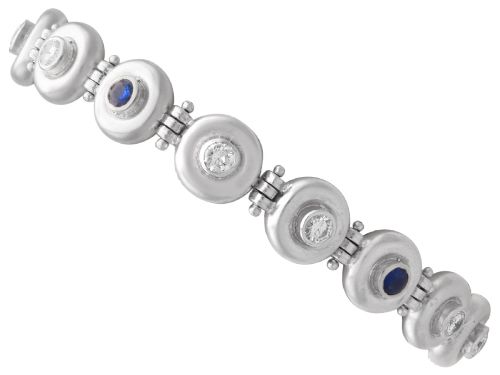
An antique blue bracelet is a wrist ornament defined by blue stones or blue enamel, spanning Victorian, Edwardian and Art Deco periods. These pieces range from delicate silver filigree links to heavy platinum settings holding significant sapphire and diamond clusters.
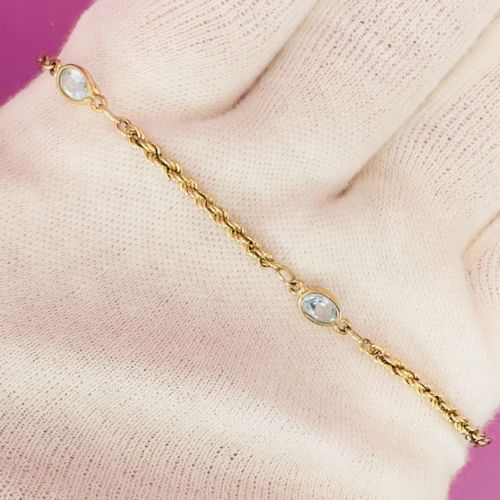
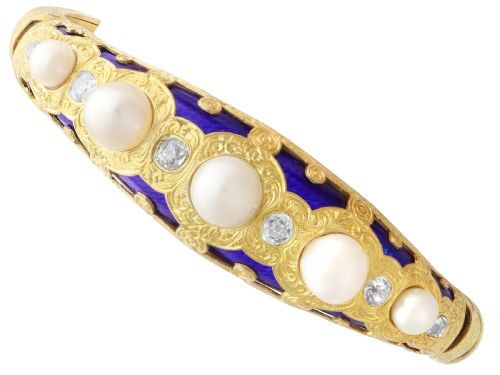
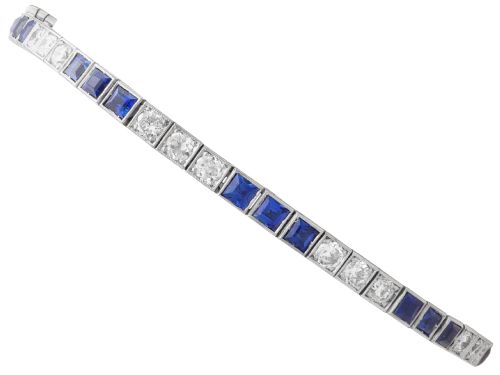
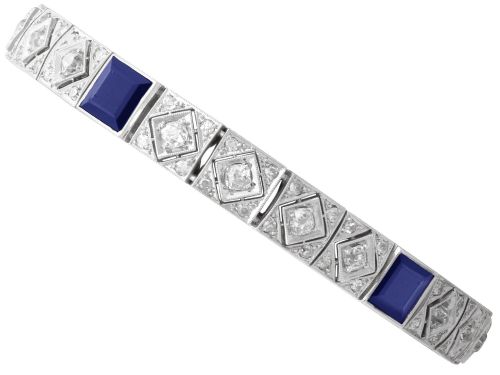
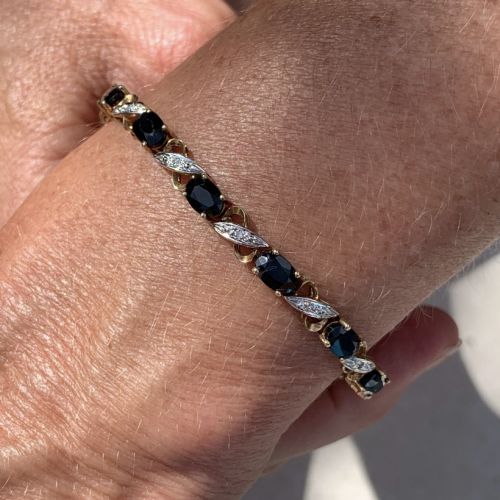
The version most often met on this page is the platinum or white metal Art Deco line bracelet, set with calibrated sapphires alongside sparkling diamonds. Alongside these geometric designs, yellow and rose gold mountings from the Victorian and Edwardian eras showcase natural blue gems and hand-painted enamel panels.
Materials and construction
Makers set precious stones into metals like platinum, 18ct yellow gold, 9ct gold and silver using channel, bezel and claw settings. Platinum provided the tensile strength needed for slender Art Deco line bracelets holding multiple diamonds and sapphires.
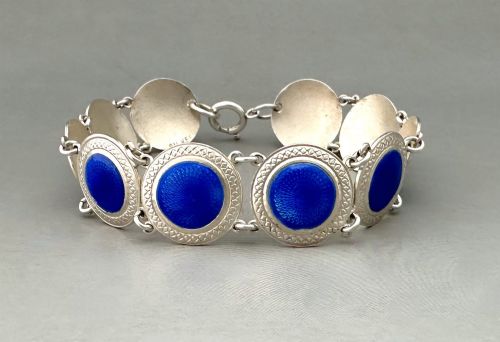
Vitreous enamel and hand-painted miniature panels introduce vivid blue tones to silver and gold frameworks, requiring careful kiln firing to fuse glass to metal. Filigree work involves twisting fine silver or gold wires into intricate openwork patterns that form lightweight structural links.
Antique Blue Bracelet Retail Price Guide 2026
Typical asking prices for blue bracelet among the pieces listed under this phrase on Sellingantiques today, from the lower quarter to the upper quarter. They describe what is for sale here now, not the wider market.
Materials recorded on this page include platinum, silver, 18ct yellow gold, 9ct rose gold, sapphires, diamonds, pearls, moonstones and vitreous enamel.
Assessing quality and craftsmanship
Quality rests on the depth of colour and origin of the sapphires, alongside the precision of the stone cutting and the matching of the layout. Uniformity in diamond clarity and colour across a line bracelet separates master craftsmanship from standard production.
The integrity of the enamel work dictates the longevity of painted or filled panels, where smooth surfaces without chipping show superior skill. Metalwork finish, from tight clasp integration to delicate gallery pierced work underneath the stones, reveals the underlying standard of the workshop.
Jakob Bengel
The Antique Blue Bracelet Glossary
- Line bracelet
- A flexible wrist ornament featuring a continuous symmetrical line of gemstones, commonly diamonds and sapphires set in platinum. This design gained prominence during the Art Deco period.
- Vitreous enamel
- A coloured glassy substance fused to metal through high-temperature firing. It provides durable blue decoration across silver and gold mounting surfaces.
- Silver filigree
- Fine metal threads soldered together into openwork lace patterns. This technique creates delicate, lightweight panels often paired with enamel.
- Basaltic sapphire
- A natural corundum gemstone originating from alkaline basalt terrains, typically displaying deep inky blue saturation. These stones feature frequently in early twentieth-century cluster designs.
- Moonstone
- A sodium potassium aluminium silicate feldspar exhibiting adularescence, a floating shimmer of light. Graduating examples appear set within Victorian gold links.
Antique Blue Bracelet: Frequently Asked Questions
How do I care for an antique blue bracelet?
Store each piece individually in a lined box to prevent metal scratching and stone impact. Avoid ultrasonic cleaners when dealing with enamel or softer gems like pearls and moonstones.
Wipe metal and sapphire surfaces gently with a soft damp cloth after wearing. Professional inspection ensures settings remain secure over time.
Are these bracelets suitable for daily wear?
Sturdy platinum and gold settings with secure box clasps handle regular use well. Delicate silver filigree and enamel pieces require a gentler approach to avoid accidental impacts.
Assessing the original clasp mechanism helps determine how safely a piece fastens around the wrist. Inserting a safety chain provides extra security during wear.
How do I date an antique bracelet?
Stylistic markers point to specific decades, such as geometric platinum layouts indicating the Art Deco era. Heavier yellow gold settings and natural pearl elements typically point towards Victorian origins.
Hallmarks stamped on the metal surface offer direct clues to the assay office and year of manufacture. Comparing stone cuts and mounting techniques helps confirm the period.